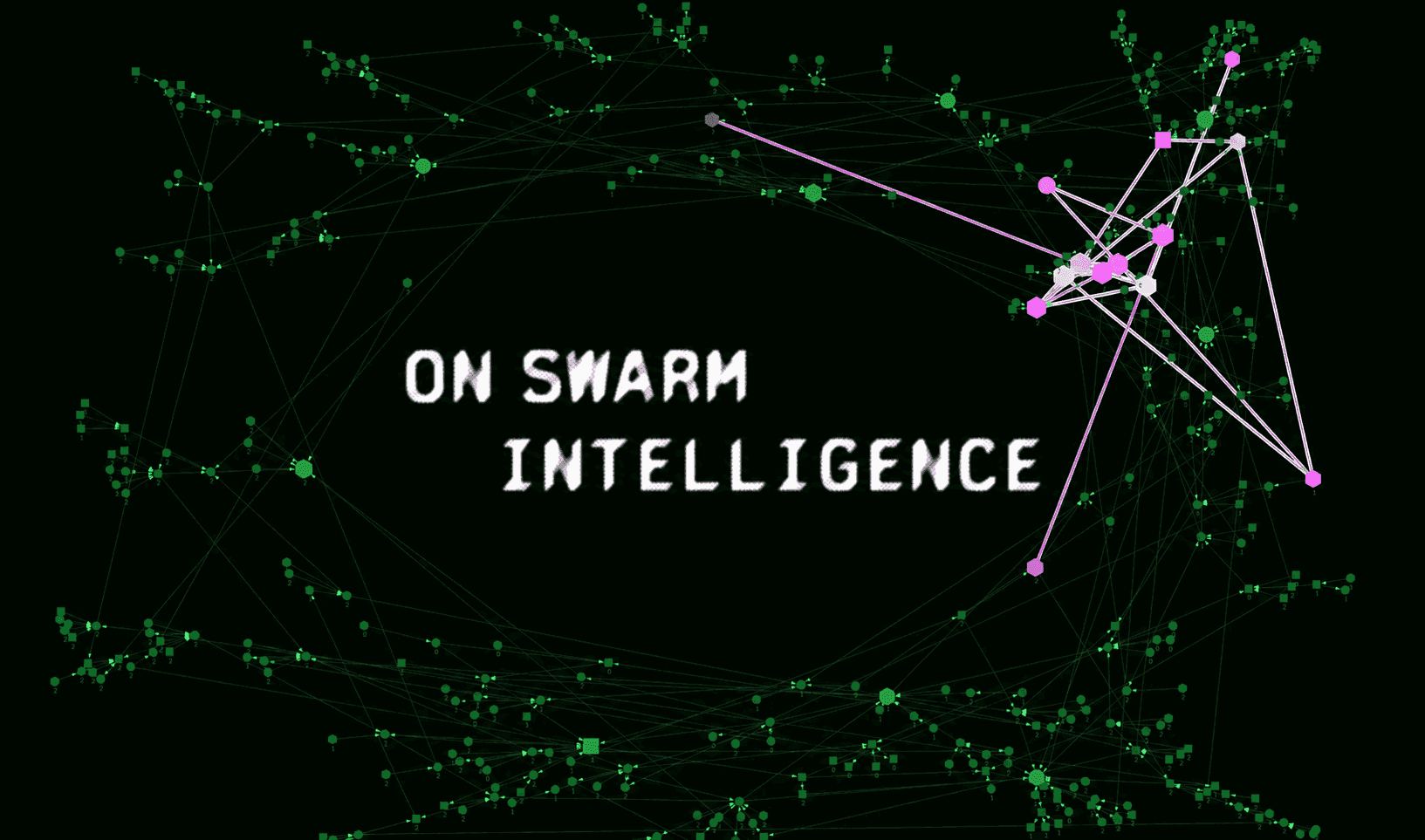
Why scaling inference ends in many agents.
Why agent swarms could be the next “scaling law”
An OpenAI researcher called it “the most ‘feel the AGI’ moment that I had since reasoning models.”

Swarm Scaling — Toby Ord
Just how powerful are large swarms of AI agents? And how do their powers scale as more and more agents are added to the swarm? We’ve seen two large and extremely capable swarms from OpenAI in the last few months: 1,200 agents were being evaluated separately, but found a way to illicitly set up a

Group size effects and collective misalignment in LLM multi-agent systems
Multi-agent systems of large language models (LLMs) are rapidly expanding across domains, introducing dynamics not captured by single-agent evaluations. Yet, existing work has mostly contrasted the behavior of a single agent with that of a collective of fixed size, leaving open a central question: How does group size shape dynamics? Here, we move beyond this dichotomy and systematically explore outcomes across the full range of group sizes. We focus on multi-agent misalignment, building on recent evidence that interacting LLMs playing a simple coordination game can generate collective biases absent in individual models. First, we show that collective bias is a deeper phenomenon than previously assessed: Interaction can amplify individual biases, introduce new ones, or override model-level preferences. Second, we demonstrate that group size affects the dynamics in a nonlinear way, revealing model-dependent dynamical regimes. Finally, we develop a mean-field analytical approach and show that, above a critical population size, simulations converge to deterministic predictions that expose the basins of attraction of competing equilibria. These findings establish group size as a key driver of multi-agent dynamics and highlight the need to consider population-level effects when deploying LLM-based systems at scale.

Agent swarms and the new model economics · Cursor
We compared old and new agent swarms building SQLite from scratch and found that better coordination delivers similar quality at a fraction of the cost.
Patterns and problems in multiagent systems
We ran experiments on swarms of Claude agents and found coordination failures, collusion, and sabotage. Here, we share what they mean for AI safety.

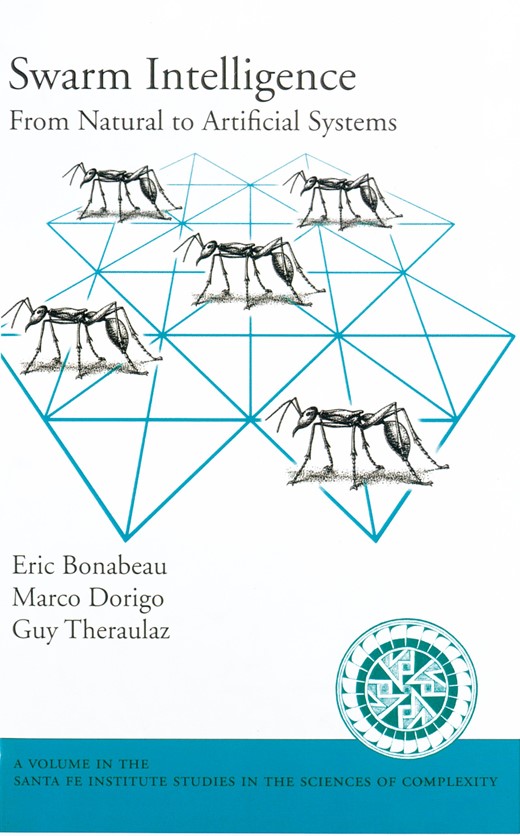
Swarm Intelligence: From Natural to Artificial Systems
Abstract. Social insects--ants, bees, termites, and wasps--can be viewed as powerful problem-solving systems with sophisticated collective intelligence. Co
The AI Scaling Problem
Headlong: a microharness for persistent agents
Self-guided agents that think continuously

When Is Collective Intelligence a Lottery? Multi-Agent Scaling Laws for Memetic Drift in LLMs
Multi-agent systems powered by large language models (LLMs) are increasingly deployed in settings that shape consequential decisions, both directly and indirectly. Yet it remains unclear whether their outcomes reflect collective reasoning, systematic bias, or mere chance. Recent work has sharpened this question with naming games, showing that even when no individual agent favors any label a priori, populations rapidly break symmetry and reach consensus. Here, we reveal the mechanism by introducing a minimal model, Quantized Simplex Gossip (QSG), and trace the microscopic origin of this agreement to mutual in-context learning. In QSG, agents maintain internal belief states but learn from one another's sampled outputs, so one agent's arbitrary choice becomes the next agent's evidence and can compound toward agreement. By analogy with neutral evolution, we call this sampling-driven regime memetic drift. QSG predicts a crossover from a drift-dominated regime, where consensus is effectively a lottery, to a selection regime, where weak biases are amplified and shape the outcome. We derive scaling laws for drift-induced polarization as a function of population size, communication bandwidth, in-context adaptation rate, and agents' internal uncertainty, and we validate them in both QSG simulations and naming-game experiments with LLM populations. Together, these results provide a framework for studying the collective mechanisms of social representation formation in multi-agent systems.

Scale CogSci
Scaling cognitive science through agentic pipelines, richer data, and automated discovery.
Designing AI for Disruptive Science
Why scaling AI won’t automatically lead to paradigm shifts.

Will we have a theory for in-the-wild AI agents? - undisciplinary
Thoughts after writing a sociology-meets-physics-meets-agents paper I just put out a preprint out on a theory of role emergence in multi-agent systems (soci…