

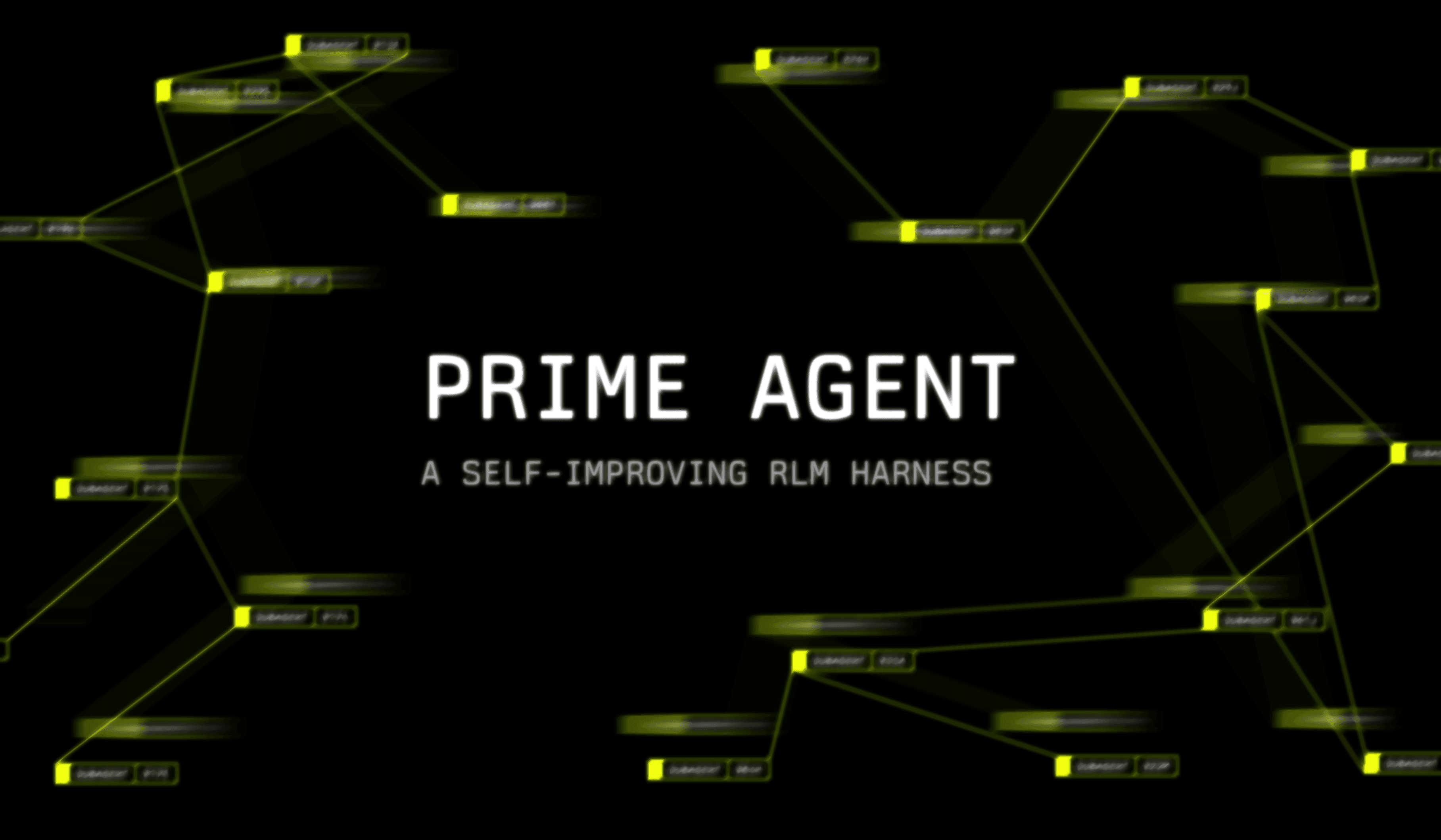
Prime Agent is our open-source, self-improving coding harness built around two abstractions: the Recursive Language Model (RLM) and the Continual Harness. With Opus 5, it achieves 95.5% on ARC-AGI-3, surpassing the reported human expert baseline.
PrimeIntellect-ai/prime-agent
A self-improving RLM agent for coding workflows and long-running autonomous tasks.
Prime Intellect - The Open Stack for Self-Improving Agents
The compute and infrastructure platform for you to train, evaluate, and deploy your own agentic models.
Prime Intellect - The Open Stack for Self-Improving Agents
The compute and infrastructure platform for you to train, evaluate, and deploy your own agentic models.
How to harness AI
"Coding agents" are complicated but intelligible

🔎 prime agent harness - Google Search
Agent Skills
AI coding agents take the shortest path to done, which usually means skipping the specs, tests, and reviews that make software reliable at scale. Agent Skill...
Scaling long-running autonomous coding · Cursor
We've been experimenting with running coding agents autonomously for weeks at a time.
Introducing Mods: Enabling Agents to Self-Improve through Harness-Level Adaptation
We’re introducing Mods to Letta Code — an agent-friendly way to extend and adapt the Letta Code harness.

OpenCode Zen | A curated set of reliable optimized models for coding agents
OpenCode - The open source coding agent.
Open Coding Agents: Fast, accessible coding agents that adapt to any repo | Ai2
SERA is the first in our family of Open Coding Agents, achieving state-of-the-art performance at low cost.
SWE-Bench Pro: Can AI Agents Solve Long-Horizon Software Engineering Tasks?
Large Language Model (LLM) agents have been widely adopted in modern software development workflows. SWE-bench [13] and related works [23, 24, 22, 25, 15] establish the task of issue resolution as a de-facto standard for assessing their capability and usefulness. In this setting, an agent is given an entire codebase, a task description (e.g., a bug report or feature request) in natural language and is instructed to produce a code patch that resolves the issue and passes the repository’s test suite. These benchmarks have been instrumental in demonstrating both the substantial potential and the persistent limitations of current models as SWE agents.
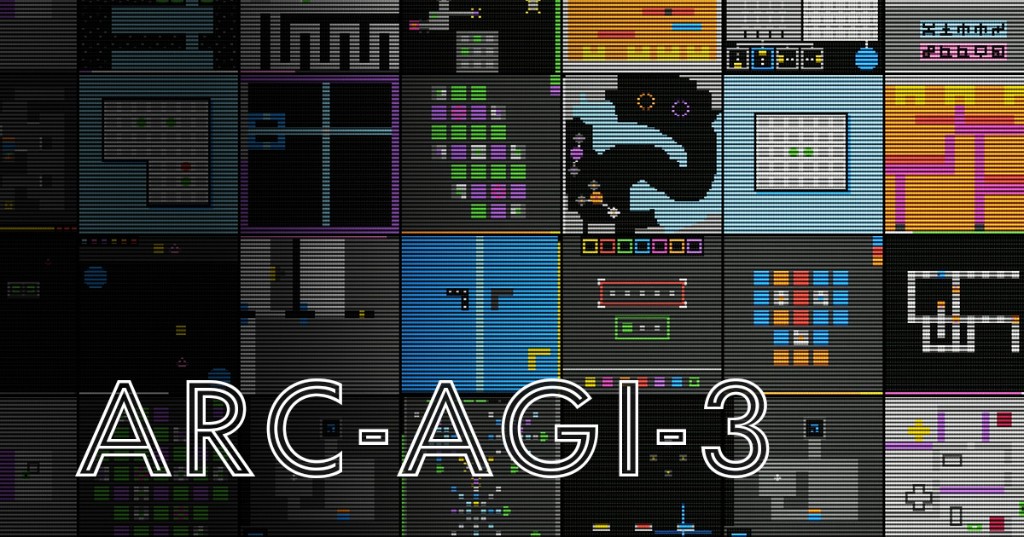
ARC-AGI-3
ARC-AGI-3 is the first interactive reasoning benchmark for AI agents—play as humans and build agents that learn in novel environments.
Rachel Thomas on Twitter / X
"We argue for a reorientation from autonomous to human-centered coding agents: systems designed not only to complete tasks, but to collaborate effectively with people."@ZhiruoW @jyangballin @KLierethttps://t.co/ncWiAUxwbo 1/— Rachel Thomas (@math_rachel) October 20, 2026