


Real-name policies have existed for over a decade, but these problems have become exponentially harmful in today's world. It's time to fight back against this unsafe and discriminatory privacy-invasive practice.
The Right to Anonymity is Vital to Free Expression: Now and Always
“There are myriad reasons why individuals may wish to use a name other than the one they were born with. They may be concerned about threats to their lives or livelihoods, or they may risk political

Anonymity, pseudonymity, and the agency of online identity: Examining the social practices of r/Gonewild
A debate is currently raging regarding the value of anonymity online. On one side of the debate is Facebook, the world’s largest social network site. Facebook demands that people use their real names and is one of the leading forces behind the push towards a “real name” Internet. On the other side of the debate are scholars such as danah boyd and Bernie Hogan and sites such as 4chan and Reddit that view anonymity and pseudonymity as important to how people construct identity online. While much has been written about the benefits of anonymity and pseudonymity, there is a lack of published research examining specific practices enabled by pseudonyms. This paper provides a detailed account of the behaviors enabled through pseudonymous identity construction through a case study of the subreddit r/gonewild. The main contribution of the article is to provide a specific account of the costs of a totalizing embrace of the “real name” Internet.
Anonymity, pseudonymity, and the agency of online identity: Examining the social practices of r/Gonewild
A debate is currently raging regarding the value of anonymity online. On one side of the debate is Facebook, the world’s largest social network site. Facebook demands that people use their real names and is one of the leading forces behind the push towards a “real name” Internet. On the other side of the debate are scholars such as danah boyd and Bernie Hogan and sites such as 4chan and Reddit that view anonymity and pseudonymity as important to how people construct identity online. While much has been written about the benefits of anonymity and pseudonymity, there is a lack of published research examining specific practices enabled by pseudonyms. This paper provides a detailed account of the behaviors enabled through pseudonymous identity construction through a case study of the subreddit r/gonewild. The main contribution of the article is to provide a specific account of the costs of a totalizing embrace of the “real name” Internet.
Undocumented Feature
And it doesn't pop up a box every time asking you to use your real name. In fact, there's no way to set your name at all. You just have to keep reminding people who you are.

Real Names and Responsible Speech: The Cases of South Korea, China, and Facebook — Yale Journal of International Affairs
By David Caragliano Human psychology and market incentives make real name registration an unpalatable proposition both to netizens and to online service providers charged with implementing the policy. In time, this article argues, internet policy makers will conclude that real nam

Trolling democracy: anonymity doesn’t cause conflicts, bad site design does
‘Don’t feed the trolls’, people on social media are told. By forcing people to use their real names online, the managers of online forums hope to shame trolls into silence. But, J…

Katika Kühnreich (@Katika@chaos.social)
Attached: 1 image #SocialMedia of #realnameregistration , oh sorry, they call it real #humans , that advertises with " #AI " #slop #wsocial is more than problematic And already has #bots crawling it's #network Now they show that they are problematic concerning #aesthetics as well & advertise with tasteless #aislop @bildoperationen@tldr.nettime.org #realnameregistration is highly dangerous & if the company that wants to have your most private data can't save there net from bots they're not very trustworthy, are they? #tech

Why does Google+ insist on having your real name?
Google+ is the latest social network to demand people's real names. But why do they need them?

Deliberation and Identity Rules: The Effect of Anonymity, Pseudonyms and Real-Name Requirements on the Cognitive Complexity of Online News Comments
How do identity rules influence online deliberation? We address this question by drawing on a data set of 45 million comments on news articles on the Huffington Post from January 2013 to May 2015. At the beginning of this period, the site allowed commenting under what we call non-durable pseudonyms. In December 2013, Huffington Post moved to regulate its forum by requiring users to authenticate their accounts. And in June 2014, Huffington Post outsourced commenting to Facebook altogether, approximating a ‘real-name’ environment. We find a significant increase in the cognitive complexity of comments (a proxy for one aspect of deliberative quality) during the middle phase, followed by a decrease following the shift to real-name commenting through Facebook. Our findings challenge the terms of the apparently simple trade-off between the goods and bads of anonymous and real-name environments and point to the potential value of durable pseudonymity in the context of online discussion.

Deliberation and Identity Rules: The Effect of Anonymity, Pseudonyms and Real-Name Requirements on the Cognitive Complexity of Online News Comments
How do identity rules influence online deliberation? We address this question by drawing on a data set of 45 million comments on news articles on the Huffington Post from January 2013 to May 2015. At the beginning of this period, the site allowed commenting under what we call non-durable pseudonyms. In December 2013, Huffington Post moved to regulate its forum by requiring users to authenticate their accounts. And in June 2014, Huffington Post outsourced commenting to Facebook altogether, approximating a ‘real-name’ environment. We find a significant increase in the cognitive complexity of comments (a proxy for one aspect of deliberative quality) during the middle phase, followed by a decrease following the shift to real-name commenting through Facebook. Our findings challenge the terms of the apparently simple trade-off between the goods and bads of anonymous and real-name environments and point to the potential value of durable pseudonymity in the context of online discussion.
The UK’s War on Anonymity Has Come to America — Effort
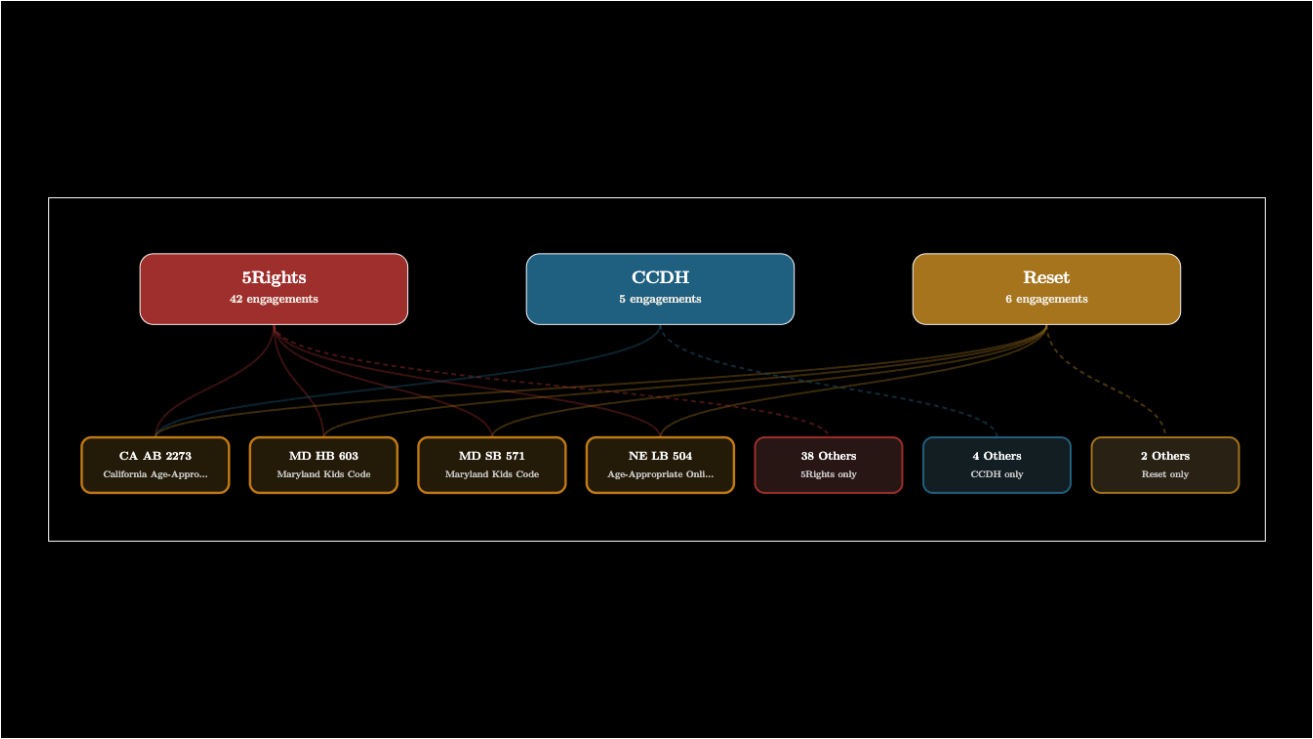
The NGOs Behind Britain's Digital ID Laws are Targeting American Statehouses
Katika Kühnreich (@Katika@chaos.social)
@BerserkEd_PT@masto.pt @_elena@mastodon.social @aral@mastodon.ar.al One #problem with #realnameregistration is that it can be used as an #ID for governmental services as well That is what you could call a #thecirclescenario Another problem is the #superapp In #China it became nearly impossible to exist without the #微信 #app , known as #WeChat internationally If you analyse what #AnnaZeiter said in interviews there are possibilities they want #WSocial to become a #superapp I'll write it in more detail, in the future, I promise…
Constructing and enforcing "authentic" identity online: Facebook, real names, and non-normative identities
Despite the participatory and democratic promises of Web 2.0, many marginalized individuals with fluid or non-normative identities continue to struggle to represent themselves online. Facebook users, in particular, are told to use “authentic identities,” an idea reinforced throughout the site’s documentation, “real name” and other policies, and in public statements by company representatives. Facebook’s conception of authenticity and real names, however, has created problems for certain users, as demonstrated by the systematic deactivation of many accounts belonging to transgender and gender variant users, drag queens, Native Americans, abuse survivors, and others. In view of the struggles of marginalized users, Facebook policy appears paradoxical: the site simultaneously demands authenticity yet proscribes certain people from authentic self-presentation. In this work, we examine Facebook’s construction of “authenticity” and show how it excludes multifaceted, fluid, or non-normative identities. Using content analysis and close reading, we analyze site documentation and data from The Zuckerberg Files (an online archive of Facebook founder and CEO Mark Zuckerberg’s public remarks) to understand the platform’s mechanisms for enforcing authenticity. We find that Facebook positions itself as a type of administrative identity registrar, raising vital questions regarding the ethics and consequences of identity enforcement online today.
Constructing and enforcing "authentic" identity online: Facebook, real names, and non-normative identities
Despite the participatory and democratic promises of Web 2.0, many marginalized individuals with fluid or non-normative identities continue to struggle to represent themselves online. Facebook users, in particular, are told to use “authentic identities,” an idea reinforced throughout the site’s documentation, “real name” and other policies, and in public statements by company representatives. Facebook’s conception of authenticity and real names, however, has created problems for certain users, as demonstrated by the systematic deactivation of many accounts belonging to transgender and gender variant users, drag queens, Native Americans, abuse survivors, and others. In view of the struggles of marginalized users, Facebook policy appears paradoxical: the site simultaneously demands authenticity yet proscribes certain people from authentic self-presentation. In this work, we examine Facebook’s construction of “authenticity” and show how it excludes multifaceted, fluid, or non-normative identities. Using content analysis and close reading, we analyze site documentation and data from The Zuckerberg Files (an online archive of Facebook founder and CEO Mark Zuckerberg’s public remarks) to understand the platform’s mechanisms for enforcing authenticity. We find that Facebook positions itself as a type of administrative identity registrar, raising vital questions regarding the ethics and consequences of identity enforcement online today.
Online anonymity

“There's plenty of research in this topic area that shows hate speech doesn't decline when real-name policies are in effect, in fact usually the inverse, and the diversity of people contributing to conversations decreases” — bsky.app/profile/did:plc:5w4eqcxzw5jv5…
Real-Name Policies: The War Against Pseudonymity
Real Names and Responsible Speech: The Cases of South Korea, China, and Facebook — Yale Journal of International Affairs
Deliberation and Identity Rules: The Effect of Anonymity, Pseudonyms and Real-Name Requirements on the Cognitive Complexity of Online News Comments
Digital Social Norm Enforcement: Online Firestorms in Social Media
Why does Google+ insist on having your real name?
doi.org