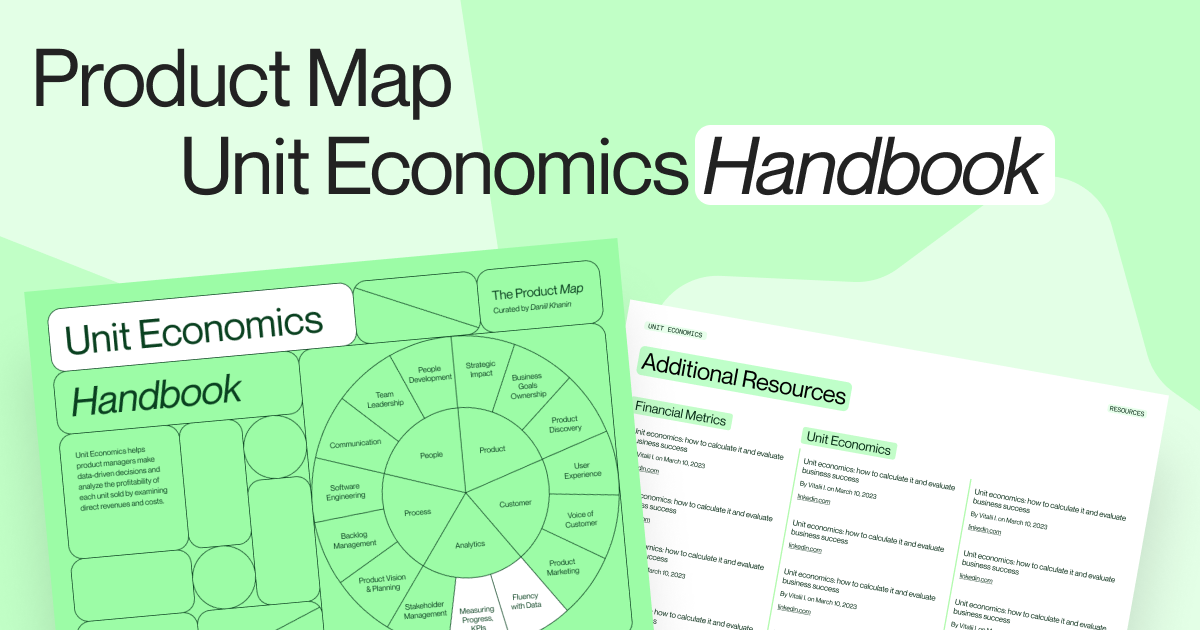
Unit Economics Handbook is a valuable resource for product managers and entrepreneurs, offering practical insights into calculating and optimizing financial metrics across various business models. This comprehensive guide features the Unit Economics Canvas, a structured tool for analyzing and improving the profitability of business units.
How to Price Effectively: A Guide for Managers and Entr…
Pricing decisions are among the most important and impa…

Good Product Manager/Bad Product Manager | Andreessen Horowitz
Warning: This document was written 15 years ago and is probably not relevant for today’s product managers. I present it here merely as an example of a useful training document. Good product managers know the market, the product, the product line and the competition extremely well and operate from a strong basis of knowledge and...

Wardley map
A Wardley map is a map for business strategy.[1] Components are positioned within a value chain and anchored by the user need, with movement described by an evolution axis.[2] Wardley maps are named after Simon Wardley who created the technique at Fotango in 2005 having created the evolutionary framing the previous year.[3][4] The technique was further developed within Canonical UK between 2008 and 2010[5][independent source needed] and components of mapping can be found in the "Better for Less" paper published in 2010.[6]
"Greedflation" and the Profits Equation
The assumption behind the "greedflation" thesis is that companies are choosing to squeeze volumes because they care more about unit margins than total profits. There are other possibilities.

Sustainable Sources of Competitive Advantage
This article originally appeared on Fortune.com.

How to not screw up your product strategy | Jade Rubick - Engineering Leadership
An overview of common mistakes people make while developing a product strategy, tips for creating a successful strategy, and how to communicate and execute on a product strategy.

30 Revenue model cards (B2B)
Explore these revenue model examples for B2B, and find new ways your organization could be making money.
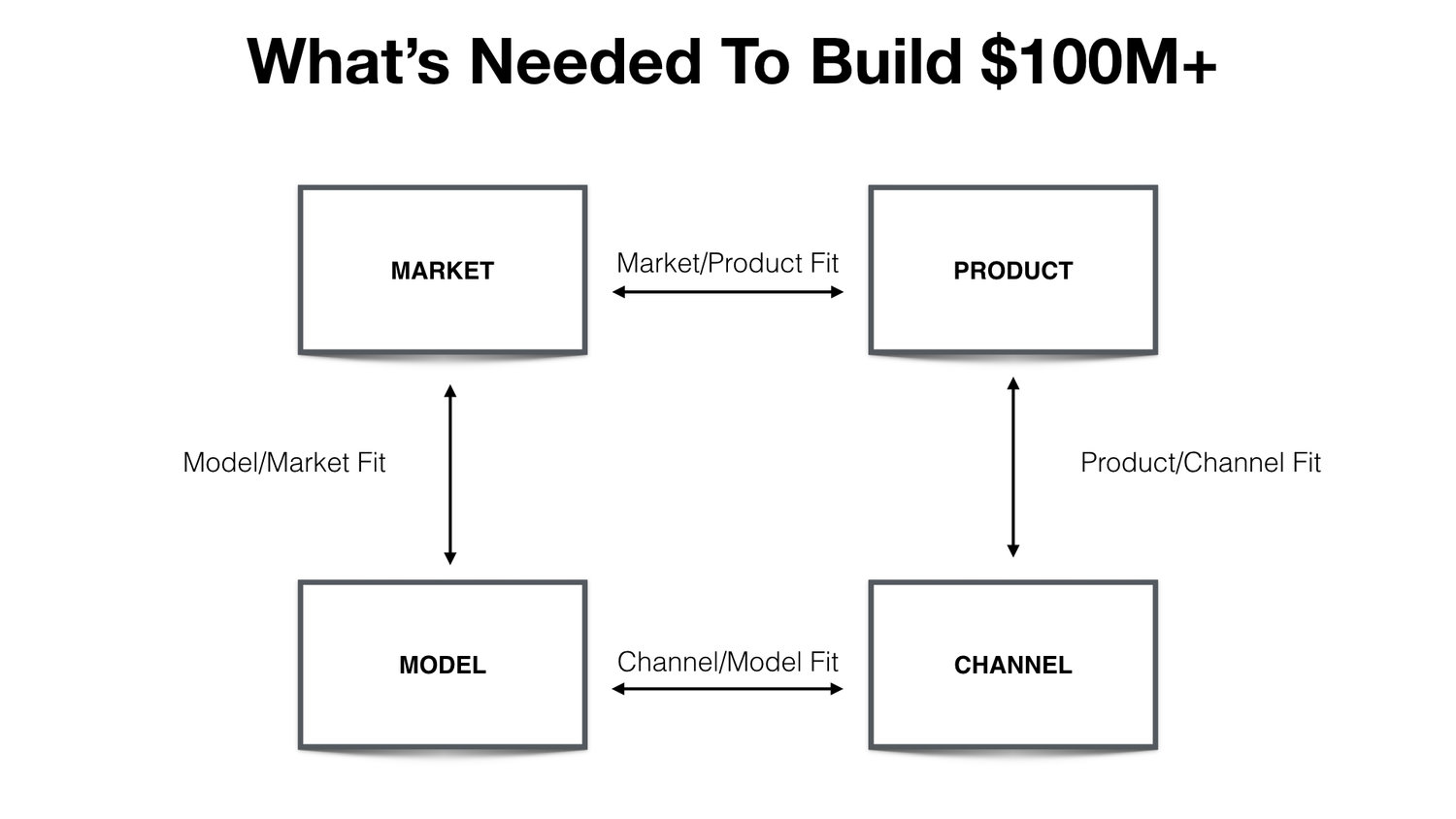
Why Product Market Fit Isn't Enough — Brian Balfour
I’ve been lucky to have been part of building, advising, or investing in 40+ tech companies in the past 10 years. Some $100M+ wins. Some, complete losses. Most end up in the middle. One of my main observations is that there are certain companies where growth seems to come easily, like gui

The Last Business System You'll Ever Need
I like to envision businesses as manufacturing machines. You put something in one end and then it goes through all these defined processes of the business and then it comes out the other end as profit (or not). Depending on how those processes work, you get something different out the backend. The manufacturing machine analogy makes sense to me because it's easier to see why you should always be working on the business, not in the business.

Feature / Product / Business: A Framework for Sustainable ATProto Projects | ATmosphereConf VODs
The ATProto community built a ton of great features and products over the past year! For our next trick, let's mature them into products and businesses. In this talk, you'll get a practical framework for understanding whether what you're building should be a feature, product, or business, plus concrete funding models at each layer to keep your work going and growing. (More in this thread: https://bsky.app/profile/mosh.bsky.social/post/3mckiat2ne22q)