


What the Democratic party needs - what it demands - is bold, persistent experimentation
An Examination of Ranked Choice Voting in the United States, 2004-2022
From the perspective of social choice theory, ranked-choice voting (RCV) is known to have many flaws. RCV can fail to elect a Condorcet winner and is susceptible to monotonicity paradoxes and the spoiler effect, for example. We use a database of 182 American ranked-choice elections for political office from the years 2004-2022 to investigate empirically how frequently RCV's deficiencies manifest in practice. Our general finding is that RCV's weaknesses are rarely observed in real-world elections, with the exception that ballot exhaustion frequently causes majoritarian failures.

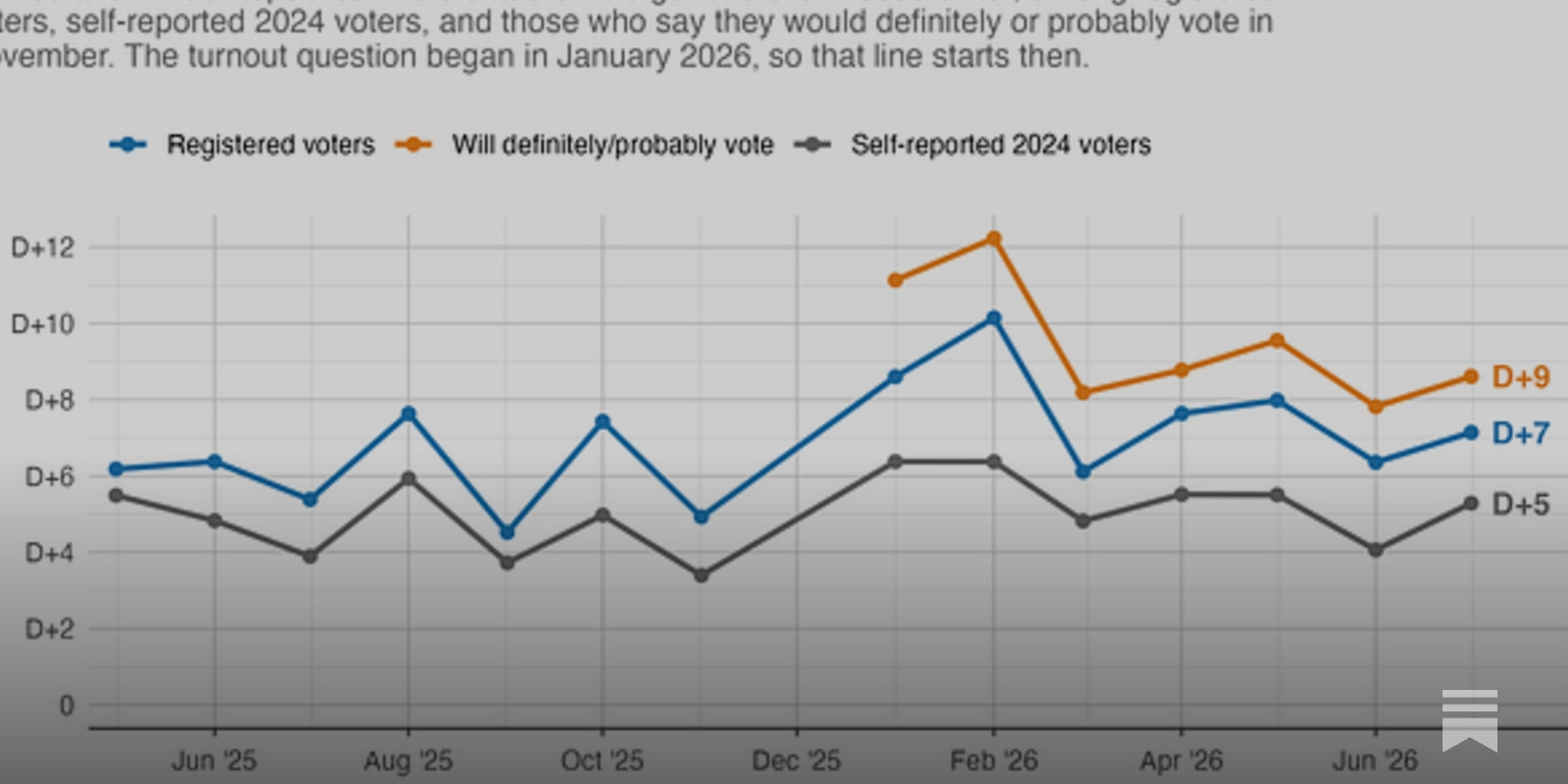
Likely voters lean more Democratic for November's midterms, a change from past cycles
In every wave of our poll this year, screening for likely voters has nudged the congressional generic ballot a point or two bluer
Opinion | Give ranked voting a shot. Our democracy would benefit.
Ranked-choice voting empowers the majority by allowing voters to order their choices.

Five Dimensions of Scaling Democratic Deliberation: With and Beyond AI
DemocracyNext's new paper on Five dimensions of scaling democratic deliberation: With and beyond AI
Correlates of the Mamdani Vote
No class gradient is a big win for democratic socialism

Proportional Representation Would Fix That
We can change the structure of elections in America to make them more free, more democratic, and more fair to every voter.
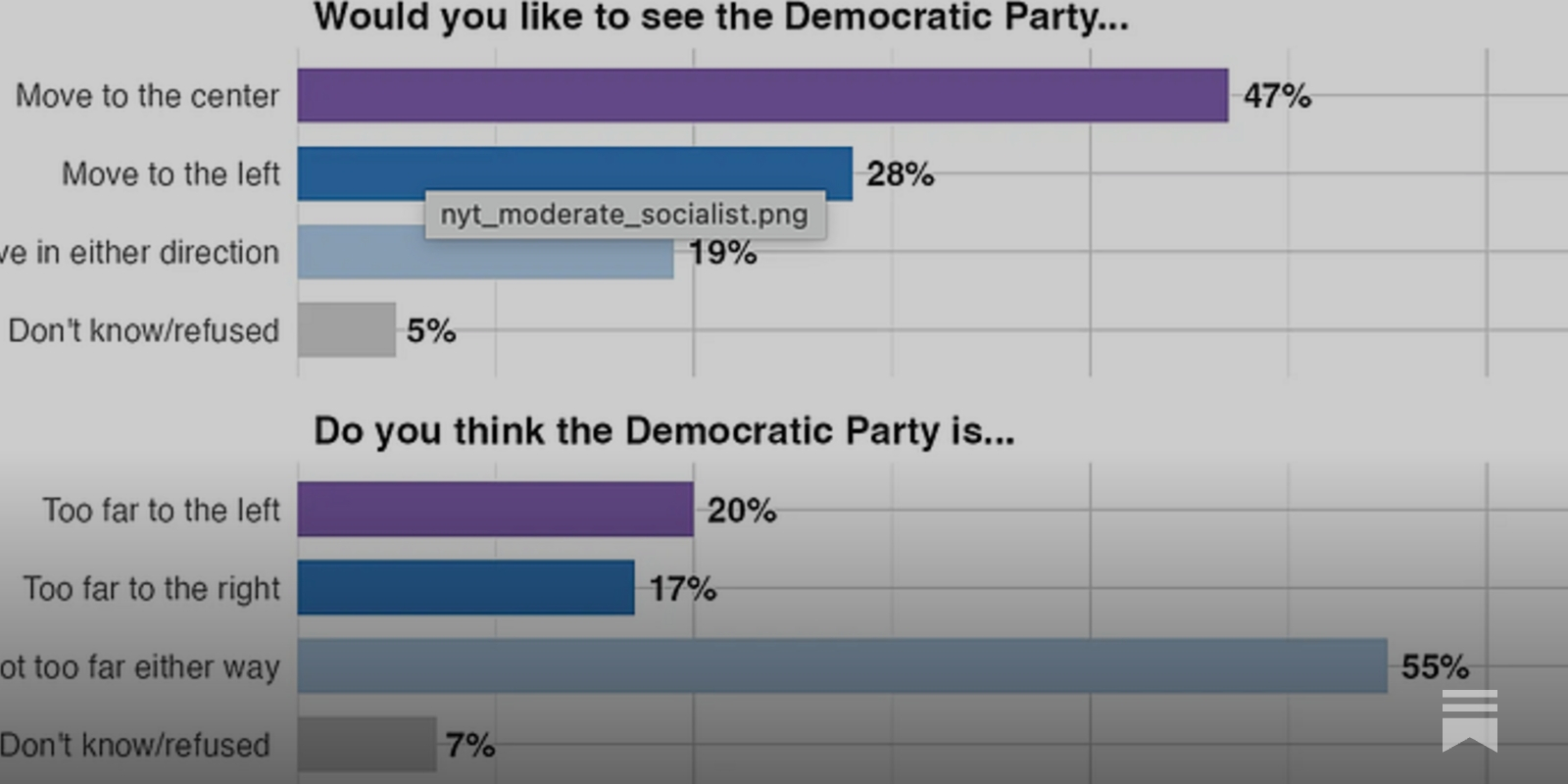
Democratic voters want the party to be more moderate — and more socialist?
The trouble with polling about ideological labels
Priorities | celeste4sos.com
The right to vote, better representation and election integrity.

Do AI and bogus respondents threaten polling’s future?
Courtney Kennedy, vice president of methods and innovation, answers some common questions about the current polling landscape in the U.S.

Legitimize or Delegitimize? Mainstream Party Strategy toward (Former) Pariah Parties and How Voters Respond
Mainstream parties have often shifted from initially portraying new competitors as undemocratic pariahs (i.e., a delegitimizing strategy) to portraying the same parties later as democratic (i.e., a legitimizing strategy). I argue that voters follow mainstream parties’ legitimizing strategies in their legitimacy evaluations of these parties. I investigate this argument with two independent survey experiments and a quantitative media content analysis in two countries that differ sharply in the nature of party competition—from mainstream parties delegitimizing a far-right party (i.e., Germany) to mainstream parties legitimizing it (i.e., Sweden). I find strong evidence that (a) mainstream parties can effectively legitimize pariah parties in the eyes of voters, (b) turning back to delegitimization has little effect, (c) legitimization is no less effective in the face of a third party’s delegitimizing strategy, and (d) legitimization resonates beyond co-partisans. The results suggest that mainstream party legitimization of pariah parties has far-reaching consequences.

Reimagining American Elections to Combat Gerrymandering
Read the latest by Democracy Docket.

The Twilight of the Polls? A Review of Trends in Polling Accuracy and the Causes of Polling Misses
Polls have had a number of high-profile misses in recent elections. We review the current polling environment, the performance of polls in a historical context, the mechanisms of polling error, and the causes of several recent misses in Britain and the US. Contrary to conventional wisdom, polling errors have been constant over time, although the level of error has always been substantially beyond that implied by stated margins of error. Generally, there is little evidence that voters lying about their vote intention (so-called ‘shy’ voters) is a substantial cause of polling error. Instead, polling errors have most commonly resulted from problems with representative samples and weighting, undecided voters breaking in one direction, and to a lesser extent late swings and turnout models. We conclude with a discussion of future directions for polling both in terms of fixing the problems identified and new approaches to understanding public opinion.

The Minimal Persuasive Effects of Campaign Contact in General Elections: Evidence from 49 Field Experiments
Significant theories of democratic accountability hinge on how political campaigns affect Americans’ candidate choices. We argue that the best estimate of the effects of campaign contact and advertising on Americans’ candidates choices in general elections is zero. First, a systematic meta-analysis of 40 field experiments estimates an average effect of zero in general elections. Second, we present nine original field experiments that increase the statistical evidence in the literature about the persuasive effects of personal contact tenfold. These experiments’ average effect is also zero. In both existing and our original experiments, persuasive effects only appear to emerge in two rare circumstances. First, when candidates take unusually unpopular positions and campaigns invest unusually heavily in identifying persuadable voters. Second, when campaigns contact voters long before election day and measure effects immediately—although this early persuasion decays. These findings contribute to ongoing debates about how political elites influence citizens’ judgments.

The Internet Doesn’t Have to Be Bad for Democracy
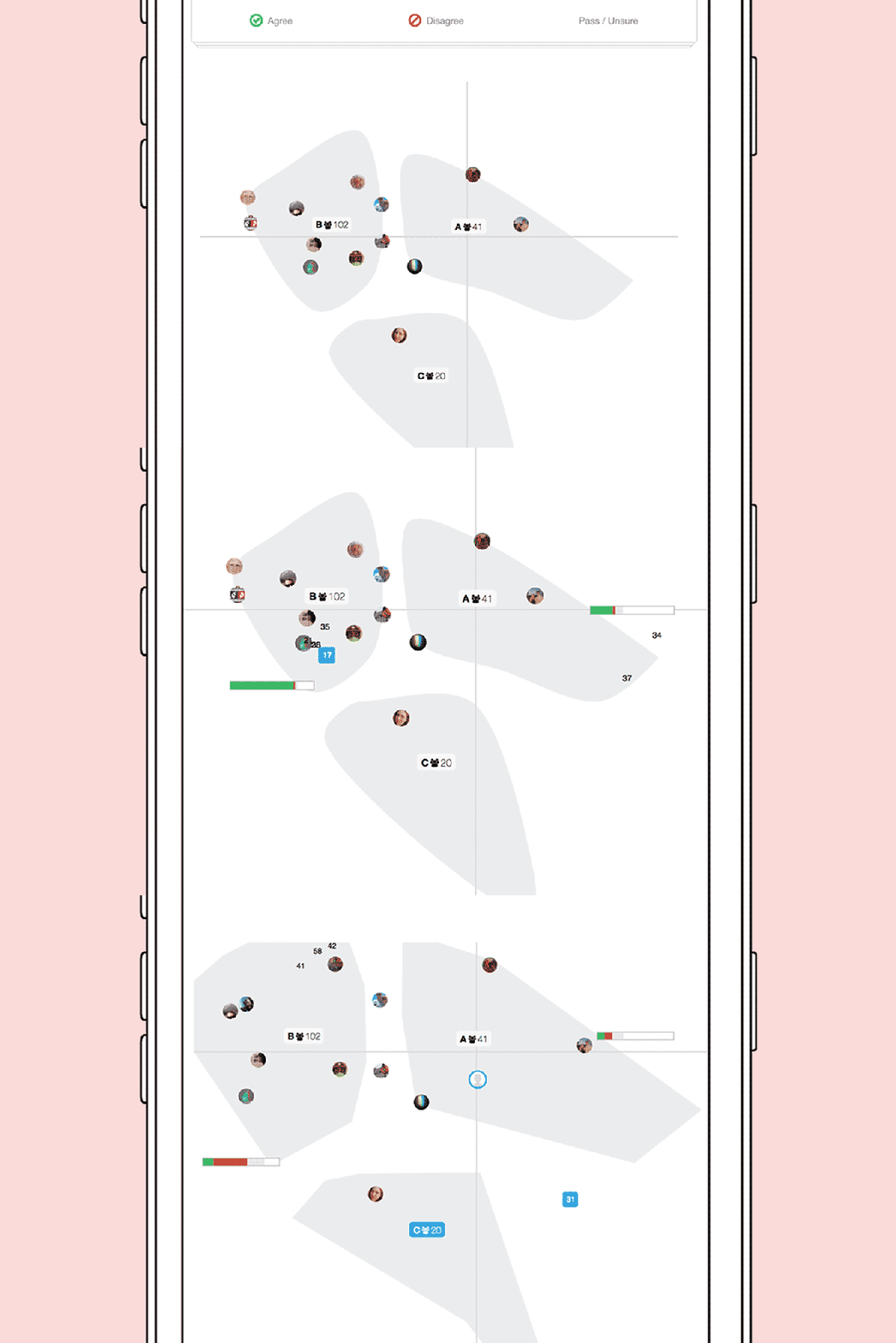
A new form of online survey uses crowdsourcing and data visualization to reveal the hidden nuances in partisan debates.
New YouGov/Economist poll out this AM has Democrats up 11 points on the House vote among likely voters. This is with named candidates, not the usual "generic ballot," which in my testing with CES data is typically more accurate in forecasting outcomes d3nkl3psvxxpe9.cloudfront.net/documents/econTabReport_SlcWd…
