

Authoritative, general, prolific: pick any two.
Nadia Eghbal, Re: Writing Hypertext
My digichat with @nayafia---an essential writer (*imho*) of texts, notes and wonderful roundups.

ATProto Reputation
Self-declaration of what you are. Published once, describes your nature. Necessary but not sufficient.
The Golden Rule for Becoming a Better Writer - T.R Napper
I’m obsessed with the craft of writing. I write every day, I read about the craft often, and in my...

Project Rachel: Can an AI Become a Scholarly Author?
This paper documents Project Rachel, an action research study that created and tracked a complete AI academic identity named Rachel So. Through careful publication of AI-generated research papers, we investigate how the scholarly ecosystem responds to AI authorship. Rachel So published 10+ papers between March and October 2025, was cited, and received a peer review invitation. We discuss the implications of AI authorship on publishers, researchers, and the scientific system at large. This work contributes empirical action research data to the necessary debate about the future of scholarly communication with super human, hyper capable AI systems.


A Text Renaissance
There is a renaissance underway in online text as a medium. The Four Horsemen of this emerging Textopia are: Roam , a hypertext publishing platform best…

The TLS and Generative AI: Editorial guidelines
Dated: May 1, 2026 These guidelines outline the TLS’s approach to artificial intelligence (AI), based on the standards of literary excellence we have
Ontology is Overrated: Categories, Links, and Tags - Clay Shirky
Based on two talks I gave in the spring of 2005—one entitled "Ontology Is Overrated", and one entitled "Folksonomies & Tags: The rise of user-developed classification."
A New Paradigm for Scientific Publishing, Peer Review, and Impact Assessment
Scientific publishing and peer review have evolved little in three centuries, while the demands placed on them have grown profoundly. The growing role of artificial intelligence has underscored deep, systemic shortcomings of an aging system that has largely evaded innovation, a system whose origins are appallingly closer to the invention of the printing press than to the internet. We can do better – much better. This article is intended as the beginning of a communal experiment: a living document that critically reviews the modern academic publishing and peer-review system and presents a concrete framework to address what bibliometrics experts¹ have characterized as "the pervasive misapplication of indicators to the evaluation of scientific performance". Building on the Leiden Manifesto, DORA, and a body of scholarship spanning many disciplines and decades, we present a community-governed, non-profit platform organized around three trust-weighted impact factors, for articles, authors, and reviewers, with full algorithmic transparency, an open development log, and structural decoupling of credibility scoring from content moderation and from monetization. We invite the community to discuss, critique, and help shape it.
Agency Among Agents: Designing with Hypertextual Friction in the Algorithmic Web
Today's algorithm-driven interfaces, from recommendation feeds to GenAI tools, often prioritize engagement and efficiency at the expense of user agency. As systems take on more decision-making, users have less control over what they see and how meaning or relationships between content are constructed. This paper introduces "Hypertextual Friction," a conceptual design stance that repositions classical hypertext principles--friction, traceability, and structure--as actionable values for reclaiming agency in algorithmically mediated environments. Through a comparative analysis of real-world interfaces--Wikipedia vs. Instagram Explore, and Are.na vs. GenAI image tools--we examine how different systems structure user experience, navigation, and authorship. We show that hypertext systems emphasize provenance, associative thinking, and user-driven meaning-making, while algorithmic systems tend to obscure process and flatten participation. We contribute: (1) a comparative analysis of how interface structures shape agency in user-driven versus agent-driven systems, and (2) a conceptual stance that offers hypertextual values as design commitments for reclaiming agency in an increasingly algorithmic web.
Agency Among Agents: Designing with Hypertextual Friction in the Algorithmic Web
Today's algorithm-driven interfaces, from recommendation feeds to GenAI tools, often prioritize engagement and efficiency at the expense of user agency. As systems take on more decision-making, users have less control over what they see and how meaning or relationships between content are constructed. This paper introduces "Hypertextual Friction," a conceptual design stance that repositions classical hypertext principles--friction, traceability, and structure--as actionable values for reclaiming agency in algorithmically mediated environments. Through a comparative analysis of real-world interfaces--Wikipedia vs. Instagram Explore, and Are.na vs. GenAI image tools--we examine how different systems structure user experience, navigation, and authorship. We show that hypertext systems emphasize provenance, associative thinking, and user-driven meaning-making, while algorithmic systems tend to obscure process and flatten participation. We contribute: (1) a comparative analysis of how interface structures shape agency in user-driven versus agent-driven systems, and (2) a conceptual stance that offers hypertextual values as design commitments for reclaiming agency in an increasingly algorithmic web.
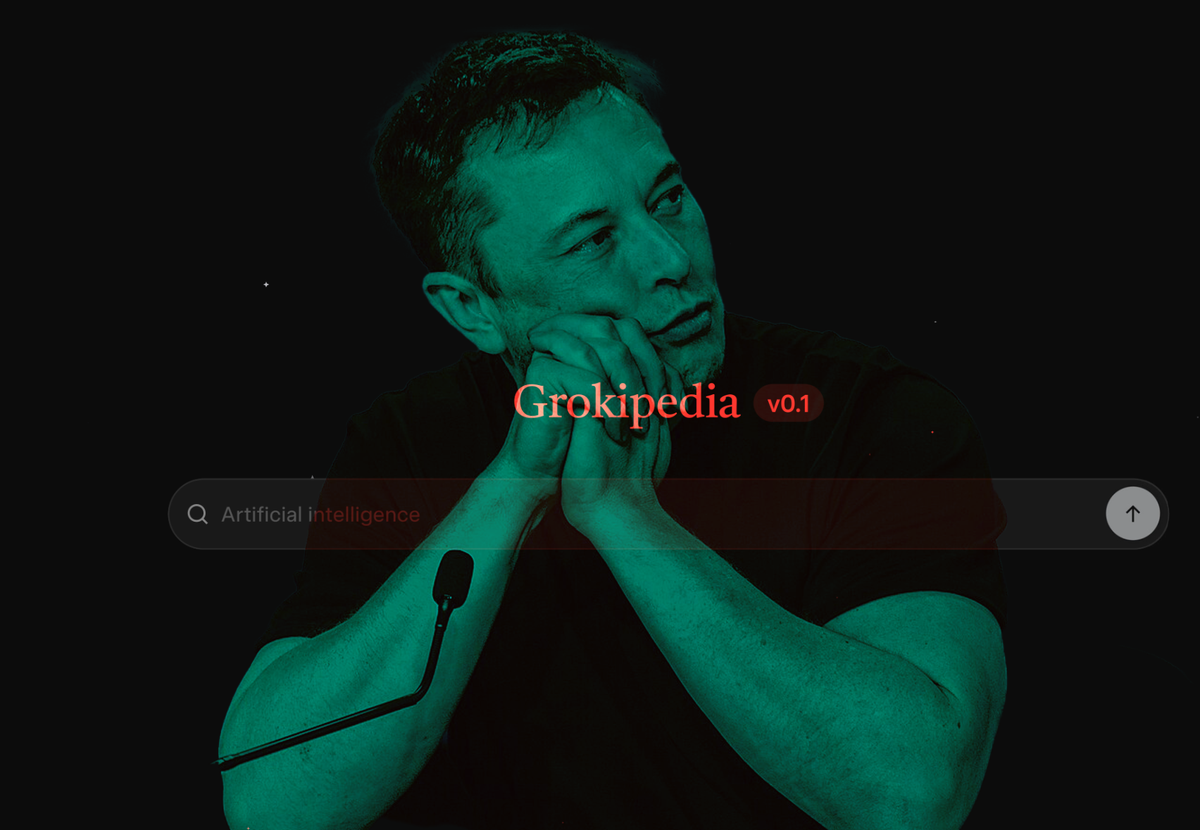
Grokipedia Is the Antithesis of Everything That Makes Wikipedia Good, Useful, and Human
Grokipedia is not a 'Wikipedia competitor.' It is a fully robotic regurgitation machine designed to protect the ego of the world’s wealthiest man.
What Was the Internet?
As AI overtakes the web, five writers reflect on how far it’s fallen and what comes next.

What Was the Internet?
As AI overtakes the web, five writers reflect on how far it’s fallen and what comes next.
Wikipedia Mining Algorithm Reveals The Most Influential People In 35 Centuries Of Human History
The top ranked men and women will surprise you
