


Outraged by the Jan. 6 Capitol riot, a wilderness survival trainer spent years undercover climbing the ranks of right-wing militias. He didn’t tell police or the FBI. He didn’t tell family or friends. The one person he told was a ProPublica reporter.
Left-Wing Group Too Disorganized For FBI Agents To Infiltrate
NEW YORK—Admitting that they had been working for several years without any discernible success, FBI agents confirmed Wednesday that a local left-wing political group was too disorganized to infiltrate. “We’ve had a few guys in there posing as members and trying to manipulate them into committing acts of violence we can arrest them for, but these people don’t ever do anything violent—they don’t ever do anything at all,” an undercover FBI agent told reporters, adding that the agency believed they’d made headway with turning the leader of the Liberation Socialists group into an informant until the guy didn’t show up to a meeting for months. “These people are incredibly disorganized. We try to attend their meetings to get them to unwittingly work on our behalf, but half the time no one shows up but the undercover agents, and the other half of the time the meetings are so confusing it’s impossible to follow what they’re actually trying to do. We also tried to sow division in their ranks to ensure that they couldn’t become powerful, but that didn’t work because these people already all fucking hate each other. They spend all their time arguing about minutiae, and most of the time when we try to talk them into doing something violent to the communal spaces in their community, they don’t even know where to go. They’re just a mess.” The FBI agent added that he was worried the left-wing organization was on to him, as he’d already aroused suspicion by interrupting a meandering discussion of principles with a straightforward plan of action.

Joaquin Sapien — ProPublica
ProPublica is an independent, non-profit newsroom that produces investigative journalism in the public interest.

Attorney: Homeland Security spied on Minnesotans who spoke out against ICE
Defense attorney Kevin Riach alleges that just four days after Alex Pretti was shot and killed by federal agents, that Homeland Security Investigations launched Operation Puppet Master. The agency couched this program in language about rooting out people they describe as “violent opportunists.”
FBI Eyed Susan Collins Over Defense Contractor’s Donations — ProPublica
After the FBI caught a defense contractor’s CEO making illegal campaign contributions, it sought to launch a sweeping political bribery probe involving Collins and others. Then the second Trump administration dismantled the unit handling the inquiry.

NewsGuild president writes to ProPublica management: Get serious on AI — ProPublica Guild
Artificial intelligence is guaranteed to shake up journalism in varied and unexpected ways. This could be a moment in which experienced journalists leverage a powerful new tool to produce even bigger and better investigations. Or it could be one in which management pivots to yet another new technolo

Bodyguard
A troubled war veteran is assigned to protect a controversial politician who may be the target of a terror plot.

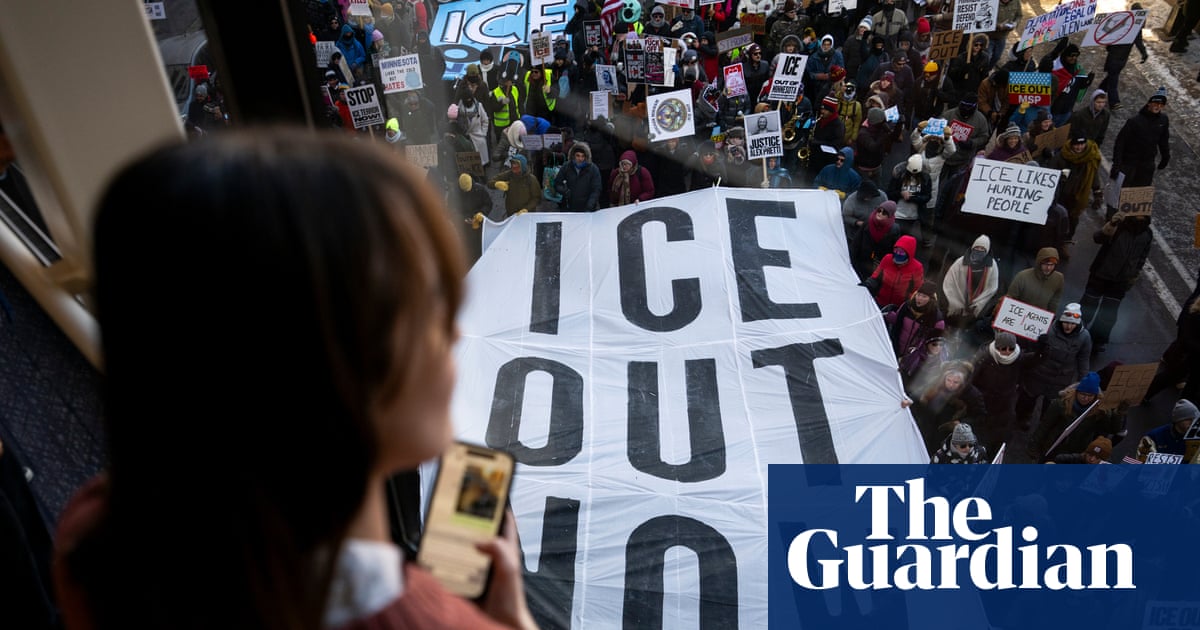
Revealed: How undercover agents spied on anti-ICE protesters in Minnesota
DHS officers posed as concerned citizens, joining Signal groups and taking photos of community meetings
Forget the FBI cache; the Podesta emails show how America is run | Thomas Frank
WikiLeaks’ dump of messages to and from Clinton’s campaign chief offer an unprecedented view into the workings of the elite, and how it looks after itself

Days of Rage: America's Radical Underground, the FBI, a…
From the bestselling author of Public Enemies & The Big…

How to Responsibly Report on Hacks and Disinformation
The run-up to the 2016 U.S. presidential election illustrated how vulnerable our most venerated journalistic outlets are to a new kind of information warfare. Reporters are a targeted adversary of foreign and domestic actors who want to harm our democracy. And to cope with this threat, especially in an election year, news organizations need to prepare for another wave of false, misleading, and hacked information. Often, the information will be newsworthy. Expecting reporters to refrain from covering news goes against core principles of American journalism and the practical business drivers that shape the intensely competitive media marketplace. In these cases, the question is not whether to report but how to do so most responsibly. Our goal is to give journalists actionable guidance.
FBI Raided Texas Activist’s House — Then Offered Her $200,000 to Become Antifa Informant
During the raid, federal agents asked about links between the woman and Prairieland — suggesting a sprawling conspiracy that fits with Trump’s attacks on antifa.
DOJ Using Gang, Terrorist Prosecutors To Ensure People Opposed To Trump Are Treated Like Gang Members, Terrorists
The authoritarianism has been out in the open pretty much since day one with this presidency. Things that leak out around the edges — unaccompanied by official statements, announcements, or r…

The Deepfake Defense—Exploring the Limits of the Law and Ethical Norms in Protecting Legal Proceedings from Lying Lawyers
Thousands of audiovisual images documented the insurrectionists who stormed the United States Capitol on January 6, 2021. Authorities subsequently collected those images and charged some for their criminal conduct. Given the overwhelming audiovisual evidence implicating the insurrectionists, it should be impossible to assert a plausible defense claiming that those unmistakably depicted in the images were not present. Right? Wrong. As the defense in the federal criminal trial of January 6th insurrectionist leader Guy Reffitt illustrated, the emergence of “deepfakes” has changed the landscape of plausible defenses to crimes. Reffitt led the attack on the Capital. Videos and other visual images showed him at the head of the crowd advancing on the Capitol’s West Terrace. He was arrested and charged with multiple crimes. And although the evidence, including audiovisual images, against Reffitt, was clear and overwhelming, his lawyer undermined it, arguing to the jury that the evidence against Reffitt was a “deepfake” – an audiovisual recording created using Artificial Intelligence technology that allows anyone with a smartphone to believably map one person’s movements and words onto the image of another person. Unfortunately, the law does not provide a clear response to Reffitt’s lawyer’s reliance on deepfakes as a defense. <br><br>But this much is clear—the “deepfake defense” is a new challenge to our legal system’s adversarial process and truth-seeking function. Because the norms of professional ethics require lawyers to advocate zealously, deepfakes invite lawyers to raise objections and arguments to evidence to exploit juror bias and skepticism about what is real. Thus, lawyers may plant the seeds of doubt in jurors’ minds to question the authenticity of all digital audio and visual images, even those counsel knows to be genuine.<br><br>Currently, no rule of procedure, ethics, or legal precedent directly addresses the presentation of the “deepfake defense” in court. The existing standards provide scant guidance because they were developed before the advent of deepfake technology. As a result, they do not solve the concern of how to deter lawyers from exploiting it. Although in the last several years, legal scholarship and the popular news media have addressed certain facets of deepfakes, there has been no in-depth commentary on the “deepfake defense.” This article is the first to explore the deepfake defense, locating it within the historical and current framework of lawyers’ efforts to fabricate evidence and the laws and the practice norms that exist to curb that conduct. It proposes a reconsideration of the ethical rules governing candor, fairness, and the limits of zealous advocacy and urges a re-examination of the court’s role in sanctioning such conduct. Thus, this article offers novel proposals to guide the way forward for lawyers and courts as they traverse this new technological landscape.

FROM KIRK TO A/I
For a detailed breakdown of our investigation check out our DEDICATED INVESTIGATION PAGE How a post-assassination campaign against "Antifa" moved through outside advocates, the White House, Congress and U.S. counterterrorism policy before…

Between Threat and Reality: The National Association for the Advancement of Colored People and the Emergence of Armed Self-Defense in Clarksdale and Natchez, Mississippi, 1960-1965
Annelieke Dirks, Between Threat and Reality: The National Association for the Advancement of Colored People and the Emergence of Armed Self-Defense in Clarksdale and Natchez, Mississippi, 1960-1965, Journal for the Study of Radicalism, Vol. 1, No. 1 (Spring 2007), pp. 71-98
Five Findings From the Army’s Artillery Factory Fiasco — ProPublica
ProPublica revealed how a rushed effort to arm Ukraine with artillery shells wasted half a billion dollars in taxpayer funding. Here are the biggest takeaways from that reporting.
