


When a health insurer refuses to pay for your treatment, you may have the right to have the denial reviewed — and potentially overturned — by an independent provider. Here are six steps experts suggest to help you through the external appeal process.
Claim denial rates from health insurers have been declining (maybe) - Kevin Drum
I'll have our last ACS chart later, but in the meantime I happened to run across some actual data about health insurer claim denial rates, the topic du jour since UnitedHealthcare CEO Brian Thompson was gunned down in broad daylight, allegedly in part because of his company's astronomical denial rate. These figures come from ACA transparency data and is limited…

Trump-appointed judges refuse to block Trump blacklisting of Anthropic AI tech
Appeals court denies Anthropic's emergency motion for a stay.

Jim Prosser on Twitter / X
Ask: "I just got a $2,800 bill for an ER visit I thought insurance covered. What happened?"Agent: Matches the bill to the insurer's explanation of benefits, flags discrepancies, checks coverage and financial aid, prepares a dispute, and follows up until it's resolved.— Jim Prosser (@jimprosser) October 8, 2026
Want More Policies Based on Evidence?
Medicine teaches us it will take time, effort, and investment.

PTAB Affirms §101 Rejection of Human Milk Product Claims
Patent Trial and Appeal Board Doubles Down on Natural Products Doctrine in Human Milk Case

Can Consumers Make Affordable Care Affordable? The Value of Choice Architecture
Tens of millions of people are currently choosing health coverage on a state or federal health insurance exchange as part of the Patient Protection and Affordable Care Act. We examine how well people make these choices, how well they think they do, and what can be done to improve these choices. We conducted 6 experiments asking people to choose the most cost-effective policy using websites modeled on current exchanges. Our results suggest there is significant room for improvement. Without interventions, respondents perform at near chance levels and show a significant bias, overweighting out-of-pocket expenses and deductibles. Financial incentives do not improve performance, and decision-makers do not realize that they are performing poorly. However, performance can be improved quite markedly by providing calculation aids, and by choosing a “smart” default. Implementing these psychologically based principles could save purchasers of policies and taxpayers approximately 10 billion dollars every year.
PTAB Reverses § 101 Rejection of Receptor-Derived Peptide Claims
The Patent Trial and Appeal Board (PTAB) Reverses 35 U.S.C. § 101 Subject Matter Eligibility Rejection of Receptor-Derived Peptide Claims
NY Times cited 29 times to justify decision limiting trans healthcare
Meanwhile, other mainstream media newsrooms treated the U.S. v. Skrmetti case as an opportunity to center coverage around the expected result.

Estimating Causal Effects of Treatments in Randomized and Nonrandomized Studies
Presents a discussion of matching, randomization, random sampling, and other methods of controlling extraneous variation. The objective was to specify the benefits of randomization in estimating causal effects of treatments. It is concluded that randomization should be employed whenever possible but that the use of carefully controlled nonrandomized data to estimate causal effects is a reasonable and necessary procedure in many cases.
The Oregon Health Insurance Experiment: Evidence from the First Year*
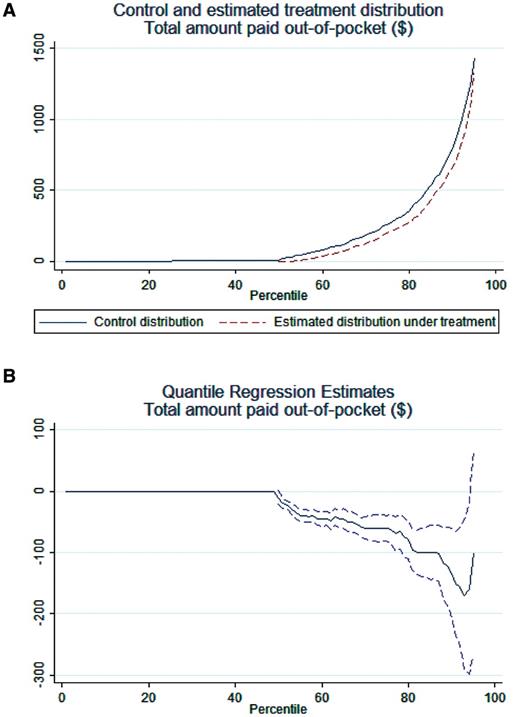
Abstract In 2008, a group of uninsured low-income adults in Oregon was selected by lottery to be given the chance to apply for Medicaid. This lottery provides an opportunity to gauge the effects of expanding access to public health insurance on the health care use, financial strain, and health of low-income adults using a randomized controlled design. In the year after random assignment, the treatment group selected by the lottery was about 25 percentage points more likely to have insurance than the control group that was not selected. We find that in this first year, the treatment group had substantively and statistically significantly higher health care utilization (including primary and preventive care as well as hospitalizations), lower out-of-pocket medical expenditures and medical debt (including fewer bills sent to collection), and better self-reported physical and mental health than the control group.
Environmental epidemiology in a crossfire
Two tendencies have emerged in environmental epidemiology that hamper the translation of research findings into prevention of environmental hazards. One is the increased focus on highlighting weaknesses of epidemiology research that is clearly meant to explain away the research conclusions and weaken their possible implications for interventions to control environmental hazards. Another is the voluminous amount of information sharing that involves a substantial amount of misinformation, as part of the ongoing infodemic. In this light, the appearance of the catalogue of doubt-raising strategies, indeed the worst practices of scientific inference, is good news. Collected under the auspices of the International Network for Epidemiology in Policy, it serves to illustrate the range of possible (and impossible) forms of critique that may be raised on behalf of vested interests or other groups who for some reason disagree with the epidemiological conclusions. We believe that this systematic list will be useful in our field and help to identify critiques of policy options that are hidden and sometimes suppressed in weighing the epidemiological evidence.

The Medium is the Message: How Non-Clinical Information Shapes Clinical Decisions in LLMs | Proceedings of the 2025 ACM Conference on Fairness, Accountability, and Transparency
There has been a growing interest in the HCI community to study Health, with particular focus in understanding healthcare practices and designing technologies to support and to enhance these practices. A majority of current health studies in HCI have ...

Your doctor’s AI notetaker may be making things up, Ontario audit finds
Made-up therapy referrals, incorrect prescriptions among the common mistakes.

PTAB Reverses §101 Rejection of Cannabis Composition Claims
Patent Trial and Appeal Board Finds That Cannabis Delivery System Is Not a Natural Product
Insurance claims to test Altman and Amodei liability for ‘rogue’ AI
Insurers and lawyers weigh the cost of potential massive lawsuits and damages against the leaders of OpenAI and Anthropic

Pro Se Plaintiff Caught Hiding Prompt Injections In Court Filings; Responds By Hiding More
There have now been dozens of stories of bad lawyers using AI results in filings, most of which show up in the form of fake case citations. That’s old hat at this point. But how about prompt …
