


Climate change is propelling enormous human migrations as it transforms global agriculture and remakes the world order — and no country stands to gain more than Russia.
The Coming Ecological Cold War
How the green transition is reshaping geopolitics

Russia Is Planning Its Most Powerful Blow Yet to Try to Freeze Ukraine
Ukraine showed European partners what it said were intercepted Russian plans to cut off major cities from power, heat and water this winter.

Climate Change is coming for Christmas
Stunted trees, pricey chocolate, threatened reindeer, scant snow—warming is taking a toll.

Climate change: The rich are to blame, international study finds
The Leeds University study looked at 86 countries and came to broadly the same conclusions about the rich.

How Climate Migration Will Reshape America (Published 2020)
Millions will be displaced in the coming decades by fires, hurricanes, extreme heat and rising seas. Where will they go?

Is population control the way to fix climate change? | CBC News
The argument some people present is that if there were fewer people on Earth, greenhouse gases would be reduced and climate change could be averted. But experts say population control isn't the panacea some might think.

The Gargantuan Lie That is Collapsing The World’s Climate
Thinking we have time left to address climate change, or that “Net Zero by 2050” will save us, is driving us toward full social collapse in ways that become more obvious with every new broken temperature record.


Appropriate Technology, Permacomputing, Post Growth, and Ecomodernism.
To adapt to the changing climate, we need to radically rethink how and why we do the things we do. From technology, to social movements, to economics. The world is at stake. And we can change it.
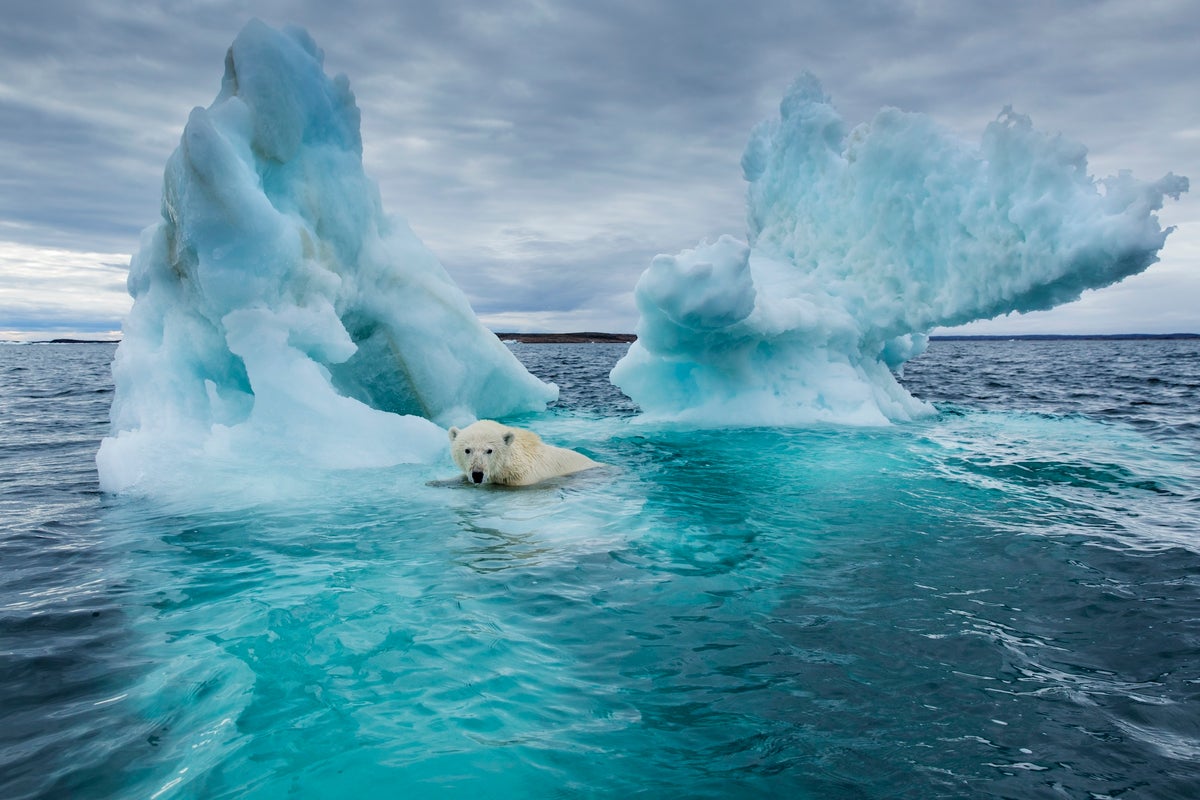
The Arctic Is in Dire Straits, 20 Years of Reporting Show
The Arctic has changed dramatically in the past 20 years, a new report shows, as temperatures skyrocket and ice rapidly melts
Show Your Stripes
Visualising how the climate has changed for every country across the globe
What's Really Warming the World?
What's Really Warming the World? Climate deniers blame natural factors; NASA data proves otherwise

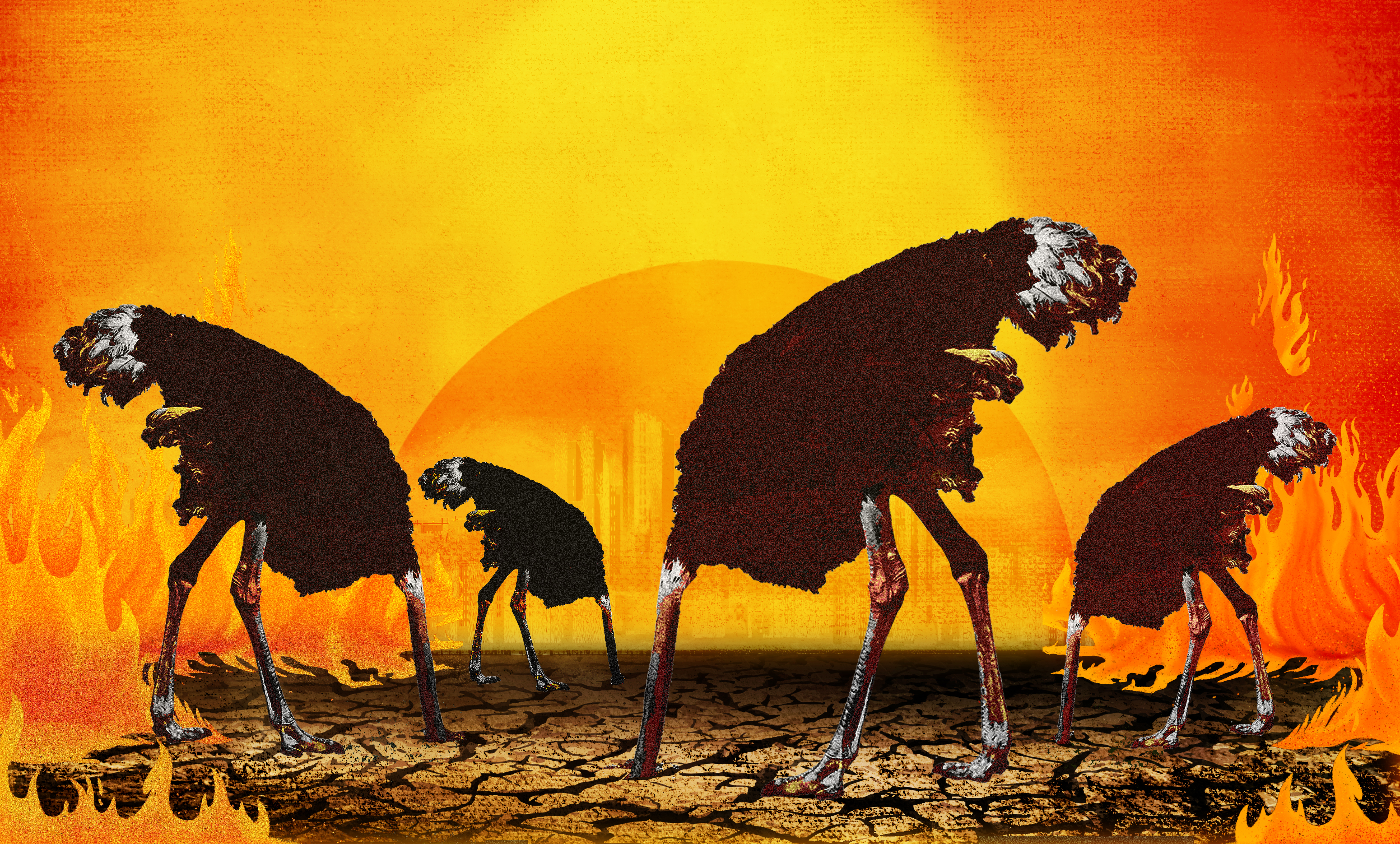
Natasha Walter: We’ve gone from climate denial to something worse – climate fatalism
The message in the western media, as global heating becomes undeniable, seems now to be that nothing can be done. That is unacceptable – especially for those in developing countries who are suffering so greatly from the crisis we created
Climate change
Present-day climate change includes both global warming—the ongoing increase in global average temperature—and its wider effects on Earth's climate system. Climate change in a broader sense also includes previous long-term changes to Earth's climate. The modern-day rise in global temperatures is driven by human activities, especially fossil fuel burning since the Industrial Revolution. Fossil fuel use, deforestation, and some agricultural and industrial practices release greenhouse gases. These gases absorb some of the heat that the Earth radiates after it warms from sunlight, warming the lower atmosphere. Earth's atmosphere now has roughly 50% more carbon dioxide, the main gas driving global warming, than it did at the end of the pre-industrial era, reaching levels not seen for millions of years.

A recent doubling of global warming rate signals a 1.5 °C breach by 2028
Timely and accurate projections of when global warming will exceed the Paris Agreement’s 1.5 °C threshold are essential for effective climate policy. Existing estimates place this exceedance in the early 2030 s but carry substantial uncertainty. Here we analyze the latest observational temperature records through 2025 and identify a statistically significant doubling of the global warming rate during 2011–2025 (0.40 °C per decade) compared to 1971–2025 (0.20 °C per decade). Extrapolating this accelerated rate projects a crossing of the 1.5 °C threshold by 2028, nearly a decade earlier than previous estimates. Regional analyses attribute this acceleration primarily to intensified warming over East Asia–the North Pacific, mid-latitude Eurasia, and the South Atlantic–Antarctic regions. The ensemble mean of 26 climate models fails to capture the observed doubling of the warming rate, simulating a rate of only 0.29 °C per decade. These findings suggest a narrower window remains to limit warming to 1.5 °C, underscoring the urgency for rapid and substantial reductions in greenhouse gas emissions.
Adaptation as a catalyst for social change - MACC Hub
Explore how transformational adaptation can address climate risk, inequality and austerity by investing in people, wellbeing and more resilient societies.
