

Increase engagement with high quality content
Prosocial Design Network
The Prosocial Design Network advocates for prosocial design: evidence-based design practices that bring out the best in human nature online.
.png)
Making the Case for Actionable Prosocial Design Research
Regulating harmful design is only half the equation — attention must also go toward how platforms can build prosocial design, and toward the research that shows them how.

Building A Prosocial Media Ecosystem | NOEMA
There’s never been a better time to make social media what it always should have been: a tool to strengthen rather than strip-mine the social fabric.

The Prosocial Ranking Challenge: Reducing Polarization on Social...
We report the first direct comparisons of multiple alternative social media algorithms on multiple platforms on outcomes of societal interest. We used a browser extension to modify which posts...

It's Possible to Reduce Polarization without Reducing Engagement
The results of the Prosocial Ranking Challenge
Read the Principles — Design Justice Network
Design mediates so much of our realities and has tremendous impact on our lives, yet very few of us participate in design processes. In particular, the people who are most adversely affected by design decisions — about visual culture, new technologies, the planning of our communities, or the structure of our political and economic systems — tend to have the least influence on those decisions and how they are made.

About Us — Design Justice Network
The Design Justice Network is a home for people who are committed to embodying and practicing the Design Justice Network Principles.
Popularity Feedback Constrains Innovation in Cultural Markets
Real-world creative processes ranging from art to science rely on social feedback-loops between selection and creation. Yet, the effects of popularity feedback on collective creativity remain poorly understood. We investigate how popularity ratings influence cultural dynamics in a large-scale online experiment where participants ($N = 1\,008$) iteratively \textit{select} images from evolving markets and \textit{produce} their own modifications. Results show that exposing the popularity of images reduces cultural diversity and slows innovation, delaying aesthetic improvements. Popularity feedback is associated with changes to both selection and creative stages. During selection, popularity information triggers cumulative advantage, with participants preferentially building upon popular images, reducing diversity. During creation, participants make less disruptive changes, and are more likely to expand existing visual patterns. Feedback loops in cultural markets thus not only shape selection, but also, directly or indirectly, the form and direction of cultural innovation.
A New Social
Our mission is to liberate people's networks from their platforms, enabling The Last Network Effect and leveling the playing field across the open social web.
A New Social
Our mission is to liberate people's networks from their platforms, enabling The Last Network Effect and leveling the playing field across the open social web.
communitycheck/design at main · rosestt/communitycheck
A design specification for attaching representative public opinion data to viral social media posts — correcting the gap between what people think and what they think others think. - rosestt/commun...
Design Justice: Community-Led Practices to Build the Worlds We Need
An exploration of how design might be led by marginalized communities, dismantle structural inequality, and advance collective liberation and ecological su
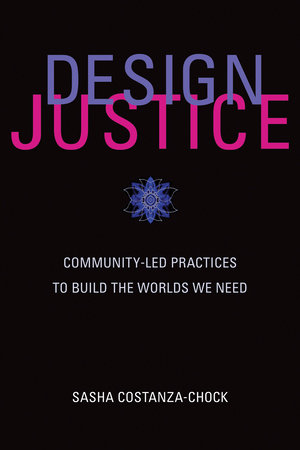
Design Justice
An exploration of how design might be led by marginalized communities, dismantle structural inequality, and advance collective liberation and ecological survival.

Design Justice
An exploration of how design might be led by marginalized communities, dismantle structural inequality, and advance collective liberation and ecological survival.
A healthier internet isn’t just wishful thinking — our friends at the @prosocialdesign.bsky.social have a whole library of research-backed design solutions for building prosocial spaces online, organized by our Civic Signals research! 🧵

Prosocial Design Network
www.prosocialdesign.orgI do think this is a kind of novel problem with our current media environment - Serious people aren't good at making content, they have other things to do, but content is what drives attention. Tastemakers used to highlight the serious people but they're gone, replaced by content creators.

