Proxmox develops powerful and efficient open-source server solutions like the Proxmox VE platform, Proxmox Backup Server, and Proxmox Mail Gateway.
Proxmox Virtual Environment
Proxmox Virtual Environment is a free and open-source server virtualization platform developed by Proxmox Server Solutions GmbH. It is based on Debian and combines Kernel-based Virtual Machine (KVM) for hardware-assisted virtual machines with LXC for Linux system containers in a single management environment.

Complete OS Guide: Proxmox How It Works, Orientation and Curiosities – LINUXMIND.DEV
Proxmox is an open-source server virtualization environment that combines two virtualization technologies: kernel-based virtual machines (KVM) and Linux containers (LXC). It offers a unified management interface for running virtual machines, containers, storage, and network configurations in a single platform. Widely adopted by enterprises, small businesses, and home lab enthusiasts, Proxmox simplifies deployment and administration of virtual infrastructure.
Proxmox VE Helper-Scripts
Community-driven scripts that simplify the setup of Proxmox Virtual Environment. Over 400+ scripts to help you manage your homelab.
ProzillaOS | Web-based Operating System
ProzillaOS is an open-source web-based operating system inspired by Ubuntu Linux and Windows made with React.js by Prozilla.

Install Ceph Server on Proxmox VE
The video tutorial explains the installation of a distributed Ceph storage on an existing three node Proxmox VE cluster. At the end of this tutorial you will be able to build a free and open source hyper-converged virtualization and storage cluster.

Deploy Hyper-Converged Ceph Cluster
Proxmox VE unifies your compute and storage systems, that is, you can use the same physical nodes within a cluster for both computing (processing VMs and containers) and replicated storage. The traditional silos of compute and storage resources can be wrapped up into a single hyper-converged appliance. Separate storage networks (SANs) and connections via network attached storage (NAS) disappear. With the integration of Ceph, an open source software-defined storage platform, Proxmox VE has the ability to run and manage Ceph storage directly on the hypervisor nodes.
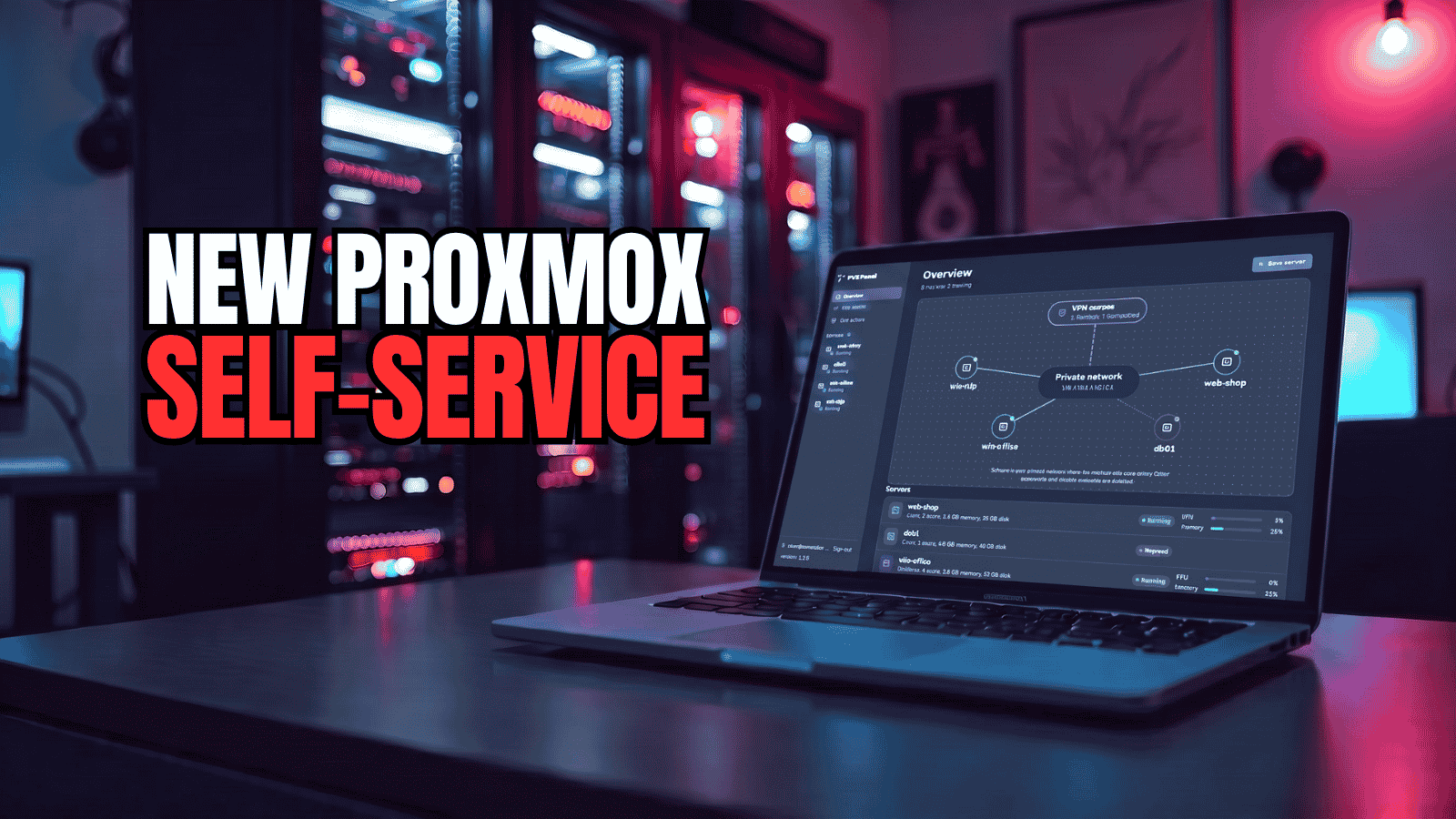
I Tried This New Proxmox Dashboard, and the Self-Service Features Got My Attention
I tested PVE Panel, a self-hosted Proxmox dashboard with VM and LXC self-service. Here’s how it works, how to set it up, and what to check first.
Safebucket | Proxmox VE Helper Scripts
Open-source file sharing where files bypass the server via presigned URLs to a local Garage (S3-compatible) object store.
So, you want to start self-hosting? Part 1 - How to install Proxmox and pick your hardware.
Self-hosting a Matrix server for 5 years
Experiences with the Matrix protocol, Matrix Synapse server, bridges, and Element mobile apps.
Cloudflare’s Gen X: Servers for an Accelerated Future
We designed and built Cloudflare’s network to be able to grow capacity quickly and inexpensively; to allow every server, in every city, to run every service; and to allow us to shift customers and traffic across our network efficiently.
How to self-host with Tailscale: Installing Proxmox and hardware choices
In this tutorial, we’ll start by picking out hardware and installing Proxmox. Tailscale can then securely connect to your self-hosted storage.
Conduit
Build a flexible, fully customizable backend server, using Conduit. Conduit is a NodeJS-based Backend as a Server, that aims to cut down development times by providing ready-made modules that offer common functionality out of the box

I've gone full Nix: Proxmox to NixOS + Incus | Bas Nijholt
After years of running a Proxmox cluster, I migrated my entire homelab to NixOS with Incus. I explain the philosophical friction of imperative 'appliance' OSs vs declarative hosts, share how I migrated my LXC/VM workloads, and why it is the perfect infrastructure to manage using AI agents.