

PSFK helps leadership teams decide what to do about change, and builds the AI brain that puts your own knowledge to work.
PSFK | Strategic Foresight, Advisory and Company Brain
PSFK helps leadership teams decide what to do about change, and builds the AI brain that puts your own knowledge to work.
Develop Strategic Thinkers Throughout Your Organization
It’s the single most important skill a leader needs.

Thinking Fast, Slow, Artificially: AI and Your Brain
AI can boost your decisions — or quietly undermine them. Wharton researchers introduce a new theory of cognition that every leader needs to understand.

How to rewire your brain for massive success, according to neuroscience
CEO Elle Kaplan shares the mental practices you can use to alter your brain for optimal function.

BrainMind
At this important juncture in neuroscience, the BrainMind ecosystem is combining the most talented of these groups in novel ways to collectively shepherd, support, and fund ideas that can be translated from labs into interventions that will benefit humanity.

‘AI gravity’ is pulling you toward dependency. Here’s how to push back | MIT Sloan
AI systems hold the promise of competitive advantage, but they can usher in cognitive decline among workers, says MIT Sloan School of Management’s Eric So. Learn how to protect cognitive capital.

‘AI gravity’ is pulling you toward dependency. Here’s how to push back | MIT Sloan
AI systems hold the promise of competitive advantage, but they can usher in cognitive decline among workers, says MIT Sloan School of Management’s Eric So. Learn how to protect cognitive capital.
AI security issues dominate corporate worries, spending
Two reports illustrate how business leaders are thinking about and budgeting for generative AI.
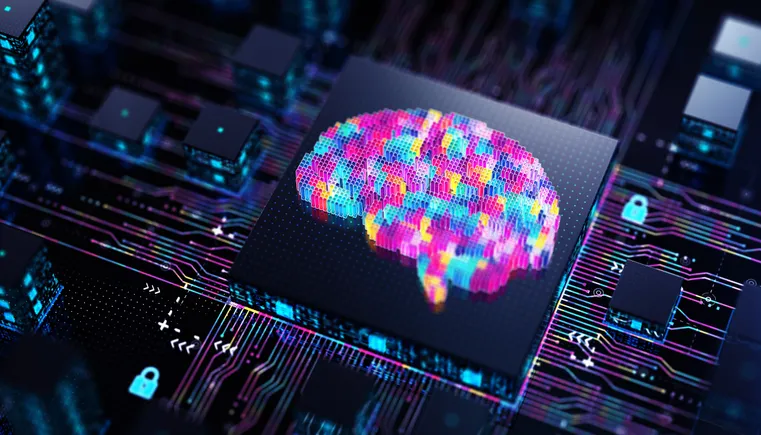
A neuroscientist who studies decision-making reveals the most important choice you can make
Neuroscientist Moran Cerf has found people's brain activity aligns when they're in each other's company. The finding can be used to maximize happiness.
AI CEO – Replace Your Boss Before They Replace You
Stop working for humans. AI CEO delivers algorithmic thought leadership, with instant decisions, and zero ego. Replace your boss before they replace you.

Sensemaking AI | Jigsaw
Sensemaking is a suite of AI-powered tools designed to help public leaders understand public opinion quickly. By combining AI interviewing with automated reporting, we bridge the gap between individual voices and actionable policy insights.
ILG Strategic Foresight & Innovation Playbook — Innovation Leadership Group
Download a free PDF of the playbook (no signup needed) or buy the print version as one place to start

AI-Generated “Workslop” Is Destroying Productivity
Despite a surge in generative AI use across workplaces, most companies are seeing little measurable ROI. One possible reason is because AI tools are being used to produce “workslop”—content that appears polished but lacks real substance, offloading cognitive labor onto coworkers. Research from BetterUp Labs and Stanford found that 41% of workers have encountered such AI-generated output, costing nearly two hours of rework per instance and creating downstream productivity, trust, and collaboration issues. Leaders need to consider how they may be encouraging indiscriminate organizational mandates and offering too little guidance on quality standards. To counteract workslop, leaders should model purposeful AI use, establish clear norms, and encourage a “pilot mindset” that combines high agency with optimism—promoting AI as a collaborative tool, not a shortcut.

Keep Forgetting Things? Neuroscience Says These 8 Brain Habits Improve Memory and Leadership
A brief introduction to some of the most interesting studies from the past couple of years.

AI: A Guide for Thinking Humans | Melanie Mitchell | Substack
I write about interesting new developments in AI. Click to read AI: A Guide for Thinking Humans, by Melanie Mitchell, a Substack publication with tens of thousands of subscribers.
AI Sycophancy and Decisions
We examine whether sycophantic AI advice distorts decisions. Our experiment involves 1,500 participants in 30 decision environments spanning core domains in eco
