


Exploring critical, philosophical, and scientific debates in psychiatric practice and the psy-sciences. Click to read Psychiatry at the Margins, by Awais Aftab, a Substack publication with tens of thousands of subscribers.
Who Gets to Define Human Suffering?
As psychiatry concedes long-standing criticisms of diagnosis, a deeper question emerges: What now justifies its authority over human suffering?

How Bad Are Things?
One “advantage” of working in psychiatry is getting a window into an otherwise invisible world of really miserable people. I work in a wealthy, mostly-white college town consistently ra…

Mental Wealth
TL;DR • When it comes to mental health, our society approaches it like we did with physical health 50 years ago. We only think about it when something goes wrong. • To the wider public, mental heal…

Computational Psychiatry Needs Systems Neuroscience
This piece was originally published in The Transmitter. I am adapting it here with some additional context for readers of this newsletter.
Pluralistic: Three more AI psychoses (12 Mar 2026) – Pluralistic: Daily links from Cory Doctorow
"AI psychosis" is one of those terms that is incredibly useful and also almost certainly going to be deprecated in smart circles in short order because it is: a) useful; b) easily colloquialized to describe related phenomena; and c) adjacent to medical issues, and there's a group of people who feel very strongly any metaphor that implicates human health is intrinsically stigmatizing and must be replaced with an awkward, lengthy phrase that no one can remember and only insiders understand.
Madness and Enterprise: Psychiatry, Economic Reason, and the Emergence of Pathological Value
Uncovers a powerful relationship between pathology and money: beginning in the nineteenth century, the severity of mental illness was measured against a patient’s economic productivity. Madness and Enterprise reveals the economic norms embedded within psychiatric thinking about mental illness in the North Atlantic world. Over the course of the nineteenth century, various forms of madness were subjected to a style of psychiatric reasoning that was preoccupied with money. Psychiatrists across Western Europe and the United States attributed financial and even moral value to an array of pathological conditions, such that some mental disorders were seen as financial assets and others as economic liabilities. By turning to economic conduct and asking whether potential patients appeared capable of managing their financial affairs or even generating wealth, psychiatrists could often bypass diagnostic uncertainties about a person’s mental state. Through an exploration of the intertwined histories of psychiatry and economic thought, Nima Bassiri shows how this relationship transformed the very idea of value in the modern North Atlantic, as the most common forms of social valuation—moral value, medical value, and economic value—were rendered equivalent and interchangeable. If what was good and what was healthy were increasingly conflated with what was remunerative (and vice versa), then a conceptual space opened through which madness itself could be converted into an economic form and subsequently redeemed—and even revered.
Who listens when mental health struggles disrupt daily life?
Ask a Bangladeshi newspaper reader to picture a mental health story. Perhaps a psychiatrist’s quote comes to mind, a helpline number, or a headline about a student’s death.

Introducing The Psyche Network
Occurrence of Psychosis and Bipolar Disorder in Individuals With ADHD Treated With Stimulants
This systematic review and meta-analysis evaluates the association between psychosis or bipolar disorder and stimulant treatment among individuals with attention-deficit/hyperactivity disorder.

Leading Innovation in Psychiatric Treatment | Alto Neuroscience
We leverage brain biology to develop personalized medicines, helping patients get better faster.

It is time for a community approach to mental health
Abolitionists and mental health advocates in the US are working to replace both police and psychiatry by reimagining how we respond to mental health crisis.

#1292 Nima Bassiri: Capitalism, Psychiatry, and the Emergence of Pathological Value
Working remotely, coworking spaces, and mental health - bitquabit
This should be a hard blog post to write–after all, it’s the one where I openly admit I had an emotional breakdown and saw a mental health professional–but it’s actually easy. And it’s easy because it has a good ending: facing long odds and a frustrating situation, I ended up turning everything around and getting a place where I love my job and I’m a happy person again.
"[PSH] asks not only what the psychopathic profile is, but where it wins. ... whether the traits that once had to remain parasitic at the margins of reciprocal communities can become structurally amplified in environments where consequence is abstracted and reward is symbolic."

The Psychopathic Selection Hypothesis Guide for Readers
gregelliott2000.substack.comHas anyone looked at this paper more closely? I've seen many of my bachelor students refer to it when it comes to depressive disorders. Authors find worldwide depression rates doubled from 1990 to 2020, which seems like a lot. pubmed.ncbi.nlm.nih.gov/40313474/

Trends in Prevalent Cases and Disability-Adjusted Life-Years of Depressive Disorders Worldwide: Findings From the Global Burden of Disease Study From 1990 to 2021 - PubMed
pubmed.ncbi.nlm.nih.govMental health


Dysthymia
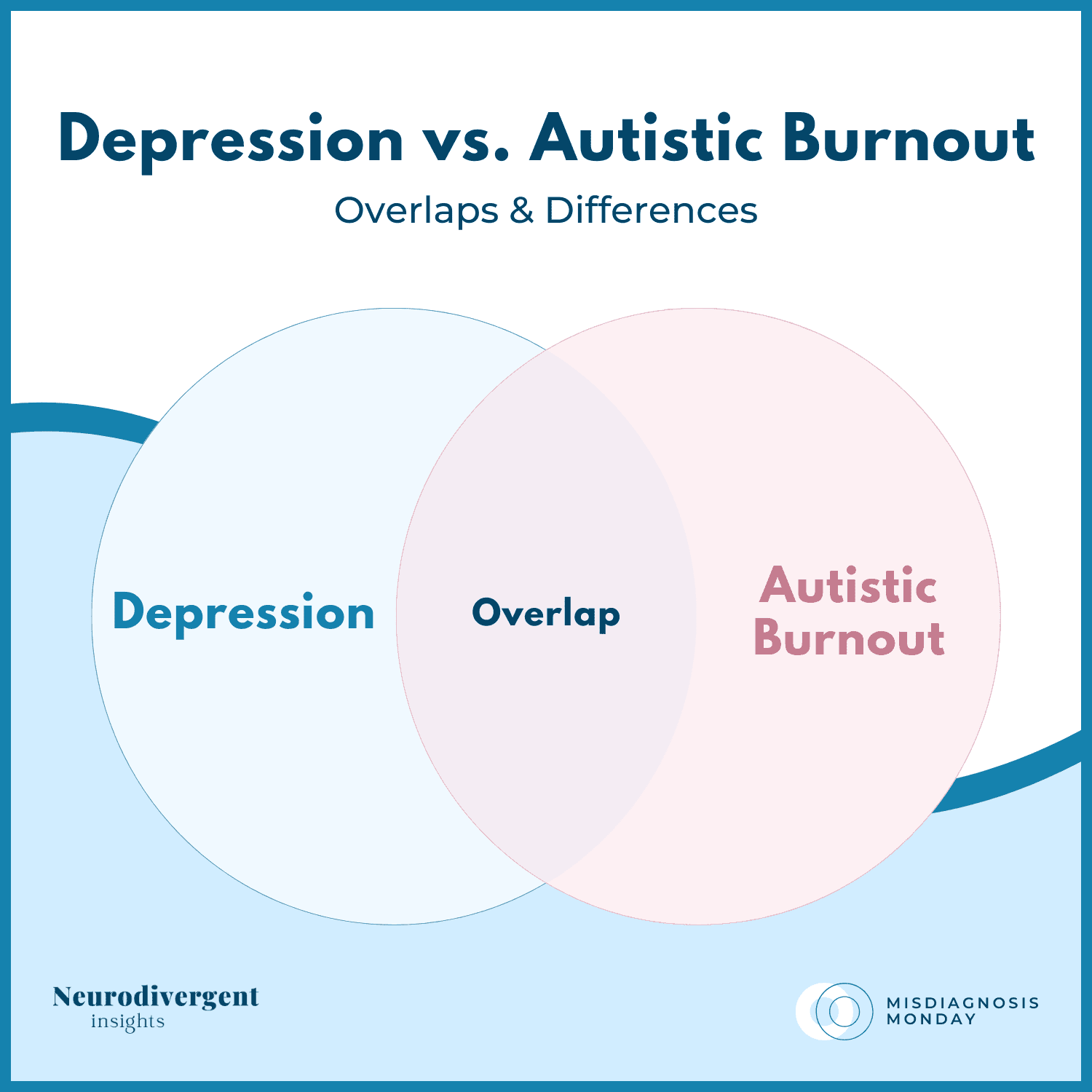
Autistic Burnout vs. Depression | Neurodivergent Insights

Defining autistic burnout through experts by lived experience: Grounded Delphi method investigating #AutisticBurnout - Julianne M Higgins, Samuel RC Arnold, Janelle Weise, Elizabeth Pellicano, Julian N Trollor, 2021
What Is Autistic Burnout? A Thematic Analysis of Posts on Two Online Platforms - Jane Mantzalas, Amanda L. Richdale, Achini Adikari, Jennifer Lowe, Cheryl Dissanayake, 2022
“Having All of Your Internal Resources Exhausted Beyond Measure and Being Left with No Clean-Up Crew”: Defining Autistic Burnout - Dora M. Raymaker, Alan R. Teo, Nicole A. Steckler, Brandy Lentz, Mirah Scharer, Austin Delos Santos, Steven K. Kapp, Morrigan Hunter, Andee Joyce, Christina Nicolaidis, 2020
“Shutdowns Are Like You’re Stuck on the Blue Screen of Death”: A Metaphor Analysis of Autistic Shutdowns - Katie Paris, Alexandru “Zeph” Lodestone, Melissa Houser, Laura Foran Lewis, 2025

