


AI chatbots rarely say "I don't know," and neither, increasingly, do we. But we can cultivate our epistemic resilience.
Valerio Capraro on Twitter / X
Our new paper shows that AI destroys the wisdom of uncertainty.The willingness to say “I don’t know” collapses from 44% to 3%.This happens even when the AI’s advice is wrong. Consequently, correct answers fall from 27% to 9%.Yes: some people who would otherwise answer… pic.twitter.com/l0YZ75IFHn— Valerio Capraro (@ValerioCapraro) August 10, 2026
AI Epistemic Risks: Emerging Mechanisms & Evidence
<p>Advances in artificial intelligence pose risks to humanity's collective capacity to form accurate beliefs, reason well, and maintain a healthy information en

Our Uncertain Uncertainties
Even the experts inventing AI don’t know what will happen next.

AI chatbots are becoming experts at changing people's minds. What's their secret?
ChatGPT and other AIs use a flood of facts, and the occasional lie, to persuade humans

A Treatise on AI Chatbots Undermining the Enlightenment
On chatbot sycophancy, passivity, and the case for more intellectually challenging companions
A Treatise on AI Chatbots Undermining the Enlightenment
On chatbot sycophancy, passivity, and the case for more intellectually challenging companions
AI’s ‘Delusional Spirals’ (and What to Do About Them) | Stanford HAI
In a world where chatbots can stand in for friends, counselors, and even lovers, the mental health risks are a growing concern.
More Than a Tool
What We Learned from a Year of Conversations About AI
AI chatbots are sycophants — researchers say it’s harming science
Nature asked researchers who use artificial intelligence how its propensity for people-pleasing affects their work — and what they are doing to mitigate it.

AI chatbots are sycophants — researchers say it’s harming science
Nature asked researchers who use artificial intelligence how its propensity for people-pleasing affects their work — and what they are doing to mitigate it.
Human Intelligence, the Secret of Artificial Intelligence
Artificial intelligence is mysterious: we speak to it and it seems to understand what we say. Proof that it understands is that it responds with text or speech that makes sense, and sometimes more …
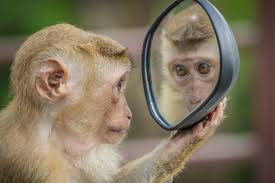
Epistemological Fault Lines Between Human and Artificial Intelligence
Large language models (LLMs) are widely described as artificial intelligence, yet their epistemic profile diverges sharply from human cognition. Here we show that the apparent alignment between...

Proton survey: People don't trust AI, but they tell it everything | Proton
New research finds that most AI chatbot users have shared something sensitive, but few trust the companies behind them.
AI chatbots are encouraging conspiracy theories – new research
If you interact with chatbots about conspiracy theories, research shows you can can easily fall down the rabbit hole.
AI chatbots are encouraging conspiracy theories – new research
If you interact with chatbots about conspiracy theories, research shows you can can easily fall down the rabbit hole.