

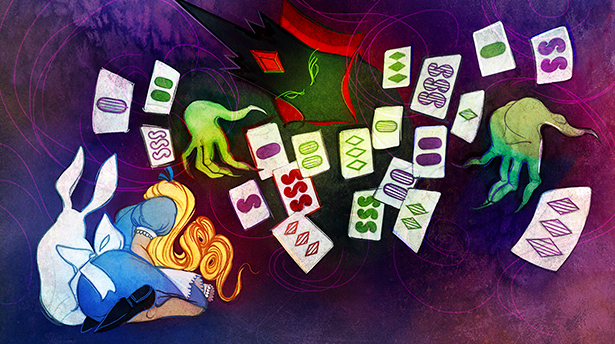
A new series of papers has settled a long-standing question related to the popular game in which players seek patterned sets of three cards.
Game theorists crack poker
An 'essentially unbeatable' algorithm for the popular card game points to strategies for solving real-life problems without having complete information.

Magic: The Gathering is Turing Complete
$\textit{Magic: The Gathering}$ is a popular and famously complicated trading card game about magical combat. In this paper we show that optimal play in real-world $\textit{Magic}$ is at least as...

Finite and Infinite Games
Notes from James Carse's book 'Finite and Infinite Games'. Author unknown.
Collections: Teaching Paradox, Imperator, Part IIIa: De Re Publica
This is the first half of the third part of our three-part (I, IIa, IIb, IIIa, IIIb) look at Paradox Interactive’s ancient grand strategy game Imperator: Rome, running from the late fourth through …

A Brief Introduction to the Basics of Game Theory
I provide a (very) brief introduction to game theory. I have developed these notes to provide quick access to some of the basics of game theory; mainly as an a

17. A Value for n-Person Games
17. A Value for n-Person Games was published in Contributions to the Theory of Games, Volume II on page 307.
Collections: Teaching Paradox, Imperator, Part IIIb: Imperator Interrupted
This is the second half of the third and final part of our three-part (I, IIa, IIb, IIIa, IIIb) look at Paradox Interactives ancient grand strategy game, Imperator: Rome, which covers (inter alia) …

The Math of Idle Games, Part I
Originally published October 4, 2016 I’ve given a few talks in the past about the appeal and general mechanics of idle games, but what if you actually wanted to make one? Theory and patterns are nice, but there’s some complicated math running behind it. And how on earth
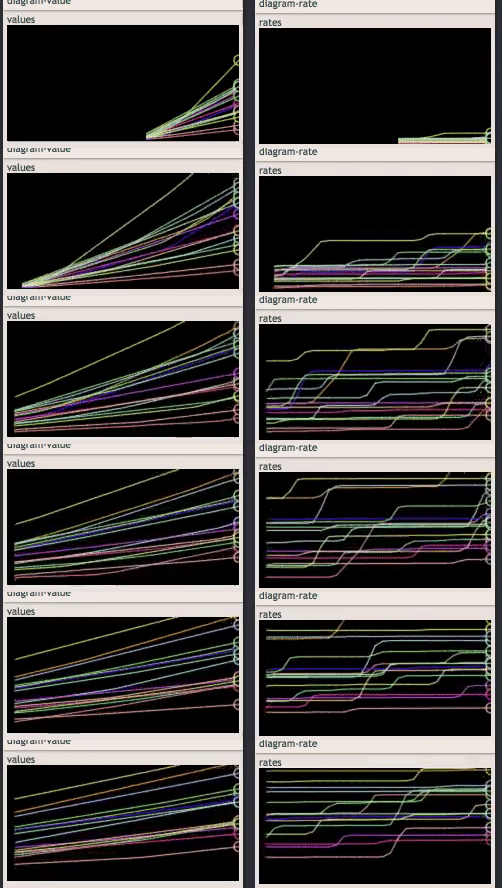
The Science of Winning Poker
Bluffing still matters, but the best players now depend on math theory

Collections: Teaching Paradox, Imperator, Part IIa: Pops and Chains
This is the first half of the second part of our three part (I, IIa, IIb, IIIa, IIIb) look at Paradox Interactive’s Hellenistic-era grand strategy game Imperator: Rome. I had hoped to do this…

A Life in Games | Quanta Magazine
The mathematician John Horton Conway’s myriad accomplishments — including the Game of Life, sprouts and the surreal numbers — are the product of a mind at play.

Checkers Is Solved
The game of checkers has roughly 500 billion billion possible positions (5 × 10²⁰). The task of solving the game, determining the final result in a game with no mistakes made by either player, is daunting. Since 1989, almost continuously, dozens of ...

Game Theory | Open Yale Courses
This course is an introduction to game theory and strategic thinking. Ideas such as dominance, backward induction, Nash equilibrium, evolutionary stability, commitment, credibility, asymmetric information, adverse selection, and signaling are discussed and applied to games played in class and to examples drawn from economics, politics, the movies, and elsewhere.
The 100:10:1 method – the heart of my game design process
This is the second post of a series on practical game-design techniques. Here’s the first. In my years designing games, my methods have evolved from Games-Randomly-Emerging-from-the-Inchoate…

GameSpot's SIMply Divine: The Story of Maxis Software
GameSpot action adventure driving puzzle role-playing simulation sports strategy hardware