


Psychedelic drugs can trigger characteristic hallucinations, which have long been thought to hold clues about the brain’s circuitry. After nearly a century of study, a possible explanation is…

Psychedelic Brew Ayahuasca's Profound Impact Revealed In Brain Scans - Slashdot
An anonymous reader quotes a report from The Guardian: The brew is so potent that practitioners report not only powerful hallucinations, but near-death experiences, contact with higher-dimensional beings, and life-transforming voyages through alternative realities. Often before throwing up, or havin...

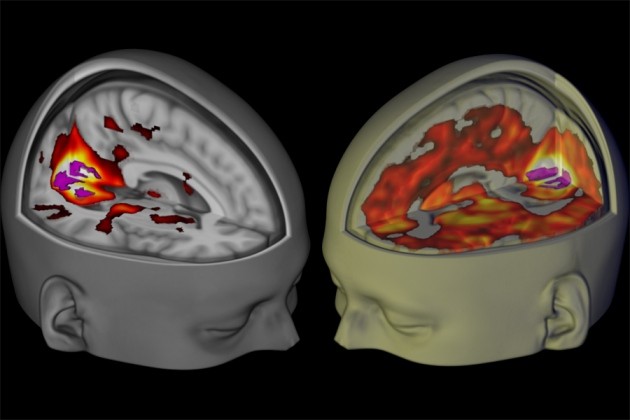
Brain scans reveal how LSD affects consciousness
Drug researcher David Nutt discusses brain-imaging studies with hallucinogens.
What Are Psychedelic Entities?
The beings people often meet while using psychedelics resist tidy explanations.
Hallucination by proxy in LLM-assisted differential diagnosis
Current evidence suggests that LLM assistance could augment the diagnostic accuracy of clinicians. However, these systems are black boxes, susceptible to hallucinations, and project a potentially...

Hallucination by proxy in LLM-assisted differential diagnosis
Current evidence suggests that LLM assistance could augment the diagnostic accuracy of clinicians. However, these systems are black boxes, susceptible to hallucinations, and project a potentially...
What are AI hallucinations? Why AIs sometimes make things up
When AI systems try to bridge gaps in their training data, the results can be wildly off the mark: fabrications and non sequiturs researchers call hallucinations.
What are AI hallucinations? Why AIs sometimes make things up
When AI systems try to bridge gaps in their training data, the results can be wildly off the mark: fabrications and non sequiturs researchers call hallucinations.
New psychedelic research sheds light on why psilocybin-containing mushrooms have been consumed for centuries
A new study from the Center for Psychedelic and Consciousness Research at Johns Hopkins University School of Medicine provides insight into the

Scientists studying psychoactive drugs accidentally proved the self is an illusion
Philosophers and mystics have long contemplated the disconcerting notion that the fixed self is an illusion. Neuroscientists now think they can prove it or, at least, help us glimpse this truth with some help from psilocybin, the psychoactive property in magic mushrooms.

A Dose of a Hallucinogen From a ‘Magic Mushroom,’ and Then Lasting Peace (Published 2016)
Two studies used psilocybin to see if the drug could reduce depression and anxiety in cancer patients. The results were striking.

New mechanism proposed for why some psychedelics act as antidepressants
We know what receptors they bind, but where they bind them might matter, too.
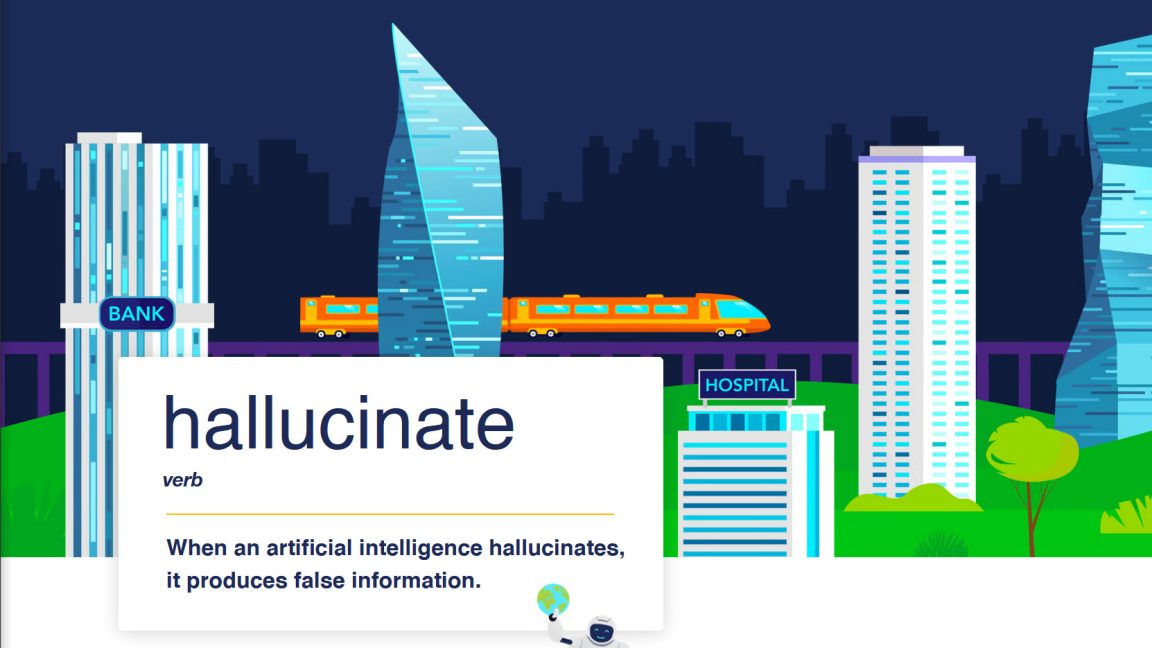
“Hallucinating” AI models help coin Cambridge Dictionary’s word of the year
Cambridge: "When an artificial intelligence hallucinates, it produces false information."
From treating PTSD to quitting tobacco: researchers say public investment into psychedelic drugs essential | CBC News
Magic mushrooms to treat depression, ecstasy to cure PTSD and LSD to combat alcoholism; just some of the drug-affliction pairings that have been tested in recent years.

Setting aside all the absurdity of thinking we need to have scientific papers with risks of hallucination, I'm flabbergasted this was taken as sufficiently novel to warrant publication in Nature. It's just sort of stitching things together with MCP...

Ran Blekhman
This is the future of scientific papers. Instead of a PDF, the paper is an AI agent that you can talk to, ask questions, run analyses. No more digging through supplements - just ask the paper directly: "what p-value cutoff was used in Fig 3B? Re-run at 0.01." nature.com/articles/s41586-026-11044-y

