

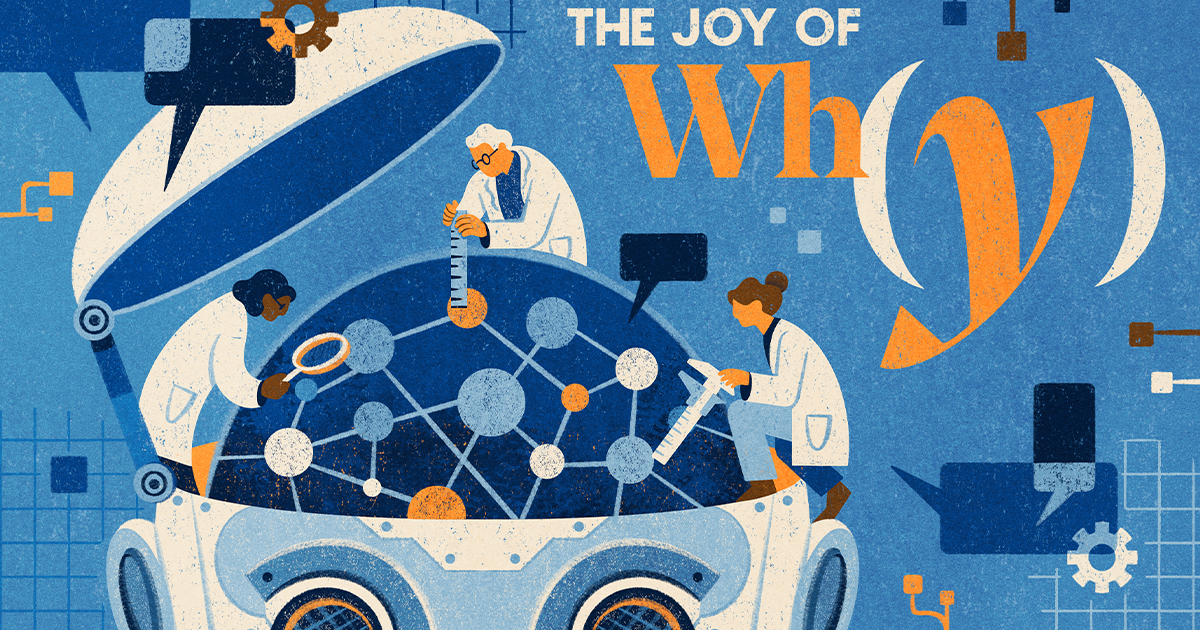
Computer scientist Melanie Mitchell discusses why artificial intelligence doesn’t “think” or “reason” like humans, and how we can create better methods for measuring machine cognition.
AI: A Guide for Thinking Humans | Melanie Mitchell | Substack
I write about interesting new developments in AI. Click to read AI: A Guide for Thinking Humans, by Melanie Mitchell, a Substack publication with tens of thousands of subscribers.
Why I believe current AI models can really think and understand - Part 2 of 3
Why computers can in principle produce thinking and understanding

On working machines
In part one, on thinking machines, I explored two facets of the philosophy of artificial intelligence: “intelligence”, and consciousness. That left an important topic to consider for this post: the...
Why I believe current AI models can really think and understand - Part 1 of 2
How the human mind is different from our conception of it

Thinking—Fast, Slow, and Artificial: How AI is Reshaping Human Reasoning and the Rise of Cognitive Surrender
People increasingly consult generative artificial intelligence (AI) while reasoning. As AI becomes embedded in daily thought, what becomes of human judgment? We

AI is An Ideology, Not A Technology
At its core, "artificial intelligence" is a perilous belief that fails to recognize the agency of humans.
AI co-scientists are revolutionizing how research is done
Artificial-intelligence systems can generate hypotheses, design experiments and analyse data — but humans still need to decide what makes sense.

Machine god metaphors eat your brain
There are other ways of thinking about AI

Thinking Fast, Slow, Artificially: AI and Your Brain
AI can boost your decisions — or quietly undermine them. Wharton researchers introduce a new theory of cognition that every leader needs to understand.

No, Artificial Intelligence Is Not Conscious
Taken to its logical conclusion, this line of thinking is absurd—and damning.

The Impact of Artificial Intelligence on Human Thought
This research paper examines, from a multidimensional perspective (cognitive, social, ethical, and philosophical), how AI is transforming human thought. It highlights a cognitive offloading effect: the externalization of mental functions to AI can reduce intellectual engagement and weaken critical thinking. On the social level, algorithmic personalization creates filter bubbles that limit the diversity of opinions and can lead to the homogenization of thought and polarization. This research also describes the mechanisms of algorithmic manipulation (exploitation of cognitive biases, automated disinformation, etc.) that amplify AI's power of influence. Finally, the question of potential artificial consciousness is discussed, along with its ethical implications. The report as a whole underscores the risks that AI poses to human intellectual autonomy and creativity, while proposing avenues (education, transparency, governance) to align AI development with the interests of humanity.

Is AI Reasoning Right for the Wrong Reasons? | Quanta Magazine
The idea that artificial intelligence can “reason” is more intuitive than ever. But intuitions can be wrong, and the science is far from settled.
Microsoft Study Finds AI Makes Human Cognition “Atrophied and Unprepared”
Researchers find that the more people use AI at their job, the less critical thinking they use.

Microsoft Study Finds AI Makes Human Cognition “Atrophied and Unprepared”
Researchers find that the more people use AI at their job, the less critical thinking they use.
Are we offloading too much of our thinking to AI?
Reflections on autonomy and the value of thinking for ourselves

Artificial intelligence systems do not think, feel, want or understand. Avoid language that gives them human characteristics.
https://apnews.com/article/openai-safety-ai-framework-089e75b95bc935af092da7b79d92706d
apnews.com