


The latest AI algorithms are probing the evolution of galaxies, calculating quantum wave functions, discovering new chemical compounds and more. Is there anything that scientists do that can’t be…
The AI Revolution in Math Has Arrived | Quanta Magazine
AI is being used to prove new results at a rapid pace. Mathematicians think this is just the beginning.
How AI Agents are transforming scientific discovery
AI agents are starting to reshape science, from proposing novel hypotheses to writing code. Learn what comes next for scientists and policymakers.

Deep Research, information vs. insight, and the nature of science
What AI will accelerate in the scientific process, what it cannot do, and how we can prepare for new manners of scientific investigation.
AI has supercharged scientists—but may have shrunk science
Analysis of 41 million papers finds that although AI expands individual impact, it narrows collective scientific exploration
AI for science needs reasoning, not just data
AI agents that can model the human process of research will accelerate discoveries in science.

Science that Compounds: The Need for A New Substrate for Research in the Age of AI
This paper is a perspective from Lightcone Research, an open-source initiative building tooling for scientific research in the age of agentic AI.
Is AI the End of Math As We Know It? | Quanta Magazine
Mathematicians are facing the sudden shift with grief, anger, and a desperate search for fresh ideas: “If we don’t adapt, there’s just no more math in 50 years.”
AI for science: What can it do? Can it do things? Let’s find out!
A what we’re reading spotlight
AI scientists are changing research — institutions, funders and publishers must respond
The ability to automate the discovery process in some areas of scientific inquiry raises unanswered questions about how research should be conducted.
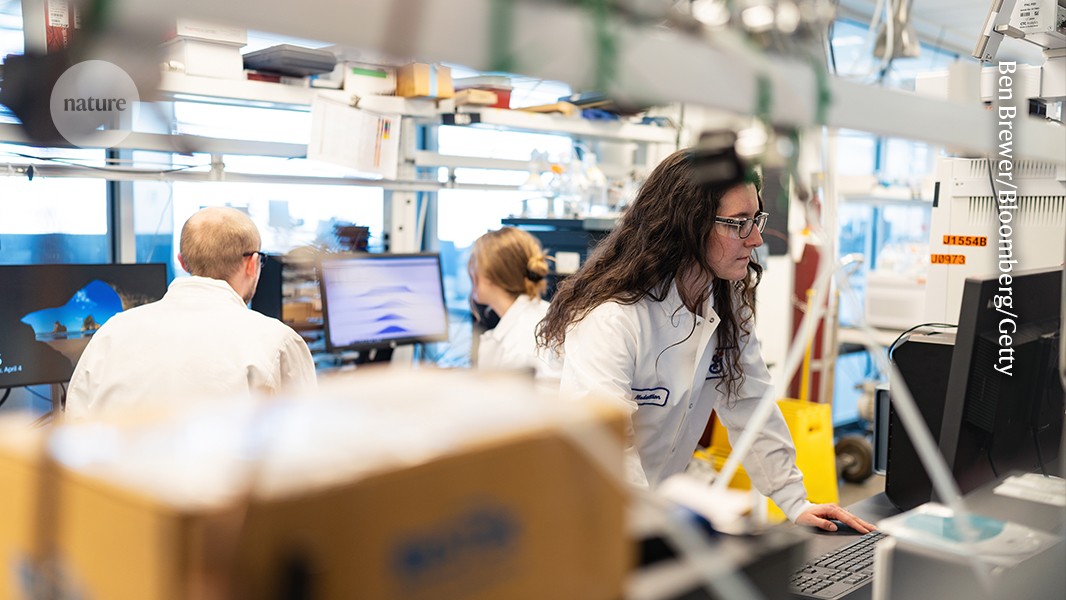
Kosmos: An AI Scientist for Autonomous Discovery
Today, we are announcing Kosmos, our next-generation AI Scientist. Kosmos is a major upgrade on Robin, our previous AI Scientist. You can read about it in our technical report, here. Kosmos is available to use from day one on our platform, here.

Zhijing Jin on Twitter / X
🚀 Can #AI agents actually do science?Current agents can optimize for predictive fit — but fail at recovering the underlying physical laws.We introduce Stargazer🪐: a scalable benchmark + environment for astronomical discovery🔭Agents must:• propose hypotheses•… pic.twitter.com/hGIjz4KJMT— Zhijing Jin (@ZhijingJin) May 7, 2026

Will AI spark a scientific renaissance — or a diffuse monoculture?
Artificial intelligence’s ability to enrich science will depend not only on model capability, but also on whether researchers, reviewers and funders reward originality over speed.
AI co-scientists are revolutionizing how research is done
Artificial-intelligence systems can generate hypotheses, design experiments and analyse data — but humans still need to decide what makes sense.
No. 008: AI co-mathematician, compiler-verified protocols, open infrastructure bets - The Hallway Track
The Hallway Track No. 008 - How AI is affecting the practice of science
From Genius Science to Scenius Science - Cosmik Labs
Why personal AI tools might not be all we need to revolutionize science
Arthur Turrell on Twitter / X
Today @Google, we published work led by @m_codreanu on AI in Science, drawing on 15 million Gemini interactions, 2,600 specialised AI models & a 600-scientist survey. What did we find about how AI is changing science? Read on... pic.twitter.com/VqO2xxcm02— Arthur Turrell (@arthurturrell) September 15, 2026
