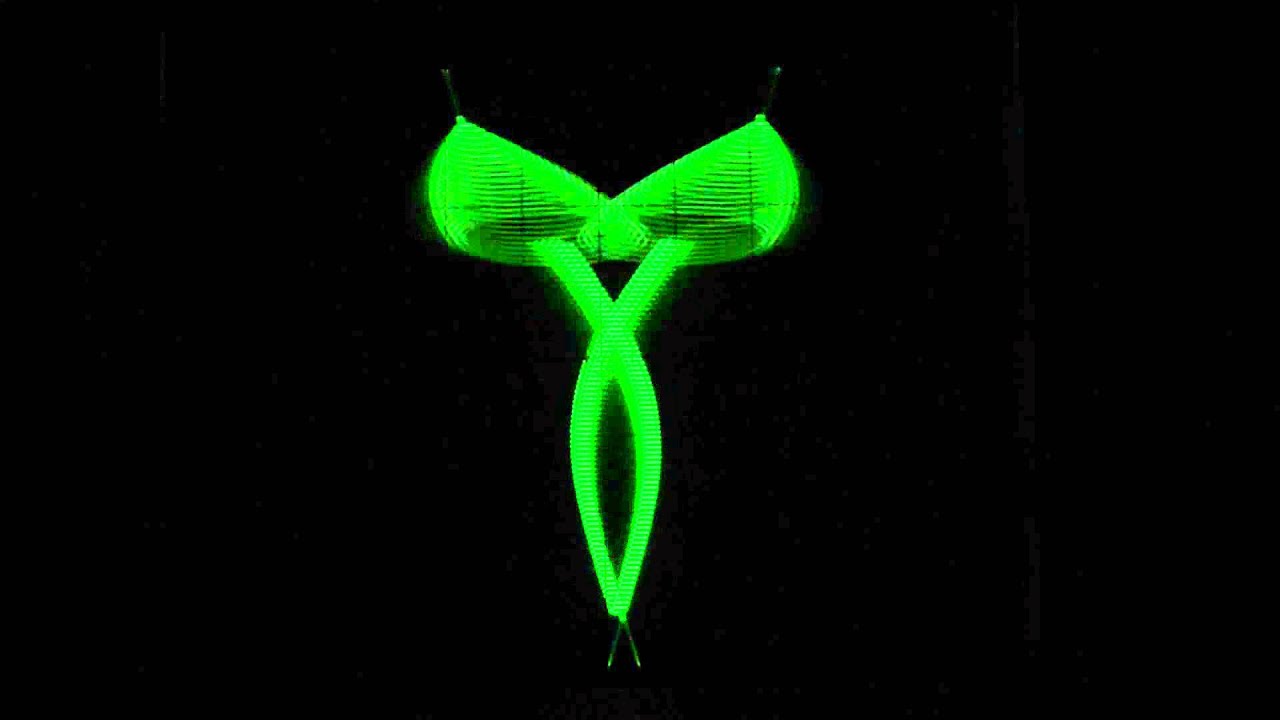
The same phenomenon by which an opera singer can shatter a wineglass also underlies the very existence of subatomic particles.

🔬Doing Vibe Physics — Alex Lupsasca, OpenAI
The full story of how GPT‑5.x derived new results in theoretical physics and quantum gravity.
Quantum dialectics - MR Online
The quantum revolution in physics played out over a period of 22 years, from 1905 to 1927. When it was done, the new theory of quantum mechanics had completely undermined the basis for our understanding of the material world. The familiar and intuitively appealing description of an atom as a tiny solar system, with electrons orbiting the […]

Holonomy, Aharonov-Bohm effect and phonon scattering in superfluids
In this article we discuss the analogy between superfluids and a spinning thick cosmic string. We use the geometrical approach to obtain the geometrical phases for a phonon in the presence of a vortex. We use loop variables for a geometric description of Aharonov-Bohm effect in these systems. We use holonomy transformations to characterize globally the "space-time" of a vortex and in this point of view we study the gravitational analog of the Aharonov-Bohm effect in this system. We demonstrate that in the general case the Aharonov-Bohm effect has a contribution both from the rotational and the translational holonomy. We study also Berrys quantum phase for phonons in this systems.

How physics at the roots of reality point to a grand unified theory | Aeon Essays
Physics displays an uncanny alignment at its very deepest levels. Is a grand theory of everything finally within reach?
physics as a game loop. part 1: objects and waves - underreacted
Resonant Computing Theses
Theses on Resonant Computing Resonant computing is not a dogmatic or rigid paradigm, but a vision for the future of digital technology that we’re collectively defining in real time. The theses on this page are an ongoing experiment in collective intelligence, where anyone who builds or uses techn...

monome
we have a new band member: a kinetic multicellular ceramic sound sculpture suspended in the sky.
Collapse Theories
Quantum mechanics, with its revolutionary implications, has posedinnumerable problems to philosophers of science. In particular, it hassuggested reconsidering basic concepts such as the existence of aworld that is, at least to some extent, independent of the observer,the possibility of getting reliable and objective knowledge about it,and the possibility of taking (under appropriate circumstances) atleast some properties to be objectively possessed by physical systems.It has also raised many others questions which are well known to thoseinvolved in the debate on the interpretation of this pillar of modernscience. One can argue that most of the problems are not only due tothe intrinsic revolutionary nature of the phenomena which have led tothe development of the theory. They are also related to the fact that,in its standard formulation and interpretation, quantum mechanics is atheory which is excellent (in fact it has an unprecedented success inthe history of science) in telling us everything about what weobserve, but it meets with serious difficulties in telling uswhat there is. We are making here specific reference to thecentral problem of the theory, usually referred to as themeasurement problem, which is accompanying quantum theory sinceits birth. It is just one of the many attempts to overcome thedifficulties posed by this problem that has led to the development ofCollapse Theories, i.e., to the Dynamical ReductionProgram (DRP). As we shall see, this approach consists inaccepting that the dynamical equation of the standard theory should bemodified by the addition of stochastic and nonlinear terms. The nicefact is that the resulting theory is capable, on the basis of a singledynamics which is assumed to govern all natural processes, to accountat the same time for all well-established facts about microscopicsystems as described by the standard theory, as well as for theso-called postulate of wave packet reduction (WPR), which accompaniesthe interaction of a microscopic system with a measuring device. As iswell known, such a postulate is assumed in the standard scheme just inorder to guarantee that measurements have outcomes but, as weshall discuss below, it meets with insurmountable difficulties if onetries to derive it by assuming the measurement itself to be a processgoverned by the linear laws of the theory. Finally, the collapsetheories account in a completely satisfactory way for the classicalbehavior of macroscopic systems.
Art of Noise
A multi-sensory exploration of how design has changed the way we’ve experienced music over the past 100 years.

Building Glass for the Web
How we built a cross-browser glass effect for the web, and how it shapes a family of components.

Bouba/kiki effect
The bouba–kiki effect or takete–maluma phenomenon is a non-arbitrary mental association between certain speech sounds and certain visual shapes. The most typical research finding is that people, when presented with nonsense words, tend to associate certain "soft" sounds with a rounded shape and other "hard" sounds with a spiky shape. Its discovery dates back to the 1920s, when psychologists documented experimental participants as connecting nonsense words to shapes in consistent ways.

First Shape Found That Can’t Pass Through Itself | Quanta Magazine
After more than three centuries, a geometry problem that originated with a royal bet has been solved.

Are Electrons Real?
A deceptively simple question spurred an exploration of physicists’ views on whether their theories describe reality.