


The mathematician John Horton Conway’s myriad accomplishments — including the Game of Life, sprouts and the surreal numbers — are the product of a mind at play.
The Math of Idle Games, Part II
Originally published October 28, 2016 In Part I [https://www.sirpinski.com/the-math-of-idle-games-part-i/] of this three-part series, we looked at some of the standard math behind rapid-growth idle games, primarily at the relationships between exponential and polynomial growth and some methods of
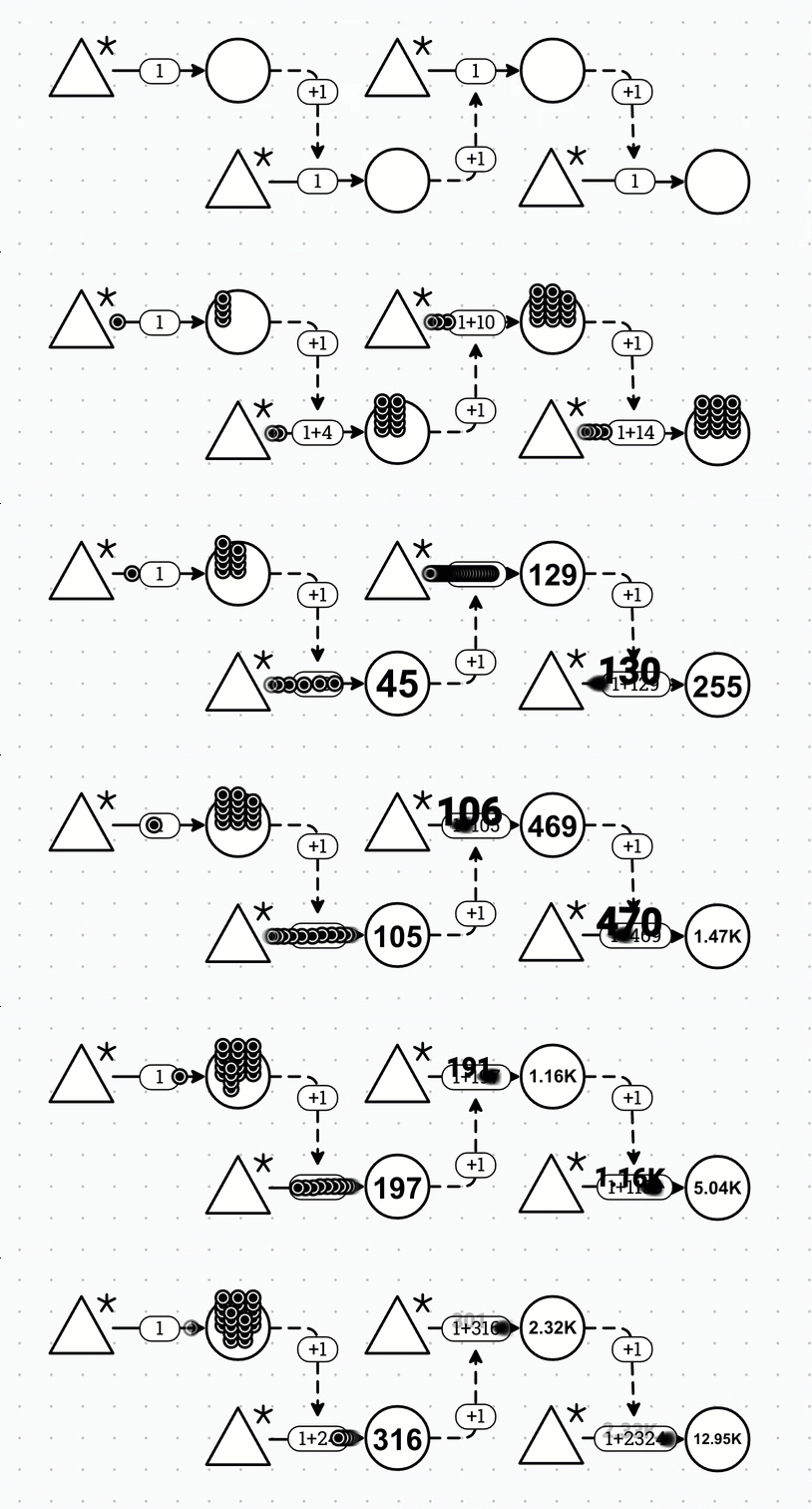
Playing with “game”
The world is full of systems. Often they exist below the threshold of what we perceive. It’s all a whirling clockwork of near-infinite complexity, from the tiny mysteries of quantum physics to the wonder of a single tree spanning miles, to the vastness of neurons that sit inside our relatively small skulls.
The Math of Idle Games, Part I
Originally published October 4, 2016 I’ve given a few talks in the past about the appeal and general mechanics of idle games, but what if you actually wanted to make one? Theory and patterns are nice, but there’s some complicated math running behind it. And how on earth


The Rise and Fall of the Lone Game Developer – Holy Ghost Stories
In the early 80s, all it took to make a game was a computer, some graph paper, and a lot of determination.
Finite and Infinite Games
Notes from James Carse's book 'Finite and Infinite Games'. Author unknown.
GameSpot's SIMply Divine: The Story of Maxis Software
GameSpot action adventure driving puzzle role-playing simulation sports strategy hardware
17. A Value for n-Person Games
17. A Value for n-Person Games was published in Contributions to the Theory of Games, Volume II on page 307.
The Myth and Magic of Generating New Ideas
A mathematician on how to get the mind into motion.

Is this the meaning of life? | John Stewart
John Stewart: Developments in evolutionary theory suggest we have a central role to play in the future of the universe
Game theorists crack poker
An 'essentially unbeatable' algorithm for the popular card game points to strategies for solving real-life problems without having complete information.

Revisiting Fun: 20 Years of A Theory of Fun
A Theory of Fun for Game Design was first published twenty years ago. Today, it’s required reading in game design programs all over the world. But times have changed! Our craft knowledge has evolved!

Everything
Be the Universe in this epic, award-winning reality simulation game - featuring thousands of playable characters, endless exploration, an extraordinary soundtrack and narration from Alan Watts.
