

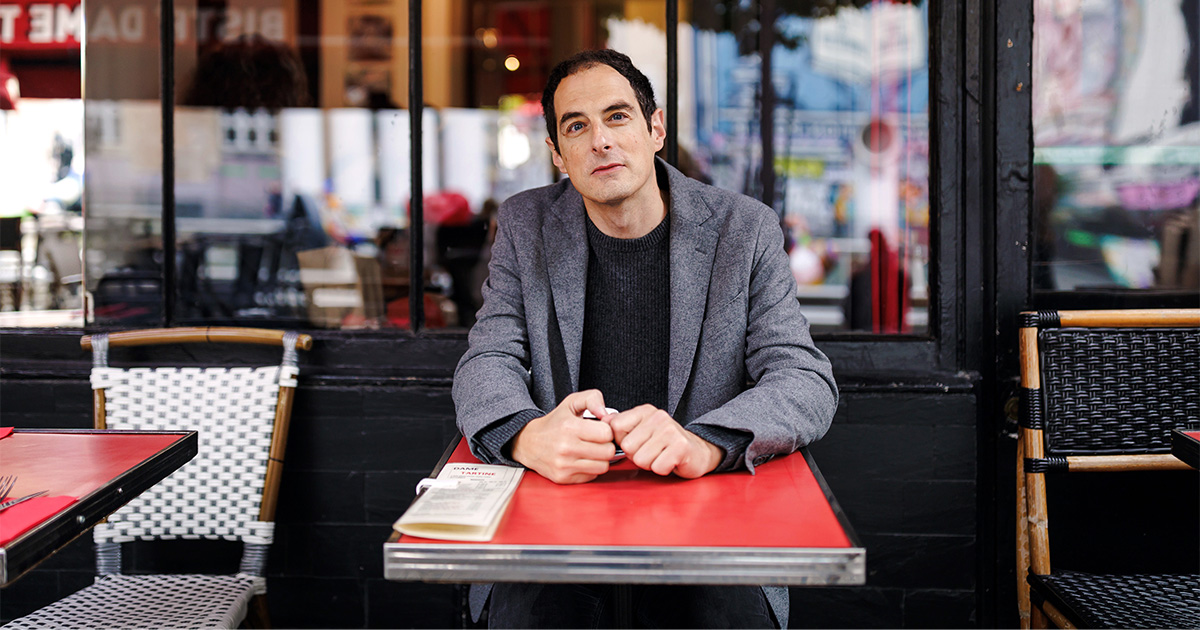
The mathematician David Bessis claims that everyone is capable of, and can benefit greatly from, mathematical thinking.
Kill Math
The power to understand and predict the quantities of the world should not be restricted to those with a freakish knack for manipulating abstract symbols.
Is AI the End of Math As We Know It? | Quanta Magazine
Mathematicians are facing the sudden shift with grief, anger, and a desperate search for fresh ideas: “If we don’t adapt, there’s just no more math in 50 years.”
Mathematics in the age of AI
An essay, based on a public lecture delivered at the 2026 International Congress of Mathematicians, on how the mathematical community might respond to the arrival of artificial intelligence tools that are capable of performing research-level mathematical tasks. Rather than debating the capabilities of such tools, we condition on the hypothesis that these capabilities will arrive, and examine instead a question that is orthogonal to it: what the goals and values of mathematical research actually are. The problem-solving component of mathematics is used as a case study.

Mathematics in the Library of Babel — Daniel Litt
Mathematics isn't only about saying true things. It's about asking the right questions, being confused, stumbling about, getting distracted, being wrong, recognizing when you're wrong, being stuck. Mostly being stuck. It's about clinging to a giant edifice and feeling it out until you understand som

What it Means to Be a Mathematician When AI Does the Math
Researchers debate motivation, purpose, and the field’s future

The End of Mathematics — Daniel Litt
I'm currently returning to Toronto from a summit on the future of mathematics, at OpenAI. Sebastian Bubeck asked me to talk a bit about the future we'd all like to avoid, where humans are mathematically disempowered. Jacob Tsimerman advised us to try to prioritize detail over correctness, and I have no doubt that I succeeded in deprioritizing correctness.

Math Academy
The Math Academy curriculum and pedagogy leverage cutting-edge cognitive learning theory. Why? Because it’s been studied extensively, backed up and proven to work. We aren’t providing edu-tainment. This isn’t enrichment. We teach math as if we were training a professional athlete or musician, or anyone looking to acquire a skill to the highest degree possible. This is real work for a student who is serious about learning math. We expect every student using our system to actually master the material, and do it efficiently and effectively.
Thomas Wolf on Twitter / X
Very thoughtful piece from Kevin Buzzard (perfect IMO score, number theorist, pioneer of formal maths in Lean)if math is not just about “human understanding,” then what is it about?and if ai capabilities keep growing exponentially what happens since “mathematics is infinite”? https://t.co/h7yYmZS01T pic.twitter.com/wFp2fec52Q— Thomas Wolf (@Thom_Wolf) October 2, 2026

Mathematical Beauty, Truth and Proof in the Age of AI | Quanta Magazine
Mathematicians have started to prepare for a profound shift in what it means to do mathematics.
Applied Pure Mathematics
Some thoughts about mathematics as a cultural and social technology.
Summary: Thinking in Systems (by Donella H. Meadows)
The main argument of the book: Everything in this world is made of systems. While we cannot fully understand systems, we can observe them…
Arthur Benjamin: Teach statistics before calculus!
Someone always asks the math teacher, "Am I going to use calculus in real life?" And for most of us, says Arthur Benjamin, the answer is no. He offers a bold proposal on how to make math education relevant in the digital age.
The end of the age of heroes
AI will soon be better at math than any human. What does that mean?
Why Math is an Art, Not a Science
Mathematics is usually classed with the sciences, both in official catalogs and in the popular imagination. People who are good at science…
Thoughtful and relevant outside math. A partial summary: Gowers thinks it’s important to sustain a human mathematical culture, but is unconvinced by the Leiden Declaration’s attempt to do that by reaffirming human ownership of specific *discoveries*.

tachikoma
an interesting blog post by Timothy Gowers on the Leiden declaration (on AI and Math), on why he didn't sign. it gets to a subtler aspect of control over AI and our future.
