


Bringing ethics to a world of AI optimism is no easy task. Read about how Arjun Subramonian tackles it with queer collaborators, sage mentors and their new paper on intersectionality.
AI and Queer Communities — Queer in AI
This Pride Month, I am writing about how AI harms queer communities and what it would even mean for AI to be “LGBTQIA+ inclusive.”

Bound by the Bounty: Collaboratively Shaping Evaluation Processes for Queer AI Harms | Montreal AI Ethics Institute
🔬 Research Summary by Nathaniel Dennler and Queer in AI. Nathan is a Ph.D. candidate at the University of Southern California and a member of the Queer in AI organization; their personal work is in…

AI, Ethics, and Society — Home
Digest Issue 92: The AI Ethics Brief #202 | What Happens When You Have a Choice? | Reading the Label on AI | Pangram is not an oracle | A Fresh Look at The World Map of Encryption Laws and Policies
Discover insights at the intersection of technology and society

AI Ethics Class
AI Art and its Impact on Artists
DOI: https://doi.org/10.1145/3600211.3604681 AIES '23: AAAI/ACM Conference on AI, Ethics, and Society, Montréal, QC, Canada, August 2023
Friends with no previous interest in AI ethics have been asking me about it recently, so I want to share several underlying concepts about AI & power that are important to understand. 🧵 1/
Friends with no previous interest in AI ethics have been asking me about it recently, so I want to share several underlying concepts about AI & power that are important to understand. 🧵 1/— Rachel Thomas (@math_rachel) May 16, 2023
AI & Ethics Workgroup | Lincoln Center for Applied Ethics
Artificial Intelligence (AI) is a term with an array of contingent and shifting meanings, unified only by a general aspiration to use mathematical computation to emulate human cognition, language and problem-solving. Rather than a technical term, “AI” can be thought of as a sociotechnical system and assemblage, consisting of technical objects and social imaginaries, practices and ideologies. How we characterize and conceptualize AI shapes how, why and when we use it and when we may constrain or refuse its use. This paper provides a primer on various technologies that often fall under the rubric of “AI” and outlines the various discursive and cultural meanings carried by the term.
I really love the active discussion abt the role of ethics in AI, spurred by Google Gemini's text-to-image launch & its relative lack of white representation. As one of the most experienced AI ethics people in the world (>4 years! ha), let me help explain what's going on a bit.
I really love the active discussion abt the role of ethics in AI, spurred by Google Gemini's text-to-image launch & its relative lack of white representation. As one of the most experienced AI ethics people in the world (>4 years! ha), let me help explain what's going on a bit. pic.twitter.com/uuIbE2NRfd— MMitchell (@mmitchell_ai) February 25, 2024

Meet the One Woman Anthropic Trusts to Teach AI Morals
The tech company has entrusted the philosopher to endow its chatbot with a sense of right and wrong.

Inside the fight to reclaim AI from Big Tech’s control
For years, Big Tech has set the global AI research agenda. Now, groups like Black in AI and Queer in AI are upending the field’s power dynamics to build AI that serves people.

The Future of AI
The Parents’ Paradox: AI, Ethics, and the Limits of Machine Morality This post is based on a talk I gave at The AI & Automation Conference in London on February 25, 2026, and my slides. A…
The Unbearable White Maleness of AI - Dame Magazine
We have entered the era of the cute “AI” stunt, and its implications are more immediately disconcerting than the looming specter of a robot apocalypse (and certainly more amusing). The gag goes something like this: A journalist, tasked with covering “artificial intelligence,” asks a computer program to do something for them, such as write a
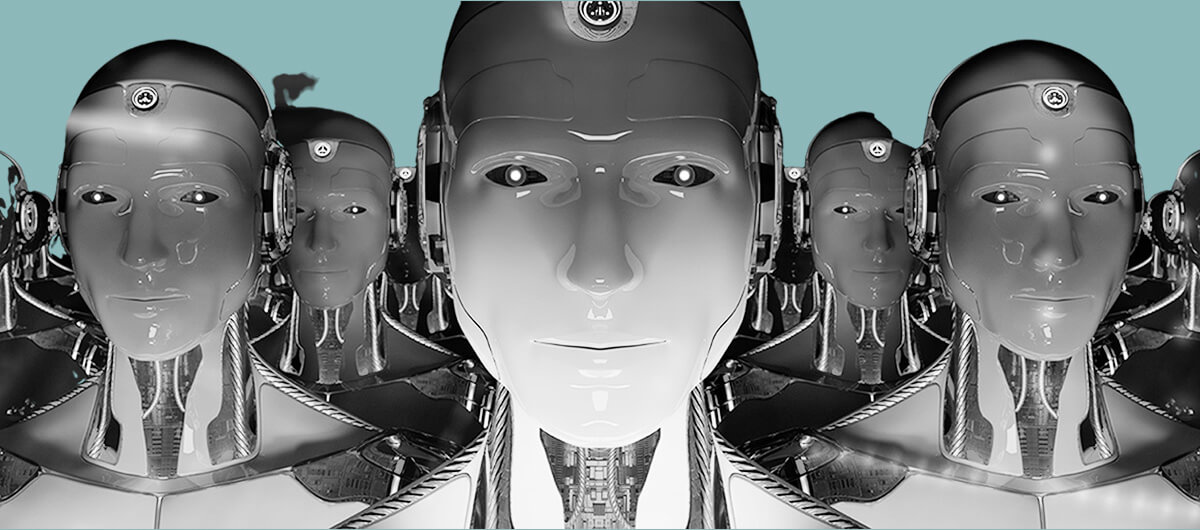
Big Tech’s guide to talking about AI ethics
50-ish words you can use to show that you care without incriminating yourself.
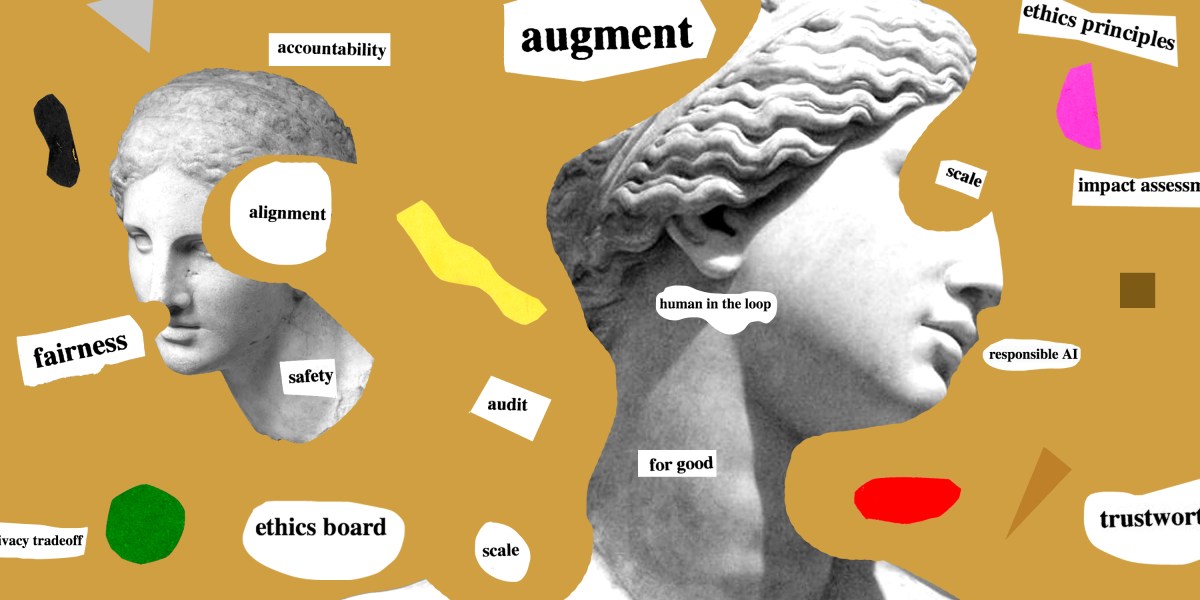
Nothing About Us, Without Us: Disability Justice and AI
Intersectionality, ways that AI can support the disabled, and how we can win the race to make AI more inclusive.

The Impact of Artificial Intelligence on Human Thought
This research paper examines, from a multidimensional perspective (cognitive, social, ethical, and philosophical), how AI is transforming human thought. It highlights a cognitive offloading effect: the externalization of mental functions to AI can reduce intellectual engagement and weaken critical thinking. On the social level, algorithmic personalization creates filter bubbles that limit the diversity of opinions and can lead to the homogenization of thought and polarization. This research also describes the mechanisms of algorithmic manipulation (exploitation of cognitive biases, automated disinformation, etc.) that amplify AI's power of influence. Finally, the question of potential artificial consciousness is discussed, along with its ethical implications. The report as a whole underscores the risks that AI poses to human intellectual autonomy and creativity, while proposing avenues (education, transparency, governance) to align AI development with the interests of humanity.
