

Alan Kay's answer: Ivan Sutherland — the inventor-originator of interactive computer graphics — had the idea of a clipping window to see a part of the very large Sketchpad world. This wound up being a program structure roughly like a camera which had an aperture that could be of any size relative...
Ivan Sutherland's Sketchpad
"Watch What I Do"
I don't know who first made the parallel between programming a computer and using a tool, but it was certainly implicit in Jack Licklider's thoughts about "man-machine symbiosis" as he set up the ARPA IPTO research projects in the early sixties. In 1962, Ivan Sutherland's Sketchpad became the exemplar to this day for what interactive computing should be like--including having the end-user be able to reshape the tool.
Pad++: A Zooming User Interface (1998)
Viewpoint demo — Scott Kim's PhD project, Stanford University 1988
History of The Graphical User Interface (GUI): A Wonderful Curse
A Guided Tour of Sketchpad
Leap Motion's Michael Buckwald Lays Out His Vision For Gesture-Based Computer Interaction | TechCrunch
While I was at South by Southwest Interactive, I had a chance to meet with the Leap Motion team and try out their upcoming gesture-based controller. We've been writing about the comapny for a while now, but this was a chance to see the technology in-person, and to use it with existing apps. Thankfully, my own feeble attempts to play Cut The Rope using the Leap Motion Controller weren't recorded on camera, but we did film a short demo by Vice President of Product Marketing Michael Zagorsek. He showed off a 3D visualizer that helps developers understand the controller's capabilities, then played Fruit Ninja using a chopstick, and finally used the controller to sculpt a digital clay.

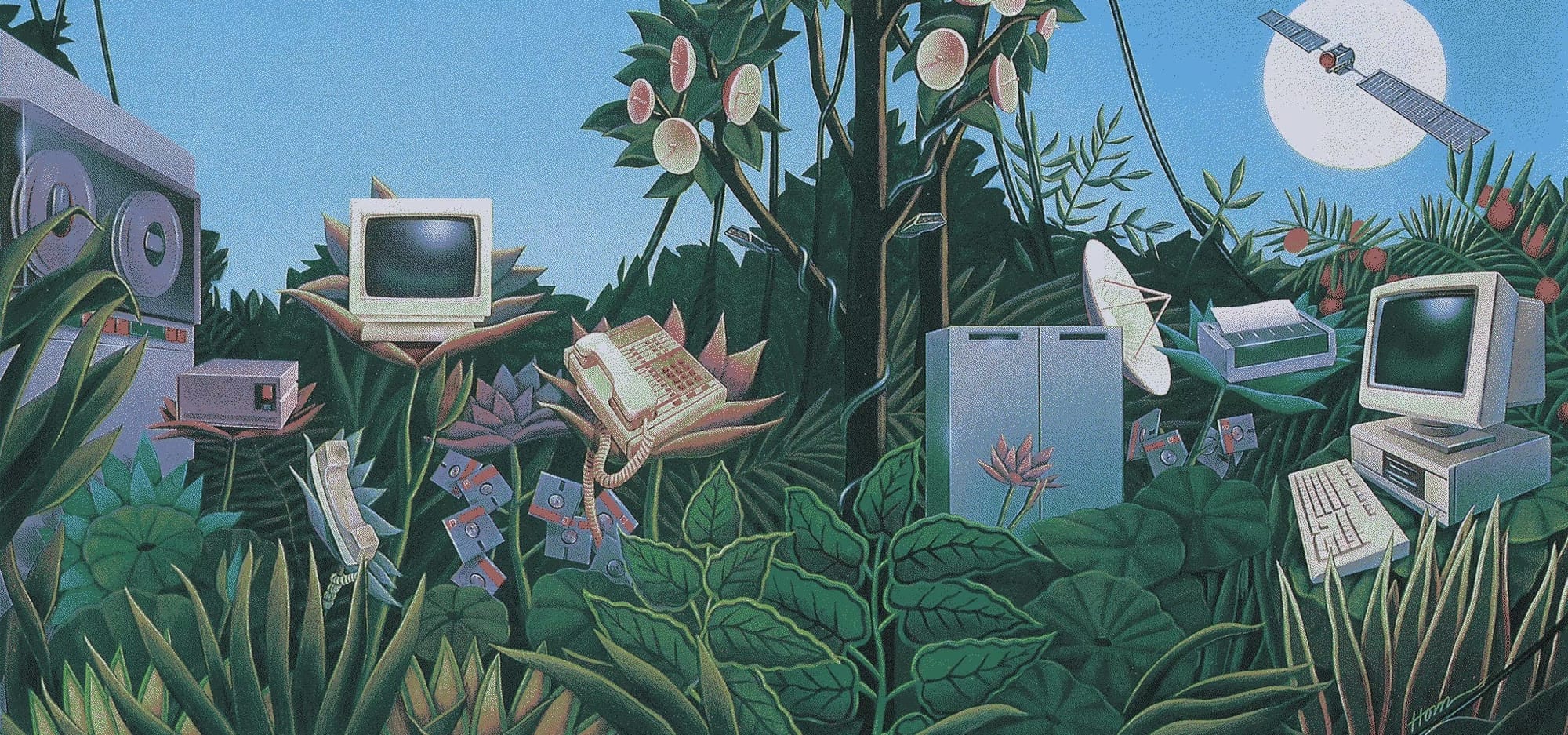
Computer Plant Life
"Thе Commodore РЕТ offers you а safe passage through the primeval swamр of computerization," says the ad copy accompanying this uncredited illustration in a June 1981 issue of Personal Computer World: That image and ad copy offers a perfect example of how most retro tech illustration works: Visualize the hell
paint: a timeline — Kristen Roos
This timeline is the result of researching the origins of digital paint and draw software, and the tools that were developed to allow for hand manipulation (versus plotter drawn) drawing and painting - the mouse, light pen & drawing tablet. If we look at the software that has become commonplace today (such as adobe photoshop), which allows for painting, animation and photo manipulation in one, we can trace the roots of this software to the University and Corporate Labs that housed large computers with advanced capabilities for their time - MIT Lincoln Labs & Radiation Labs, DARPA & the Augmented Research Centre (ARC), Bell Labs, NYIT’s Computer Graphics Lab, Xerox Palo Alto Research Centre (Xerox PARC), NASA’s Jet Propulsion Labs (JPL). The artistic collaborations that grew out of these labs fueled the advent of Computer Graphics, Computer Art and Video Art from the 1960's to the 1990's.
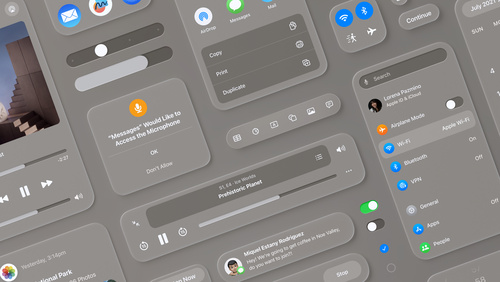
Spatial Computing
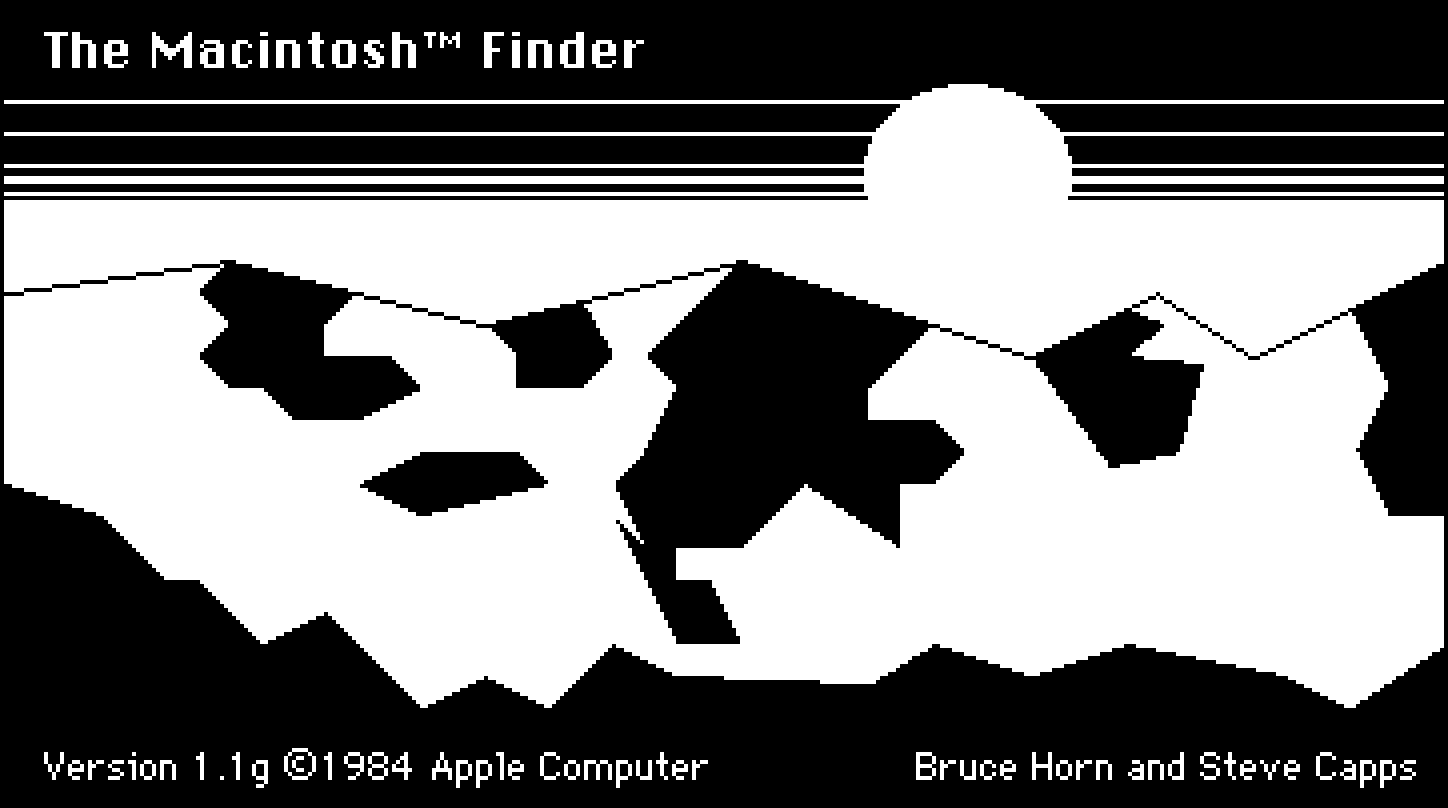
The graphical user interface on the original Macintosh was a revelation to me when I first used it at the tender age of 8 years old. Part of the magic was thanks to its use of "direct manipulation." This term was coined in the 1980s to describe the ability to control a computer without using the keyboard to explain what you wanted it to do. Instead of typing a command to move a file from one place to another, the user could just grab it and drag it to a new location.
MacBook PROLED: I Swore I’d Never Touch Screen
Early Tools for Thought, Mark Bernstein @ Tools For Thought Rocks
The Curious Case of Zoomable User Interfaces and AI
Microsoft Reveals Windows Holographic, An Augmented Reality User Interface For The World | TechCrunch
Microsoft revealed a version of Windows that blends holograms with real world video to provide users with an augmented reality version of their

Design for spatial user interfaces - WWDC23 - Videos - Apple Developer
Learn how to design great interfaces for spatial computing apps. We'll share how your existing screen-based knowledge easily translates...
Computer Graphics from Scratch - Gabriel Gambetta
Behind the beautiful imagery of the latest animated movie and the realistic environments of popular videogames lie some mysterious algorithms. Computer Graphics from Scratch aims to demystify these algorithms and shows you that computer graphics can be surprisingly simple.