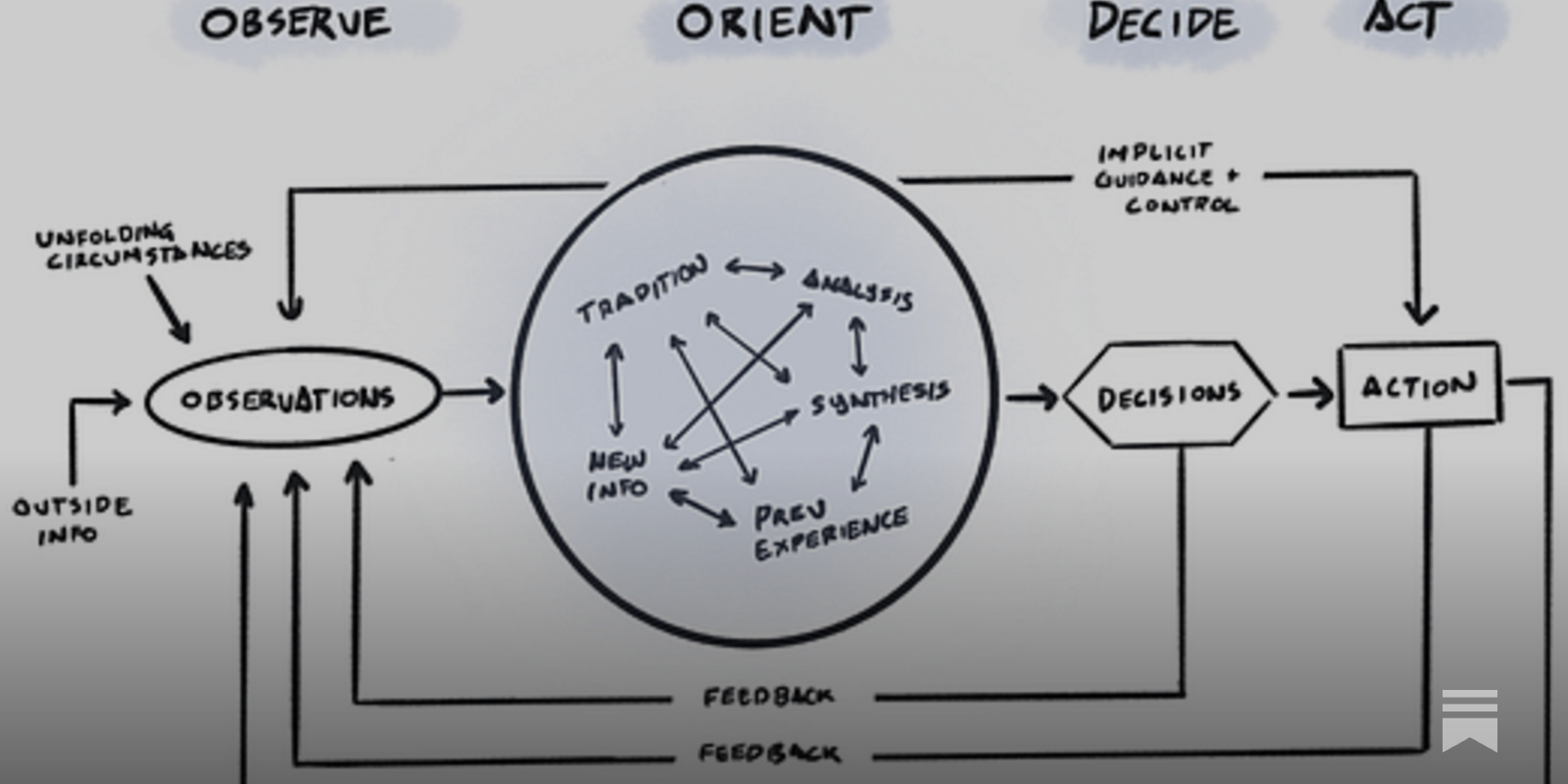
Most strategies don't fail because they were wrong. They fail because the world moved and the strategy didn't. Here is how I combine John Boyd's OODA loop with Richard Rumelt's strategy kernel to build strategy that keeps learning.
Strategy in Life
What is Strategy? Why is it easy to get wrong and so hard to get right? Strategy Structures in Life Concept-Space Getting from one point to another In a predefined direction Stars as Concept-space analogy By predefined actions Strategy in Life Know your surroundings Creating Strategies Using Strategies Summary Strategy...

Having no Strategy is a Strategy in Ottawa
What I said at my recent keynote for the Ottawa Tech Investment Summit — and what the government said three days later.

Many Strategies Fail Because They’re Not Actually Strategies
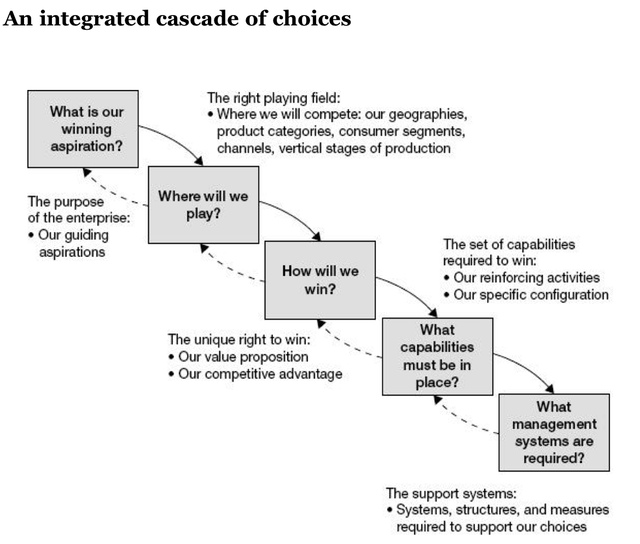
Many strategy execution processes fail because “new strategies” are often not strategies at all. A real strategy involves a clear set of choices that define what the firm is going to do and what it’s not going to do. Many strategies fail to get implemented because they do not represent such a set of clear choices. And many so-called strategies are in fact goals. “We want to be the number one or number two in all the markets in which we operate” is one of those. It does not tell you what you are going to do; all it does is tell you what you hope the outcome will be. But you’ll still need a strategy to achieve it. Another reason why many implementation efforts fail is that executives see it as a pure top-down, two-step process: “The strategy is made; now we implement it.” That’s unlikely to work. A successful strategy execution process is seldom a one-way trickle-down cascade of decisions.


Tools for thought in your OODA loop
The unreasonable effectiveness of getting oriented
Patterns of Strategy
Patterns of Strategy shows how the strategic fit between organisations drives strategic direction. It is essential reading for those who wish to understand how to manoeuvre their organisation to change its strategic fit to their advantage. The 80 ‘patterns’ of strategy help you explore options for collaboration and competition within your strategic ecosystem. A practical and authoritative guide, you can use it to plan and navigate your strategic future.

How to not screw up your product strategy | Jade Rubick - Engineering Leadership
An overview of common mistakes people make while developing a product strategy, tips for creating a successful strategy, and how to communicate and execute on a product strategy.

Playing to Win: How Strategy Really Works
How Strategy Really Works. This approach grew out of the strategy practice at Monitor Company and subsequently became the standard process at P&G.
Designing Strategy: Rushdown, Economy, and Defense
Hey everyone! Today I have a good-old-fashioned formalist-ish game design article. It’s been a little while since I’ve really done one of those, unless it was attached to Push the Lane.…

Knowing When to Stop: The Art of Making a Loop Converge | Andreessen Horowitz
The systems that matter will not be the ones that can keep going. They all can.

4 Ways to Pressure-Test Strategic Decisions, Inspired by the U.S. Military
Almost every leader has developed a process designed to avoid critical strategic mistakes, but, as the world continues to grow more complex, it’s much harder to anticipate all the changes and forces that may impact your final goal. Therefore, finding weaknesses in your strategies before you implement them and developing a rigorous process for doing so are vital. The innate ability to poke holes in one’s own strategies is something the US military has practiced and refined over centuries. Tips include forming teams that consider alternative scenarios to an expected outcome while brainstorming solutions to those scenarios if they occur; forming a council that will offer you the unvarnished truth; performing “war games” to poke holes in your own strategies; and forming a strategic council that can analyze situations from different perspectives.


Barbell strategy
In finance, a barbell strategy is formed when a trader invests in long- and short-duration bonds, but does not invest in intermediate-duration bonds. This strategy is useful when interest rates are rising; as the short term maturities are rolled over they receive a higher interest rate, raising the value.[1] A contrasting strategy is the bullet strategy, which involves investing only in intermediate-term bonds.
Solving the Engineering Strategy crisis.
These are speaking notes for my October 4th, QCon talk in San Francisco. See a video of this talk. Slides for this talk. Over the course of my career, I’ve frequently heard from colleagues, team members and random internet strangers with the same frustration: the company doesn’t have an Engineering strategy. I don’t think this problem is unique to Engineering: it’s also common to hear folks complain that they’re missing a strategy for Product, Design or Business. But, whereas I don’t feel particularly confident speaking to why so many companies are missing a clear Business or Product strategy, I’ve come to have some clear opinions about why so many engineering organizations don’t have a written strategy.

Engineering strategy notes.
Recently, I am thinking quite a bit about engineering strategy, and as part of that, I have started re-reading previous resources on the topic, and looking for new things to read while I refine my point of view on what makes for good engineering strategy. The best introduction to my current theory of engineering strategy is Solving the Engineering Strategy Crisis, which has both written and video versions. You can also read my other strategy writing via the strategy tag.