

The world is full of systems. Often they exist below the threshold of what we perceive. It’s all a whirling clockwork of near-infinite complexity, from the tiny mysteries of quantum physics to the wonder of a single tree spanning miles, to the vastness of neurons that sit inside our relatively small skulls.
The hidden ‘rules of the game’ that dictate how we navigate the world | Psyche Videos
How free are we really, if human behaviour embodies the complex, intertwined webs of society and history?

Resonite
A novel digital universe with infinite possibilities. Whether you resonate with people around the world in a casual conversation, playing games and socializing. Or you riff off each other when creating anything from art to programming complex games, you'll find your place here.
Emergence: the remarkable simplicity of complexity
From the fractal patterns of snowflakes to cellular lifeforms, our universe is full of complex phenomena – but how does this complexity arise? “Emergence” describes the ability of individual components…

Summary: Thinking in Systems (by Donella H. Meadows)
The main argument of the book: Everything in this world is made of systems. While we cannot fully understand systems, we can observe them…
🌿 Foraging in High-Dimensional Data
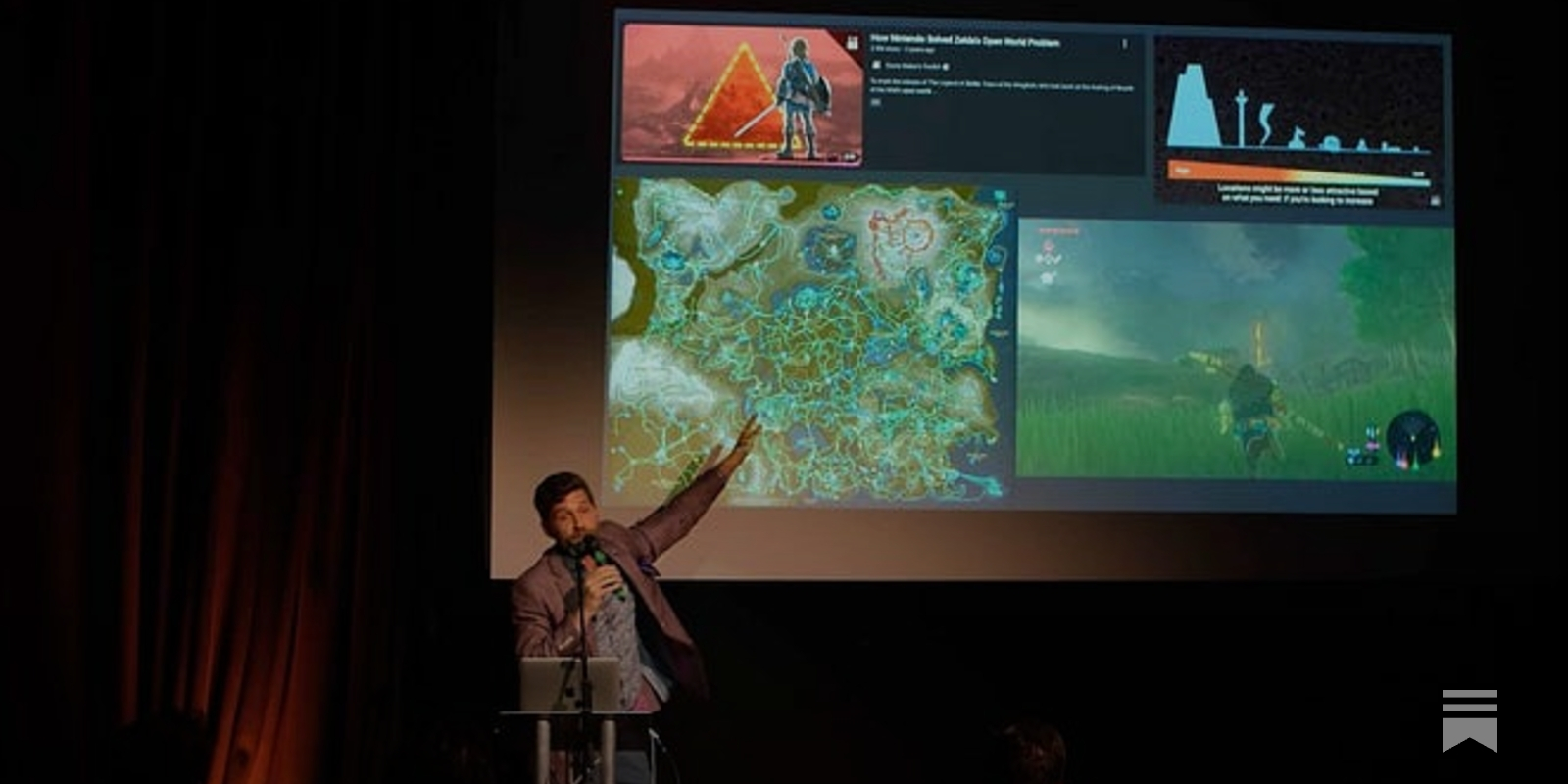
My talk from the Diverse Intelligences Summer Institute 2025 on how we can draw from thinking in complex systems science and game design to heal our relationship to the Web.
Co-Creation: Systems Thinking Beyond the Machine
Complexity thinking is all the rage — in the arts and sciences. Yet, there are two different strands of thinking about complexity, which are often confounded. The first comes from cybernetics, focussing on control in complex situations. The second is ecological, aiming at sustainable participation in a reality beyond control. Their difference rests on a fundamental distinction: is complexity rooted in feedback regulation or collective co-creation? While feedback remains mechanistic, co-creation generates new spaces of possibilities. We need it to understand life and its evolution. And it empowers us to rewrite our future, to escape our mechanistic cage without abandoning scientific rigor. In this paper, we illustrate how we implement these powerful yet abstract principles through our artistic and philosophical practice.

In an Ancient Game, Computing's Future (Published 2002)
Go is game of such depth and complexity that no computer has yet been able to achieve level of skill beyond that of casual player; game described; programmers see it as more accurate than chess in reflecting ways in which human mind works, and challenge of programming computer to mimic human process goes to core of artificial intelligence; developments in analyzing game and programming it discussed; photos (M)

The brain's 7D sandcastles could be the key to consciousness | New Scientist
We’ve glimpsed mind-bending geometric structures that fleetingly encode our thoughts, memories and feelings – and could solve the greatest mystery of all

A Life in Games | Quanta Magazine
The mathematician John Horton Conway’s myriad accomplishments — including the Game of Life, sprouts and the surreal numbers — are the product of a mind at play.

Scientists Find Evidence The Human Brain Can Create Structures in Up to 11 Dimensions
"We found a world that we had never imagined."

Software in the natural world: A computational approach to hierarchical emergence
Understanding the functional architecture of complex systems is crucial to illuminate their inner workings and enable effective methods for their prediction and control. Recent advances have introduced tools to characterise emergent macroscopic levels; however, while these approaches are successful in identifying when emergence takes place, they are limited in the extent they can determine how it does. Here we address this limitation by developing a computational approach to emergence, which characterises macroscopic processes in terms of their computational capabilities. Concretely, we articulate a view on emergence based on how software works, which is rooted on a mathematical formalism that articulates how macroscopic processes can express self-contained informational, interventional, and computational properties. This framework establishes a hierarchy of nested self-contained processes that determines what computations take place at what level, which in turn delineates the functional architecture of a complex system. This approach is illustrated on paradigmatic models from the statistical physics and computational neuroscience literature, which are shown to exhibit macroscopic processes that are akin to software in human-engineered systems. Overall, this framework enables a deeper understanding of the multi-level structure of complex systems, revealing specific ways in which they can be efficiently simulated, predicted, and controlled.

Which Computational Universe Do We Live In? | Quanta Magazine
Cryptographers want to know which of five possible worlds we inhabit, which will reveal whether truly secure cryptography is even possible.

The Fractal Brain Theory & the Unification of Neuroscience with AI & Psychology
Systems of Global Governance in the Era of Human-Machine Convergence
Technology is increasingly shaping our social structures and is becoming a driving force in altering human biology. Besides, human activities already proved to have a significant impact on the Earth system which in turn generates complex feedback loops between social and ecological systems. Furthermore, since our species evolved relatively fast from small groups of hunter-gatherers to large and technology-intensive urban agglomerations, it is not a surprise that the major institutions of human society are no longer fit to cope with the present complexity. In this note we draw foundational parallelisms between neurophysiological systems and ICT-enabled social systems, discussing how frameworks rooted in biology and physics could provide heuristic value in the design of evolutionary systems relevant to politics and economics. In this regard we highlight how the governance of emerging technology (i.e. nanotechnology, biotechnology, information technology, and cognitive science), and the one of climate change both presently confront us with a number of connected challenges. In particular: historically high level of inequality; the co-existence of growing multipolar cultural systems in an unprecedentedly connected world; the unlikely reaching of the institutional agreements required to deviate abnormal trajectories of development. We argue that wise general solutions to such interrelated issues should embed the deep understanding of how to elicit mutual incentives in the socio-economic subsystems of Earth system in order to jointly concur to a global utility function (e.g. avoiding the reach of planetary boundaries and widespread social unrest). We leave some open questions on how techno-social systems can effectively learn and adapt with respect to our understanding of geopolitical complexity.