


Shadowing is a qualitative user research method in which a researcher observes participants in real‑life contexts over an extended period without interfering. It is used to gain deep contextual insights into behaviors, workflows, environments, emotions, and workarounds.
Project Shadowglass
A stealth-focused immersive sim set within a dark fantasy kingdom. Plan daring heists, infiltrate forbidden locales, and escape with priceless artifacts. Features revolutionary 3D pixel art graphics and lasting consequences where every action could leave a trail back to you.

Sparse Virtual Shadow Maps
Devlogs and tutorials about GPGPU and graphics programming
Box Shadows - Generate CSS Box Shadows
A CSS box-shadow library and generator to create, test and share box shadows.
The Waluigi Effect (mega-post) — LessWrong
Everyone carries a shadow, and the less it is embodied in the individual’s conscious life, the blacker and denser it is. — Carl Jung …
Contextual Inquiry: Inspire Design by Observing and Interviewing Users in Their Context
Through observation and collaborative interpretation, contextual inquiry uncovers hidden insights about customer’s work that may not be available through other research methods.
Conducting a Qualitative Document Analysis
Document analysis has been an underused approach to qualitative research. This approach can be valuable for various reasons. When used to analyze pre-existing texts, this method allows researchers to conduct studies they might otherwise not be able to complete. Some researchers may not have the resources or time needed to do field research. Although videoconferencing technology and other types of software can be used to reduce some of the obstacles qualitative researchers sometimes encounter, these tools are associated with various problems. Participants might be unskillful in using technology or may not be able to afford it. Conducting a document analysis can also reduce some of the ethical concerns associated with other qualitative methods. Since document analysis is a valuable research method, one would expect to find a wide variety of literature on this topic. Unfortunately, the literature on documentary research is scant. This paper is designed to close the gap in the literature on conducting a qualitative document analysis by focusing on the advantages and limitations of using documents as a source of data and providing strategies for selecting documents. It also offers reasons for using reflexive thematic analysis and includes a hypothetical example of how a researcher might conduct a document analysis.
A Theory of Messaging Styles & Ghosting.
Online communication tools serve many purposes. So does silence.

Disqus hacks the roadmap
A recap of HackDay at Disqus featuring projects such as virtual reality moderation, a mobile publisher app, and more.

The Dark Mode Toggle Discourse
How the dark mode toggle discourse unfolded One designer's argument against the classic light/dark/system three-way switch turned into weeks of blog rebuttals, parody posts, and "do you even need a toggle at all?" takes. The timeline Aug 1…
Introduce the Vouch/Denouncement Contribution Model by mitchellh · Pull Request #10559 · ghostty-org/ghostty
This moves Ghostty to a vouch-based contribution system. The high-level idea is that only vouched users can participate in contributing to Ghostty. Users are vouched by maintainers commenting &...
Field Studies
Field research is conducted in the user’s natural setting. Learn the unexpected by leaving the office and observing people in their normal environments.

An investigation into alleged ‘hauntings’
In cases of alleged hauntings, a large number of seemingly trustworthy witnesses consistently report experiencing unusual phenomena (e.g. apparitions, sudden changes in temperature, a strong sense of presence) in certain locations. The two studies reported here explored the psychological mechanisms that underlie this apparent evidence of ‘ghostly’ activity. The experiments took place at two locations that have a considerable reputation for being haunted—Hampton Court Palace (Surrey, England) and the South Bridge Vaults (Edinburgh, Scotland). Both studies involved participants walking around these locations and reporting where they experienced unusual phenomena. Results revealed significantly more reports of unusual experiences in areas that had a reputation for being haunted. This effect was not related to participants' prior knowledge about the reputation of these areas. However, the location of participants' experiences correlated significantly with various environmental factors, including, for example, the variance of local magnetic fields and lighting levels. These findings strongly suggest that alleged hauntings may not necessarily represent evidence for ‘ghostly’ activity, but could be, at least in part, the result of people responding to ‘normal’ factors in their surroundings.

Vibe Coding | The Paper Pilot
The Paper Pilot's digital garden of thoughts on philosophy, politics, and sociology
Beyond APIs: Collecting Web Data for Research using the National Internet Observatory
Widespread Internet use offers unprecedented opportunities to study human behavior at scale, yet researchers face significant ethical and technical barriers when attempting to collect data for academic studies.
“Influencing the influencers:” a field experimental approach to promoting effective mental health communication on TikTok
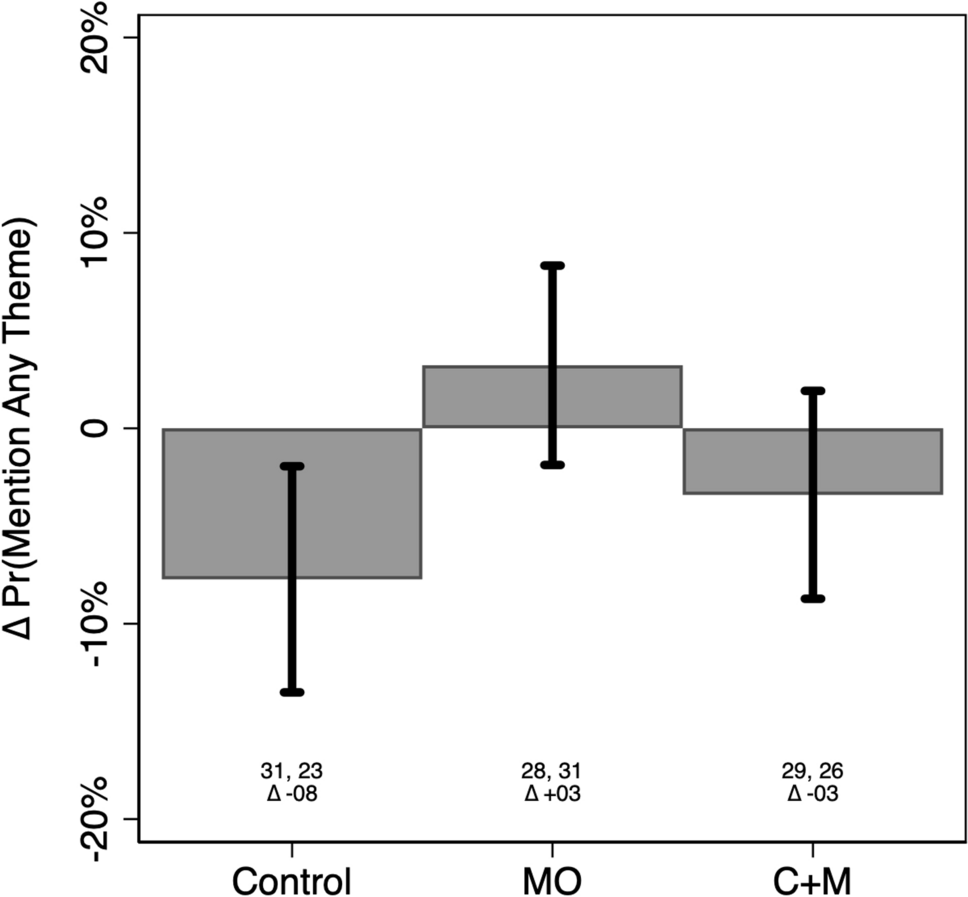
A substantial body of social scientific research considers the negative mental health consequences of social media use on TikTok. Fewer, however, consider the potentially positive impact that mental health content creators (“influencers”) on TikTok can have to improve health outcomes; including the degree to which the platform exposes users to evidence-based mental health communication. Our novel, influencer-led approach remedies this shortcoming by attempting to change TikTok creator content-producing behavior via a large, within-subject field experiment (N = 105 creators with a reach of over 16.9 million viewers; N = 3465 unique videos). Our randomly-assigned field intervention exposed influencers on the platform to either (a) asynchronous digital (.pdf) toolkits, or (b) both toolkits and synchronous virtual training sessions that aimed to promote effective evidence-based mental health communication (relative to a control condition, exposed to neither intervention). We find that creators treated with our asynchronous toolkits—and, in some cases, those also attending synchronous training sessions—were significantly more likely to (i) feature evidence-based mental health content in their videos and (ii) generate video content related to mental health issues. Moderation analyses further reveal that these effects are not limited to only those creators with followings under 2 million users. Importantly, we also document large system-level effects of exposure to our interventions; such that TikTok videos featuring evidence-based content received over half a million additional views in the post-intervention period in the study’s treatment groups, while treatment group mental health content (in general) received over three million additional views. We conclude by discussing how simple, cost-effective, and influencer-led interventions like ours can be deployed at scale to influence mental health content on TikTok.
The snake eating its own tail effect of AI agents isn’t so much a problem of training data model collapse as the collapse of the social epistemic foundations by which human sense-making can be carried out at all—and which AI agents *also* rely on for whatever facsimile of sense-making they conduct.

Ryan McGrady
The original: arstechnica.com/ai/2026/02/after-a-routine-co… and the context: theshamblog.com/an-ai-agent-published-a-hit-p… I hope they elaborate on the retraction, too, though I'm glad they acted quickly to take it down (and hope they put more effort into covering this terrifying story, since it's in their wheelhouse)
