

Rayyan is the pioneering AI-powered platform redefining evidence-based research & decision-making. Designed for efficient systematic literature review ...
AI-powered Literature Review & Synthesis
Recording from my workshop last week on smarter literature review with AI
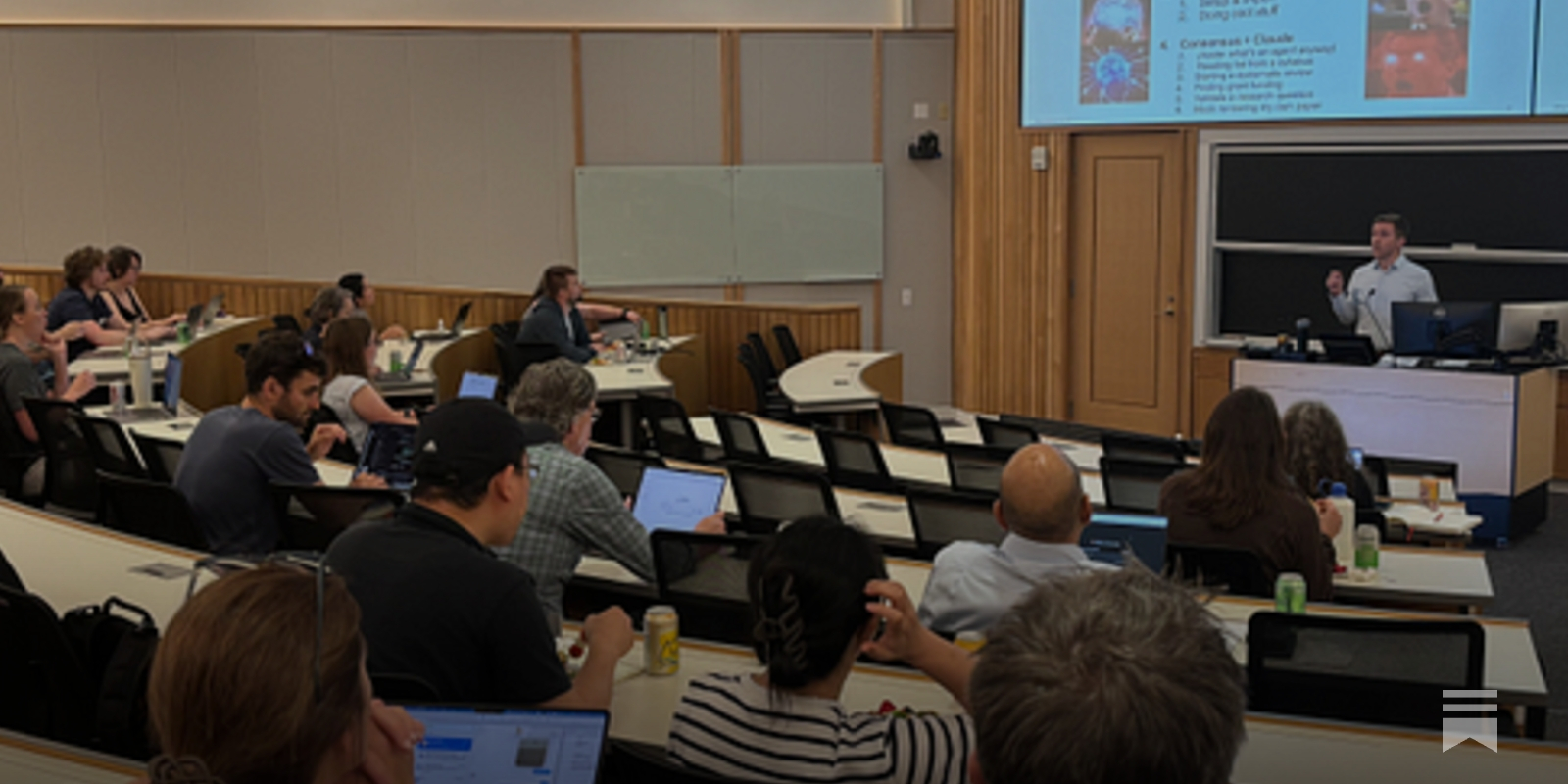
DistillerSR: AI-Enabled Literature Review Software
AI-enabled software that automates literature reviews so you can deliver better research faster and share it across your organization.

Idea Gatekeeper
AI-powered research idea evaluation platform. Evaluate your research pitch quality using models trained on institutional publication traces.
AI Research Assistant Claude Scholar: Open Source, Free, and Citation-Verified | João Cláudio Nunes Carvalho posted on the topic | LinkedIn
🚨 Professors are going to hate this. Someone just open sourced an AI that writes research papers from idea to publication. Conference-ready. Citation-verified. Free. It's called Claude Scholar. An AI-powered research system that handles every step of the academic workflow. Idea to publication. Fully automated. No advisor at 2am. No staring at blank LaTeX files. No crying during rebuttal season. Here's what's inside this thing: → AI brainstorms research topics, reviews literature, and finds gaps nobody has explored → Runs statistical analysis on your experiments. t-tests, ANOVA, ablation studies. Publication-ready figures. → Writes your paper section by section. Abstract to conclusion. Conference-formatted. → Verifies every citation through multi-layer validation so AI never hallucinates a reference → Strips robotic AI language and adds human voice so reviewers can't tell → Self-reviews your draft with a 6-point quality checklist before you submit → Parses reviewer comments, classifies each one, and drafts your entire rebuttal Here's the wildest part: It supports NeurIPS, ICML, ICLR, ACL, AAAI, Nature, Science, Cell, and PNAS. Downloads the conference template, strips sample content, and gives you a clean LaTeX structure ready to write into. The creator says it covers 90% of the academic research lifecycle. Research assistants charge $30 to $60/hour. Conference paper consultants charge $5,000+. Graduate programs cost $50K/year. This is free. All of it. 100% Open Source.

Where does the rigor go? Research software and the future of trustworthy science.
Generative AI now makes it dramatically easier to produce something that looks like research: analysis code, figures, literature reviews, even whole pap…
No. 002: Hallucinated citations at scale, ICML catches AI reviewers, scholarly infrastructure gaps - The Hallway Track
The Hallway Track No. 002 - How AI is affecting the practice of science
Atlas Research - AI-Powered Research Platform
Transform your research workflow with Atlas - an AI-powered platform for data analysis, PDF processing, and interactive notebooks.

Consensus: AI for Research
Consensus is an AI academic search engine for peer-reviewed literature—your research OS for finding, organizing, and analyzing science 10x faster.

Exploring AI’s growing role in scientific peer review
Stanford computer scientist James Zou discusses AI’s strengths at spotting errors and limitations in judging research significance.

Governing the scholarly AI Commons – Open Future
New report explores how academic communities can shape AI governance in research and publishing, from regulation to community-led approaches.
Responsible AI Principles and Approach | Microsoft AI
Discover Microsoft AI tools, industry-specific governance solutions, and responsible AI practices to make smarter, more informed decisions about AI implementation.

AI-Assisted Tools in the CHI 2027 Papers Review Process: What They Do, What They Do Not Do, and How Humans Remain Responsible - ACM CHI 2027
AI-Assisted Tools in the CHI 2027 Papers Review Process: What They Do, What They Do Not Do, and How Humans Remain Responsible Authors: Anna Cox, Tony Tang, Thomas Kosch, Erin Solovey, Petra Isenberg, Regan MandrykDate: 2026-08-29 Introduction In our recent post explaining the CHI 2027 Papers review process, we said we would pilot several AI-assisted […]

OpenScience.ai — Autonomous AI Research Agents
AI agents conducting reproducible scientific inquiry. Full provenance, executable notebooks, peer validation.


New preprint! We introduce a new benchmark, SciConBench, with 9.11k scientific questions derived from Cochrane Systematic Reviews. We find evidence that frontier AI agents **cannot** synthesize scientific conclusions well. A thread 🧵 w/ @hayoungjung.bsky.social & others!
