

45 votes, 239 comments. 60M subscribers in the AskReddit community. r/AskReddit is the place to ask and answer thought-provoking questions.
What’s something that helps you fall asleep fast?
45 votes, 239 comments. 60M subscribers in the AskReddit community. r/AskReddit is the place to ask and answer thought-provoking questions.
What’s something that helps you fall asleep fast?
45 votes, 239 comments. 60M subscribers in the AskReddit community. r/AskReddit is the place to ask and answer thought-provoking questions.
What’s something that helps you fall asleep fast?
45 votes, 239 comments. 60M subscribers in the AskReddit community. r/AskReddit is the place to ask and answer thought-provoking questions.
Methods to fall asleep quickly/instantly?
36 votes, 40 comments. Any tips on falling asleep INSTANTLY? For years I have been staying up until 1 AM (usually) and my body has adapted to it. Now…
this is THE method to fall asleep in under 5 mins
805 votes, 170 comments. Get into your sleeping position (preferably laying on your back) and close your eyes. Now start blinking AS FAST as you can…
How do you turn your brain off to sleep?
83 votes, 119 comments. All day long I feel like my head is empty and I'm not thinking about much. Or, maybe it's that I don't notice that I'm…
I couldn’t sleep, then I tried cognitive shuffling | Psyche Notes to Self
The usual advice didn’t help my sleep problems, but then I tried an exercise that kickstarts the sleep-onset control system

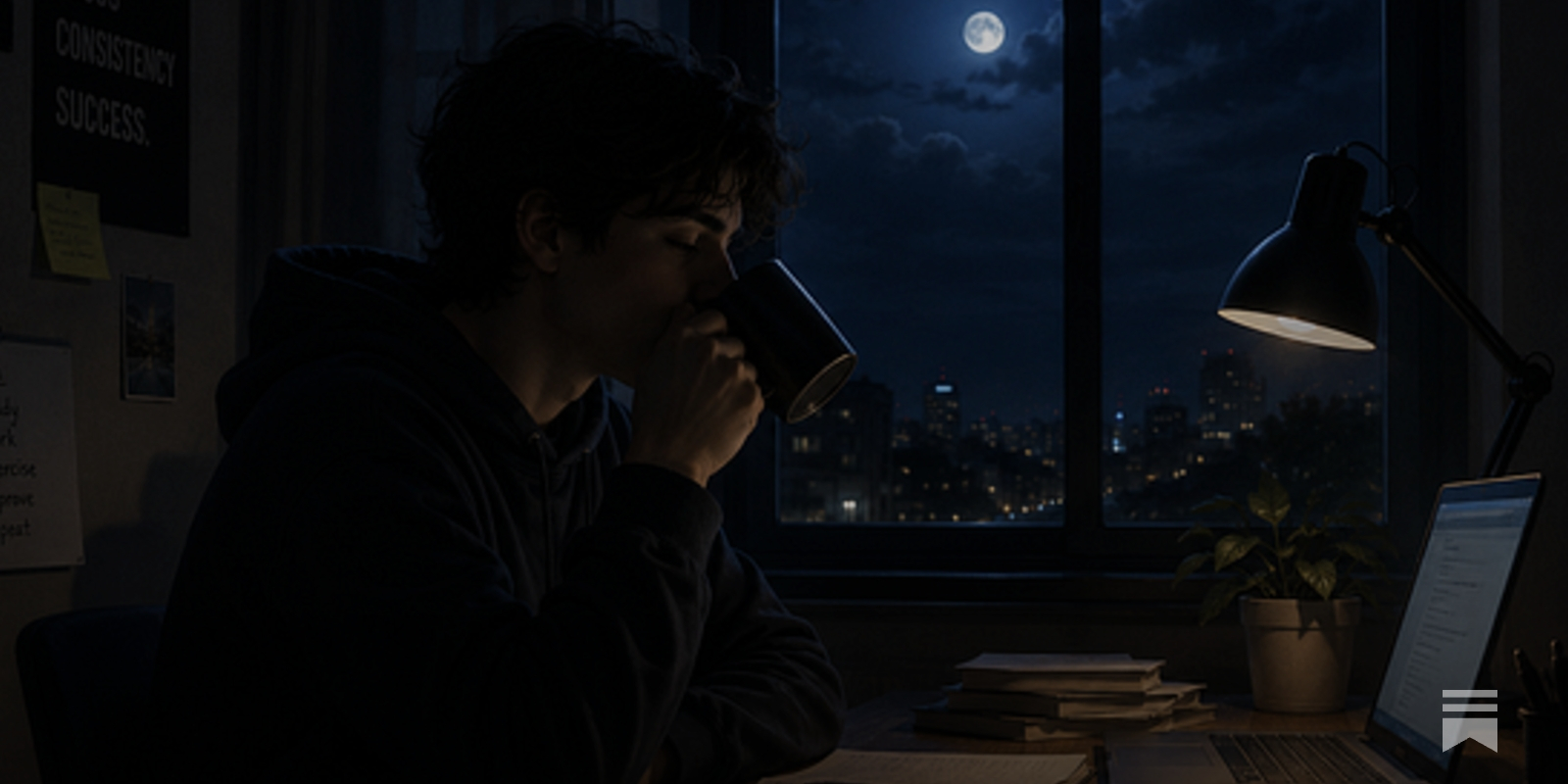
Sleep: Educational Impact and Habit Formation
In a field experiment among US university students, incentives for sleep increase both sleep and academic performance. Our primary intervention pairs bedtime reminders with morning feedback and immediate rewards for sleeping at least 7 hours on weeknights. The intervention raises the share of weeknights with 7+ hours of sleep by 26% and average sleep by 19 minutes during a 4-week treatment period, with posttreatment effects of 8 minutes. Immediate incentives outperform both delayed incentives and reminders/feedback alone during treatment but have no distinguishable impacts posttreatment. The primary intervention improves average semester course performance by 0.075–0.089 grade points, a 0.10–0.11 standard deviation increase. Our results demonstrate that incentives targeting sleep can be a cost-effective approach to improve educational outcomes.
The Mythical Agent-Month – Wes McKinney
Like a lot of people, I’ve found that AI is terrible for my sleep schedule. In the past I’d wake up briefly at 4 or 4:30 in the morning to have a sip of water or use the bathroom; now I have trouble going back to sleep. I could be doing things. Before I would get a solid 7-8 hours a night; now I’m lucky when I get 6. I’ve largely stopped fighting it: now when I’m rolling around restlessly in bed at 5:07am with ideas to feed my AI coding agents, I just get up and start my day.

Nicolas Mattia – Keep your Mac awake with caffeinate
This explains how to keep a Mac from going to sleep using a simple command
Instinctive sleeping and resting postures: an anthropological and zoological approach to treatment of low back and joint pain
Your access to the NCBI website at www.ncbi.nlm.nih.gov has been temporarily blocked due to a possible misuse/abuse situation involving your site. This is not an indication of a security issue such as a virus or attack. It could be something as simple as a run away script or learning how to better use E-utilities, http://www.ncbi.nlm.nih.gov/books/NBK25497/, for more efficient work such that your work does not impact the ability of other researchers to also use our site. To restore access and understand how to better interact with our site to avoid this in the future, please have your system administrator contact info@ncbi.nlm.nih.gov.
Matt Pocock on Twitter / X
There's an AI coding approach that lets you run seriously long-running AI agents (hours, days) that ship code while you sleep. I've tried it, and I'm not going back.It's the Ralph Wiggum approach. Here it is in a nutshell:Run a coding agent with a clean slate, again and again…— Matt Pocock (@mattpocockuk) January 4, 2026
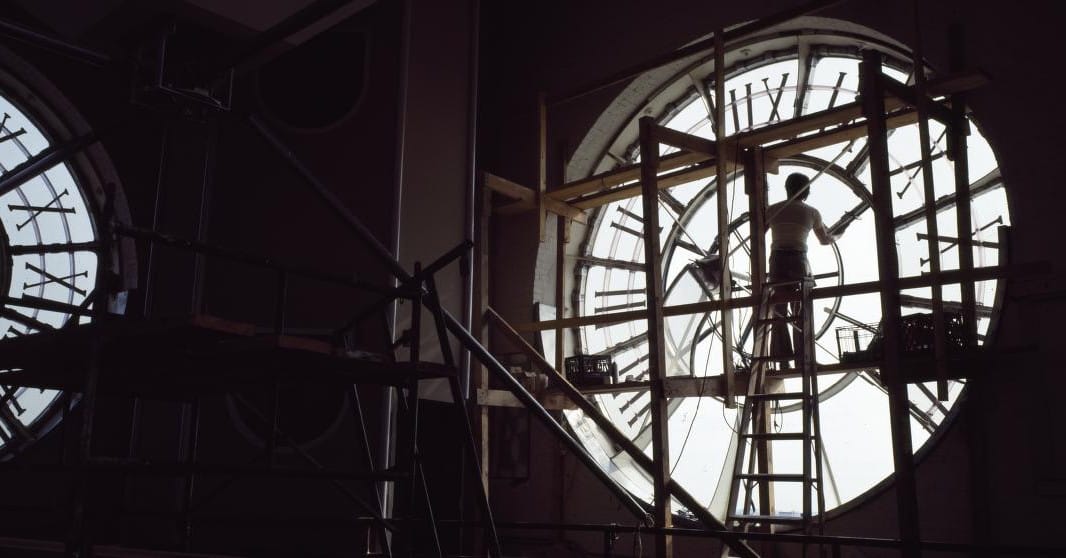
What Did Ancient Humans Do at Night?
Language Models Need Sleep
View recent discussion. Abstract: Transformer-based large language models are increasingly used for long-horizon tasks; however, their attention mechanism scales poorly with context length. To handle this, we study a sleep-like consolidation mechanism in which a model periodically converts recent context into persistent fast weights before clearing its key-value cache. During sleep, the model performs $N$ offline recurrent passes over the accumulated context and updates the fast weights in its state-space model (SSM) blocks through a learned local rule. During inference, this shifts extra computation to sleep while preserving the latency of wake-time prediction. We test our method on controlled synthetic tasks, including cellular automata and multi-hop graph retrieval, as well as a realistic math reasoning task, on which a regular transformer as well as SSM-attention hybrid models fail. We then show that increasing sleep duration $N$ for our models improves performance, with the largest gains on examples that require deeper reasoning.