

Financial Literacy, Financial Education, and Downstream Financial Behaviors
Policy makers have embraced financial education as a necessary antidote to the increasing complexity of consumers' financial decisions over the last generation. We conduct a meta-analysis of the relationship of financial literacy and of financial education to financial behaviors in 168 papers covering 201 prior studies. We find that interventions to improve financial literacy explain only 0.1% of the variance in financial behaviors studied, with weaker effects in low-income samples. Like other education, financial education decays over time; even large interventions with many hours of instruction have negligible effects on behavior 20 months or more from the time of intervention. Correlational studies that measure financial literacy find stronger associations with financial behaviors. We conduct three empirical studies, and we find that the partial effects of financial literacy diminish dramatically when one controls for psychological traits that have been omitted in prior research or when one uses an instrument for financial literacy to control for omitted variables. Financial education as studied to date has serious limitations that have been masked by the apparently larger effects in correlational studies. We envisage a reduced role for financial education that is not elaborated or acted upon soon afterward. We suggest a real but narrower role for “just-in-time” financial education tied to specific behaviors it intends to help. We conclude with a discussion of the characteristics of behaviors that might affect the policy maker's mix of financial education, choice architecture, and regulation as tools to help consumer financial behavior. This paper was accepted by Uri Gneezy, behavioral economics.

If You’re Not Getting Rich in your 20s, You’re Doing it Wrong
Whenever something unusually interesting in the field of personal finance shows up in the news, Mr. Money Mustache hears about it. Our diligent network of Mustachian Volunteer Spies combs and filte…

Young Households Are Losing Ground in Income, Despite Education (Published 2014)
The Fed’s 2013 Survey of Consumer Finances indicates that the median family headed by someone under 35 was paid less, in inflation-adjusted dollars, than a similar family in 1989.

These Young Adults Make Good Money. But Life, They Say, Is Unaffordable: Economists say that a typical middle-class family today is richer than one in the 1960s. Americans in their 20s and 30s don’t believe it.
1.1M subscribers in the economy community. Forum for economy, business, politics, stocks, bonds, product releases, IPOs, advice, news, investment…
Doing what you love when the money won’t follow
I have frequently been critical of the advice given by baby boomers to “do what you love and the money will follow”. After the hard experience of my generation and the ones following it…

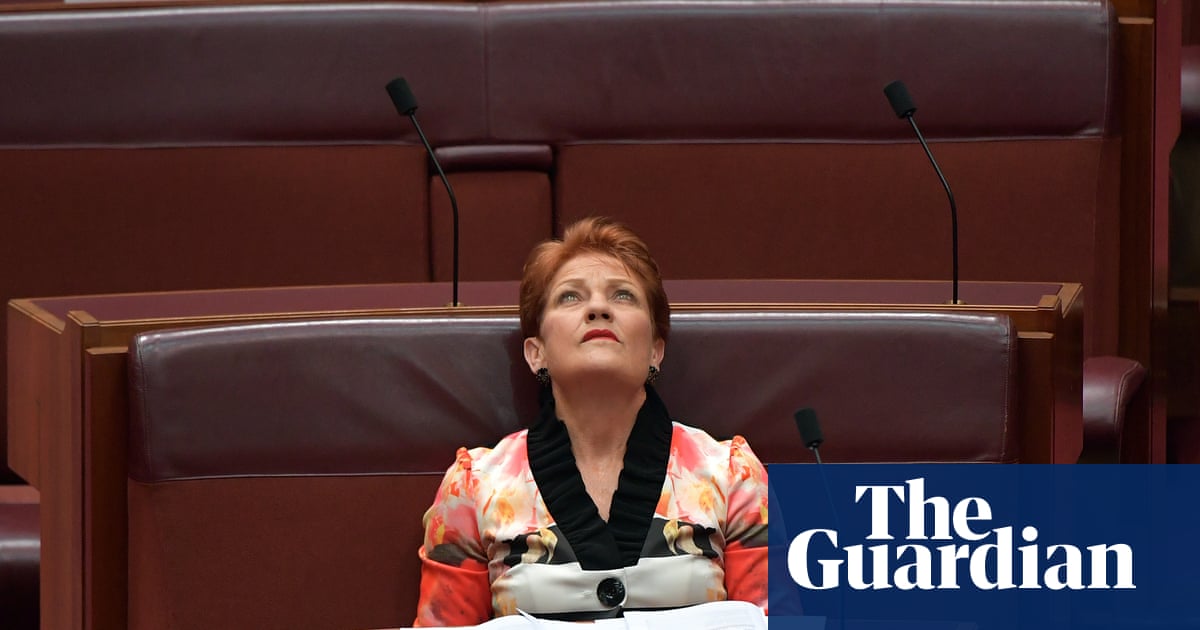
One Nation’s ‘incredibly sloppy’ financial reports reveal more than $1m in missing or worthless assets
Financial returns, obtained by the Guardian, are ‘very poor and unprofessional’ and call into question party’s fitness to govern, expert says
‘Shopping is a nightmare’: how ADHD affects people’s spending habits
Research shared exclusively with Guardian Money shows the effects the condition can have on finances

5: Behavioural biases in personal finance
Behavioural economics merges psychology and economics to explore systematic deviations in financial decision-making from traditional economic models. This chapter examines key biases such as mental accounting, present bias, planning fallacy, and misunderstanding of risk, which influence spending, saving, investing, and insuring decisions. Demonstrating the interplay of cognitive biases and heuristics highlights why individuals make suboptimal choices despite financial literacy and resource capacity. Strategies like goal-setting, commitment devices, and education interventions are evaluated, focusing on their limitations and potential for addressing these biases. The chapter concludes by emphasising the need for systemic changes, such as policy-level interventions and financial regulation, to complement behavioural interventions and address structural barriers to better financial decisions. Future research directions are suggested, including tailoring interventions, exploring technology's role, and integrating systemic solutions to support sustainable financial well-being.
Knowing When to Spend: Unintended Financial Consequences of Earmarking to Encourage Savings
Maintaining savings is an important financial goal. Yet there are times when savings should be spent, such as when people face unavoidable costs, and spending their savings allows them to avoid high interest rate debt. Existing behavioral research has focused on consumer decisions between savings and discretionary spending and has proposed interventions to promote savings in these contexts. However, when spending is not discretionary, such interventions could risk exacerbating a pattern found in economic research in which people borrow high interest rate debt while maintaining savings that earn low levels of interest. To examine how mental accounting interacts with considerations of personal responsibility and guilt to contribute to this pattern, this article explores whether people spend their savings when they need money most: during emergencies. Six studies reveal that people's tendency to preserve savings by borrowing from a high interest rate credit option varies as a function of the savings’ intended use. Paradoxically, people are most likely to turn to high interest rate credit with the belief that doing so is the responsible option.

10 Quiet Clues Someone Wasn't Raised With Financial Stability, According To Psychology
Shame around money doesn't simply disappear overnight.

The Credit Card Debt Puzzle: The Role of Preferences, Credit Access Risk, and Financial Literacy
Abstract. We use the 1979 National Longitudinal Survey of Youth to revisit what is termed the credit card debt puzzle: why consumers simultaneously co-hold high-interest credit card debt and low-interest assets that could be used to pay down this debt. Relative to individuals with no credit card debt but positive liquid assets, borrower-savers have very different perceptions of future credit access risk and use credit cards for precautionary motives. Moreover, changing perceptions about credit access risk are essential for predicting transitions among the two groups. Preferences and the composition of financial portfolios also play a role in these transitions.
More young people are struggling and there is no quick fix. Why being young is getting worse
1K votes, 39 comments. 405K subscribers in the lostgeneration community. For those who did everything our parents told us to do... now what? --…
Ripping Off Young America: The College-Loan Scandal
The federal government has made it easier than ever to borrow money for higher education - saddling a generation with crushing debts and inflating a b

Household Finance
Household financial decisions are complex, interdependent, and heterogeneous, and central to the functioning of the financial system. We present an overview of the rapidly expanding literature on household finance (with some important exceptions) and suggest directions for future research. We begin with the theory and empirics of asset market participation and asset allocation over the life cycle. We then discuss household choices in insurance markets, trading behavior, decisions on retirement saving, and financial choices by retirees. We survey research on liabilities, including mortgage choice, refinancing, and default, and household behavior in unsecured credit markets, including credit cards and payday lending. We then connect the household to its social environment, including peer effects, cultural and hereditary factors, intra-household financial decision-making, financial literacy, cognition, and educational interventions. We also discuss literature on the provision and consumption of financial advice.
Can Self-Control Explain Avoiding Free Money? Evidence from Interest-Free Student Loans
Abstract This paper uses insights from behavioral economics to explain a particularly surprising borrowing phenomenon: one in six undergraduate students offered interest-free loans turns them down. Models of impulse control predict that students may optimally reject subsidized loans to avoid excessive consumption during school. Using the National Postsecondary Student Aid Study, we investigate students' take-up decisions and identify a group of students for whom the loans create an especially tempting liquidity increase. Students who would receive the loan in cash are significantly more likely to turn it down, suggesting that consumers choose to limit their liquidity in economically meaningful situations.
The Ostrich in Us: Selective Attention to Personal Finances
Abstract We analyze attention to personal finances using a high-frequency panel of bank data, including information on logins. We document a number of robust patterns. Relative to their personal histories, individuals pay more attention when holding more cash and liquidity and when receiving income. In contrast, attention decreases discretely as bank account balances go from positive to negative and then decreases further as overdraft debt increases. We conclude that Ostrich effects in a personal finance context, i.e., the avoidance of obtaining information on everyday personal finances, is a widespread phenomenon and explore a number of explanations for our findings.
