21 votes, 30 comments. hey everyone... I am new here. I’ve been reading a lot about assistive technology lately and noticing a huge gap between what…
DevEx in Action
Somewhere, right now, a software developer is pulling open a ticket from the project backlog, excited by the prospect of working on something new. As the developer begins reading through the description of the task, their laptop is suddenly flooded with alerts from the team’s production error-tracking system, disrupting the developer’s ability to focus. Eventually, returning to the task at hand, the developer studies the requirements described in the ticket. Unfortunately, the task lacks context and clarity, so the developer asks for help, which will take days to resolve.

How Do You Solve A Problem Like Microsoft? | TechCrunch
It's great at business software and technology, but Microsoft still struggles to make coherent consumer products. The problem seems ingrained and cultural, starting with its constant reversion to ecosystem plays and through to its increasingly bizarre user interfaces. Maybe the solution is to stop trying to be so fancy and focus more on its engineering roots instead?

Ask Slashdot: Why Aren't Techies Improving The World? - Slashdot
Slashdot reader marmot7 isn't impressed by "the latest app that solves some made up problem. I'm impressed by apps that solve real problems..." I don't feel that developers, sys admins, finance people, even policy wonks focus on the problems that we need to solve to have a healthy functioning socie...

Hundreds of Ways to Get S#!+ Done—and We Still Don’t
You want to be productive. Software wants to help. But even with a glut of tools claiming to make us all into taskmasters, we almost never master our tasks.

Sung Kim (@sungkim.bsky.social)
I like this quote on code review: "The idea that humans will reliably look through code to find the increasingly rare issues that automated tools miss seems like a fantasy." By Marc Brooker, AWS.

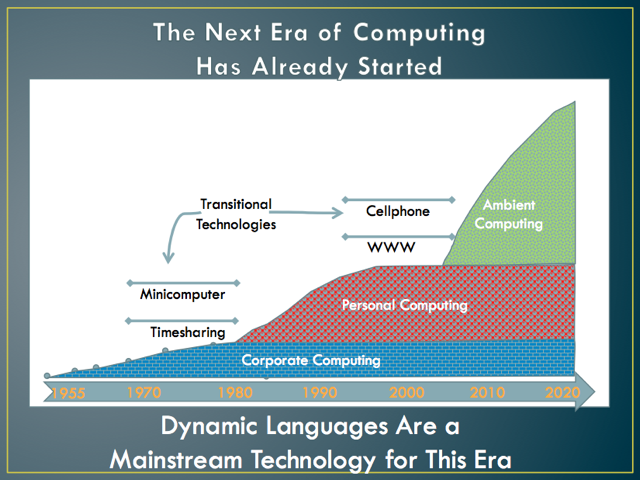
The Third Era of Computing
Most of us spend most of our time working on immediate problems. Designing a new site, adding a feature to an app, revising a specification, etc. We all need to focus on these short-term problems but sometimes it is useful to step back and look at the larger context within which we are working. L
Stop Begging Billionaires To Fix Software — Build Your Own
This is part one of a two-part series on using AI tools as one piece to fight back against tech company control of our lives. Part two shares the details of how I built my own task management tool …

The 40 Most Rage-Inducing Problems in Tech
The bugs, broken apps, and nightmare customer-service bots we can't escape, presented as a blessed and sacred addendum to Pope Leo XIV’s new encyclical on AI

How Developers Stop Learning: Rise of the Expert Beginner - DaedTech
In this post, I describe the phenomenon of the so-called expert beginner -- someone with mediocre skill who thinks he's an expert.

Ten FOSS Development Fallacies For User Facing Software
This is a list, inspired by the Five Geek Social Fallacies, of common patterns or behaviours that developers of free/open source software (FOSS) fall into when they try to develop software for users who are not technical, or for whom non-technical users would be the most obvious userbase. Hopefully writing these down (which frankly is cathartic more than anything) is helpful to some in recognising these thought patterns and avoiding them when developing software - I’ve got some of my own thoughts on this at the bottom.
Software and its Discontents, January 2023, Part 1
Over the last few months I’ve been intrigued by a question: where is the frustration and disillusionment, so prevalent currently in the software industry, coming from? And, as an engineering leader, what can I learn from this discontent and how should it shape my practices?
The low-tech guys
No-buzzwords driven development. We create those apps that you never thought you need but now you can't stop using them.

How to write error messages that actually help users rather than frustrate them
One of the most consistently neglected parts of today’s user experiences is our handling of errors. We’re so busy designing the happy paths through our products that we often forget to give the same care and attention to the times when things will go wrong
How I stopped worrying and learned to love the easy fix
On the balance between perfect solutions and pragmatic fixes in software engineering
Why Silicon Valley can’t fix itself
The long read: Tech insiders have finally started admitting their mistakes – but the solutions they are offering could just help the big players get even more powerful