

Substack Writers Concerned as Subscriptions ‘Plummet’ Due to Follow Feature
Substack writers are expressing their concerns about the platform’s following feature on social media, which some argue is suppressing their subscription growth.

Destacked: Why I Avoid Substack As Much as Possible - Jacky Alciné
From Substack LLC's attempt to capture the concept of a newsletter as a verb to their overt encouragement and support for Neo-Nazi content, don't expect me to post anything on that platform. I explain why.

Has Substack’s subscription model really “maxed out?”
Scott Carney and Taylor Lorenz posted on Substack about downward subscriber trends they’re seeing. Carney pins it on subscription fatigue and feeling like “The only way to grow is to pillage the paid subscribers from other creators.” Lorenz questions Substack’s direction, saying “more and more like this app is becoming another social media feed.” When we recently wrote about writers who are leaving Substack, they mentioned control, pricing, and the social feature creep among their reasons for choosing competitors like Ghost and Behiiv. [Link: Writers are fleeing the Substack Tax | https://www.theverge.com/tech/927294/substack-tax-ghost-beehiiv | The Verge]

Is Substack Notes a ‘Twitter clone’? We asked CEO Chris Best
Substack Notes just dropped. Can the startup survive this foray into social media?

Substack faces user revolt over anti-censorship stance on neo-Nazis
Newsletter writers with thousands of subscribers threaten to leave platform, which says banning extremists makes things worse
The Substackerati
Did a newsletter company create a more equitable media system—or replicate the flaws of the old one?
The Top 40 Substack Newsletters by Organic Traffic (in case you were wondering)
Substack doesn't publicly state what the most popular newsletters are. So I found out and showed them here.
How The Enshittification Of Social Media Is Decreasing The Switching Costs And Enabling Something New
In the last few weeks I’ve written about how Elon Musk’s “changes” to how Twitter is running have done an amazing job convincing people to join Mastodon. And I’ve also…

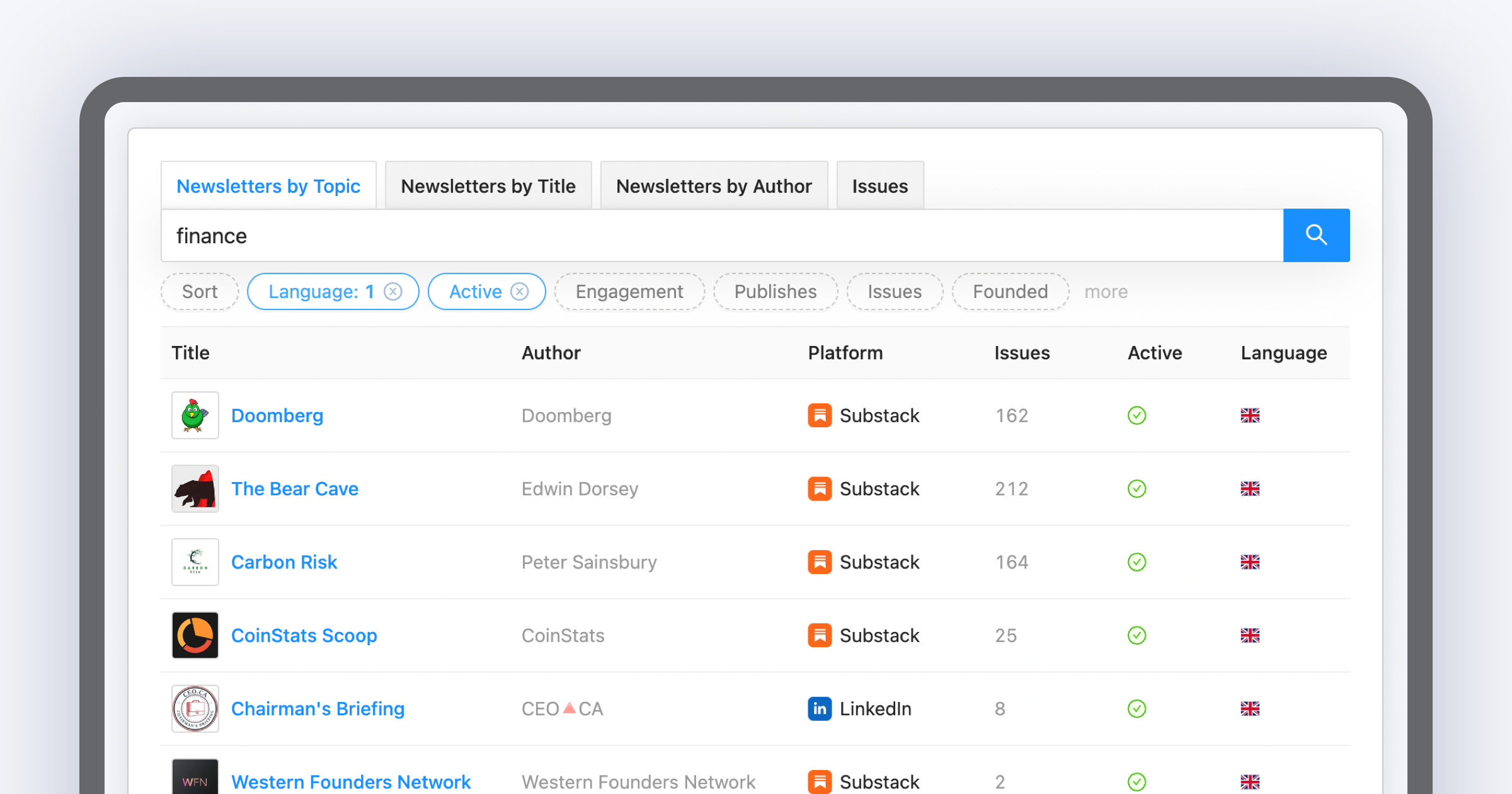
Top 50 - Substack Newsletter Charts - Reletter
View the highest ranked Substack newsletters in the Top 50 category.
Revealed: How Substack makes money from hosting Nazi newsletters
Exclusive: Site takes a cut of subscriptions to content that promotes far-right ideology, white supremacy and antisemitism
Revealed: How Substack makes money from hosting Nazi newsletters
Exclusive: Site takes a cut of subscriptions to content that promotes far-right ideology, white supremacy and antisemitism
Substack Has a Nazi Problem
The newsletter platform’s lax content moderation creates an opening for white nationalists eager to get their message out.
Why Did I Leave Substack, Anyway?
Last week, my friends at Scratch reached out to ask if I'd be interesting in answering questions about why I moved my newsletter off Substack. Of course I would! I've written some about it here, as you know, but I'm always game to talk more about this,

Writers of Color Are Leaving the Journalism Industry for Substack. Is It Better There?
Postdoctoral Fellow Nelanthi Hewa spoke to writers and journalists of color about their experiences on the email newsletter platform Substack.
Shifts in U.S. Social Media Use, 2020–2024: Decline, Fragmentation, and Enduring Polarization
The social media ecosystem appears to be in flux. Twitter’s rebranding to X has come to symbolize a broader reorganization of online publics – political reshuffling, user attrition, and uncertainty over the role of legacy platforms. Simultaneously, the shift from text-based, networked feeds toward algorithmically curated, short-form video has accelerated, with TikTok setting the pace for the wider ecosystem [18, 14, 16]. At the same time, everyday communication increasingly migrates from large, open networks to semi-private spaces such as group chats and messaging apps. Commentators describe a digital public sphere in transition: smaller, more fragmented, less dominated by traditional social networking sites, and rise of more broadcast-oriented forms of media – with some even suggesting that we are seeing the beginning of the end of the social media era.