

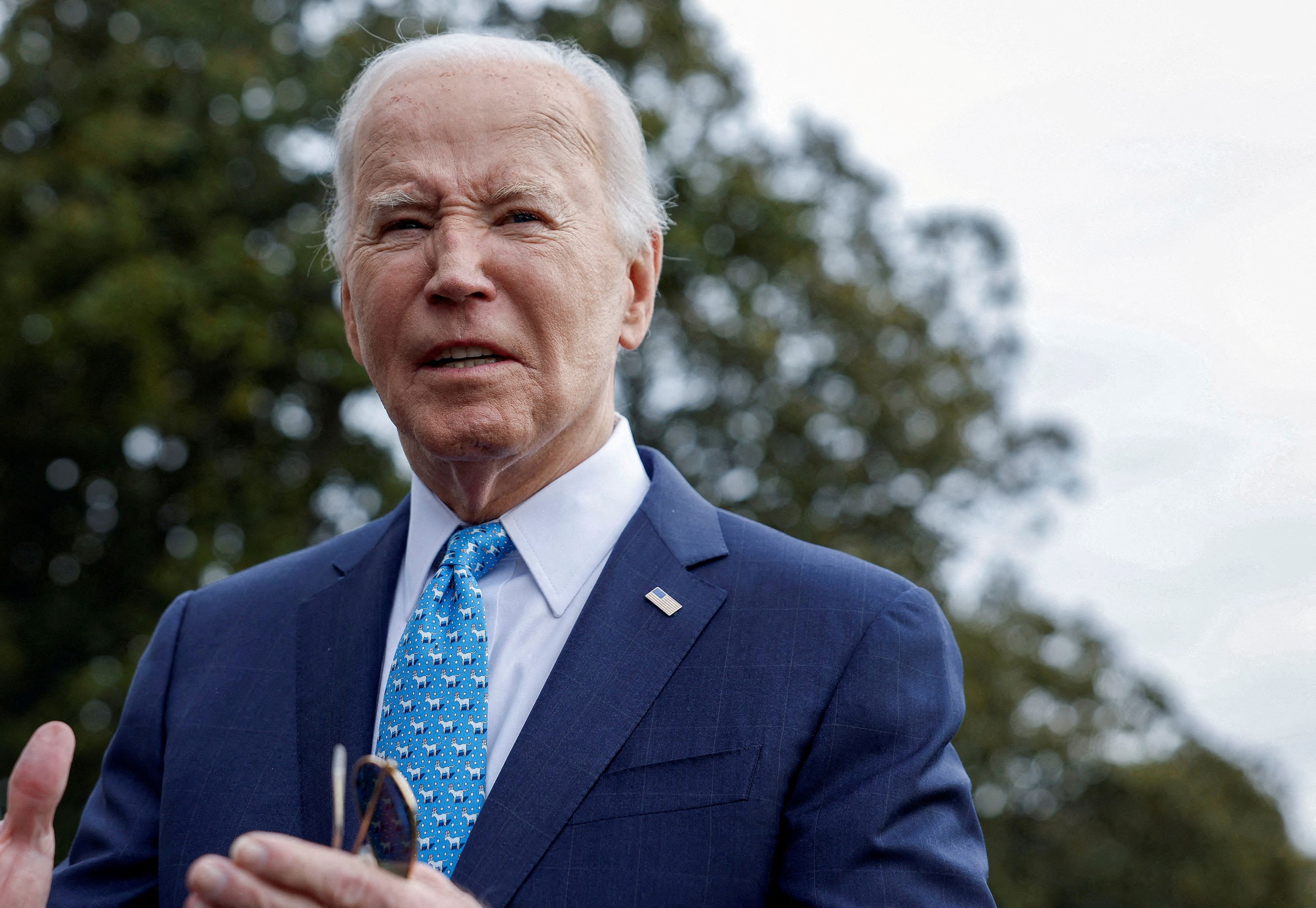
The US economy is doing well. President Biden wants to know why so many Americans are still feeling bad | CNN Politics
By many metrics, the US economy is humming along. The jobs market is robust; consumers are spending again; and inflation has eased to a three-year low.
CMV: Young people today are not economically worse off than their parents.
CMV: Young people today are not economically worse off than their parents.
These Young Adults Make Good Money. But Life, They Say, Is Unaffordable: Economists say that a typical middle-class family today is richer than one in the 1960s. Americans in their 20s and 30s don’t believe it.
1.1M subscribers in the economy community. Forum for economy, business, politics, stocks, bonds, product releases, IPOs, advice, news, investment…
Economic inequality cannot be explained by individual bad choices, study finds
A global study led by a researcher at Columbia University Mailman School of Public Health and published in the journal Scientific Reports finds that economic inequality on a social level cannot be explained ...
Opinion | We’re Measuring the Economy All Wrong (Published 2018)
The official statistics say that the financial crisis is behind us. It's not.

Spurned by the economy, young Americans are feeling so lonely and powerless they plunged the nation’s happiness score
221 votes, 68 comments. 1.1M subscribers in the economy community. Forum for economy, business, politics, stocks, bonds, product releases, IPOs…
Repeat After Me: The Markets Are Not the Economy (Published 2020)
The two have been intertwined in the American psyche since the 1929 stock crash and the onset of the Great Depression. But stocks are not a reliable gauge of overall economic health.

Why to Start a Startup in a Bad Economy
October 2008The economic situation is apparently so grim that some experts fear we may be in for a stretch as bad as the mid seventies.When Microsoft and Apple were founded.As those examples suggest, a recession may not be such a bad time to start a startup. I'm not claiming it's a particularly good time either. The truth is more boring: the state of the economy doesn't matter much either way.If we've learned one thing from funding so many startups, it's that they succeed or fail based on the qualities of the founders. The economy has some effect, certainly, but as a predictor of success it's rounding error compared to the founders.Which means that what matters is who you are, not when you do it. If you're the right sort of person, you'll win even in a bad economy. And if you're not, a good economy won't save you. Someone who thinks "I better not start a startup now, because the economy is so bad" is making the same mistake as the people who thought during the Bubble "all I have to do is start a startup, and I'll be rich."So if you want to improve your chances, you should think far more about who you can recruit as a cofounder than the state of the economy. And if you're worried about threats to the survival of your company, don't look for them in the news. Look in the mirror.But for any given team of founders, would it not pay to wait till the economy is better before taking the leap? If you're starting a restaurant, maybe, but not if you're working on technology. Technology progresses more or less independently of the stock market. So for any given idea, the payoff for acting fast in a bad economy will be higher than for waiting. Microsoft's first product was a Basic interpreter for the Altair. That was exactly what the world needed in 1975, but if Gates and Allen had decided to wait a few years, it would have been too late.Of course, the idea you have now won't be the last you have. There are always new ideas. But if you have a specific idea you want to act on, act now.That doesn't mean you can ignore the economy. Both customers and investors will be feeling pinched. It's not necessarily a problem if customers feel pinched: you may even be able to benefit from it, by making things that save money. Startups often make things cheaper, so in that respect they're better positioned to prosper in a recession than big companies.Investors are more of a problem. Startups generally need to raise some amount of external funding, and investors tend to be less willing to invest in bad times. They shouldn't be. Everyone knows you're supposed to buy when times are bad and sell when times are good. But of course what makes investing so counterintuitive is that in equity markets, good times are defined as everyone thinking it's time to buy. You have to be a contrarian to be correct, and by definition only a minority of investors can be.So just as investors in 1999 were tripping over one another trying to buy into lousy startups, investors in 2009 will presumably be reluctant to invest even in good ones.You'll have to adapt to this. But that's nothing new: startups always have to adapt to the whims of investors. Ask any founder in any economy if they'd describe investors as fickle, and watch the face they make. Last year you had to be prepared to explain how your startup was viral. Next year you'll have to explain how it's recession-proof.(Those are both good things to be. The mistake investors make is not the criteria they use but that they always tend to focus on one to the exclusion of the rest.)Fortunately the way to make a startup recession-proof is to do exactly what you should do anyway: run it as cheaply as possible. For years I've been telling founders that the surest route to success is to be the cockroaches of the corporate world. The immediate cause of death in a startup is always running out of money. So the cheaper your company is to operate, the harder it is to kill. And fortunately it has gotten very cheap to run a startup. A recession will if anything make it cheaper still.If nuclear winter really is here, it may be safer to be a cockroach even than to keep your job. Customers may drop off individually if they can no longer afford you, but you're not going to lose them all at once; markets don't "reduce headcount."What if you quit your job to start a startup that fails, and you can't find another? That could be a problem if you work in sales or marketing. In those fields it can take months to find a new job in a bad economy. But hackers seem to be more liquid. Good hackers can always get some kind of job. It might not be your dream job, but you're not going to starve.Another advantage of bad times is that there's less competition. Technology trains leave the station at regular intervals. If everyone else is cowering in a corner, you may have a whole car to yourself.You're an investor too. As a founder, you're buying stock with work: the reason Larry and Sergey are so rich is not so much that they've done work worth tens of billions of dollars, but that they were the first investors in Google. And like any investor you should buy when times are bad.Were you nodding in agreement, thinking "stupid investors" a few paragraphs ago when I was talking about how investors are reluctant to put money into startups in bad markets, even though that's the time they should rationally be most willing to buy? Well, founders aren't much better. When times get bad, hackers go to grad school. And no doubt that will happen this time too. In fact, what makes the preceding paragraph true is that most readers won't believe it—at least to the extent of acting on it.So maybe a recession is a good time to start a startup. It's hard to say whether advantages like lack of competition outweigh disadvantages like reluctant investors. But it doesn't matter much either way. It's the people that matter. And for a given set of people working on a given technology, the time to act is always now.
Born after 1995? Your lifetime economy is running at half speed — While some blame mass migration, economists say a 20-year productivity collapse has dramatically slowed the nation’s economy, hitting young people hard
How is the younger and upcoming generation supposed to survive in this economy for their future?
Boomers unable to conceive today's economy
1.6K votes, 85 comments. My neighbor never had a steady career. He shoveled snow in the winter, drove a school bus part time, owned a small grocery…
Boomers unable to conceive today's economy
1.6K votes, 85 comments. My neighbor never had a steady career. He shoveled snow in the winter, drove a school bus part time, owned a small grocery…
When It’s Bad to Have Good Choices
Why are well-fed people in affluent countries often unhappy and anxious?

Billionaires, Corporate Landlords, and AI Companies Are Seen As Among the Worst Actors in U.S. Society
Voters view billionaires, corporate landlords, payday loans, sports gambling, cryptocurrency, and AI companies as negatively impacting the U.S. economy and society.

If you want to know what is the primary determinant of people's views on the economy, & whether they think "inflation" is a problem, it's this chart on media use. More than any other factor you can think of. We tried them all. But it's not really about education. papers.ssrn.com/sol3/papers.cfm?abstract_id=4…

Todd Tucker
“As Democrats moved to the center on economics, they lost the support of these hardworking, higher-earning Americans,” Pancotti said. “To win them back — or to at least win back enough to swing the vote — they just need to run more-populist candidates.” washingtonpost.com/business/2024/11/15/education…
