


Learn how to implement enterprise-wide automation with The open source Way 2.0 guidebook.
A template for creating open source contributor guidelines
Open source contributor guidelines should be easy to read, thorough, and friendly.

Creating and growing healthy community open source projects [PLoP 2020]
Abstract: This article presents a succinct and minimal handbook of best practices of how to create and grow community open source projects. We start with the assumption that the handbook’s user has…

Introduction
Learn everything about Community Notes, X's open-source program to create a better-informed world.

Our Handbook is open source: here's why
In this post we’re explaining the reasons why having an open source Handbook works for us and how it can help you.

Creating The Open-Source Community Of Your Dreams | TechCrunch
When a company decides to embrace open-source software development, releasing the code under a suitable license is only the tip of the iceberg. The real challenge that companies face is learning how to attract and collaborate with contributors. It's not easy, but fostering the growth of a healthy community is a necessary step that will help your open-source software project fulfill its potential.

A Call to Build Models Like We Build Open-Source Software
1 Introduction 2 A brief explanation of open-source software development 3 Community-developed and continually-improved models 3.1 Incremental and cheaply-communicable updates 3.2 Merging models 3.3 Vetting community contributions 3.4 Versioning and backward compatibility 3.5 Modularity and distribution 4 An example future 5 Conclusion
Open-Source Contribution: The Ultimate Guide | Built In
How to get into open-source contribution according to these experts.


Setting an Open Source Strategy
The majority of companies that use open source understand its business value and identify its advantages in efficiency, flexibility, interoperability, and speed of innovation. Yet only half of these companies report practicing basic open source management, such as community development, code maintenance, and the like, according to the latest Future of Open Source survey.
The shape of open source
At its core, open source is about collaboration. Whether it’s version control, licenses, or issue trackers—everything exists to support people working with each other. Open source embodies a model for…

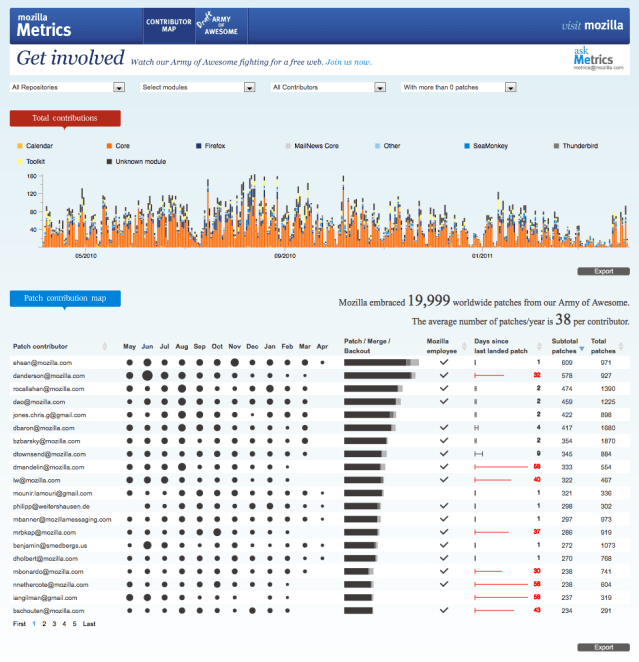
Developing Community Management Metrics and Tools for Mozilla
Background – how we got here Over the past few years I’ve spent a great deal of time thinking about how we can improve both the efficiency of open source communities and contributors experien…
Embrace Open Source, For the Good of Nerdmanity | Fortune
More businesses are willing to use open source software for key projects.

Twelve tips for growing communities around your open source project | Ben Balter
Publishing code isn't enough. Twelve practical tips to attract users, welcome contributors, and grow a healthy open source community.
Tools for Managing Open Source Programs
The road to strategic use of open source starts with a carefully planned, organized, and empowered open source program office to guide and manage its creation, distribution, and use. But that’s just a first step. To get such an office underway and running smoothly, you need the right tools. These mission-critical tools will be used to track goals and metrics in departments from engineering and legal to executive leadership, PR, and marketing, and give employees all the resources they need to gather data, provide snapshots of performance, and manage the daily use of open source within your company.