


Based on three years of research, the book Reinventing Organizations describes the emergence of a new management paradigm, a radically more soulful, purposeful and powerful ways to structure and run businesses and non-profits, schools and hospitals.
Reinventing Organizations: A Guide to Creating Organiza…
FROM THE BACKCOVERThe way we manage organizations seems…

Reinventing Organizations

The Future of Organizations is Responsive
How to Unlock Your Organization’s Potential to Change the World

My new project: Wiser Organizations
I’m working on a new project that I call Wiser Organization as a working title. It might become a book.

Bringing organizational maturity to radical groups | willowbl00
I’m honored to have helped establish, or to help continue fostering, several radical groups that have survived past their origin moment and group. The challenges that come with the second or third generation of stewards while also navigating organizational momentum are unlike those of founding a group, and I’d like to chat about them with you here. Each section has a founding pattern, the results of that pattern, and what to do about it to mature more. None of the sections involve imposing hierarchy on a distributed organization.
Organisation Ecosystem: The Theory and the Practice | Sergio Caredda
Explores the organizational ecosystem concept, emphasizing interdependence, value creation, and the distinction between intentionality and emergence.

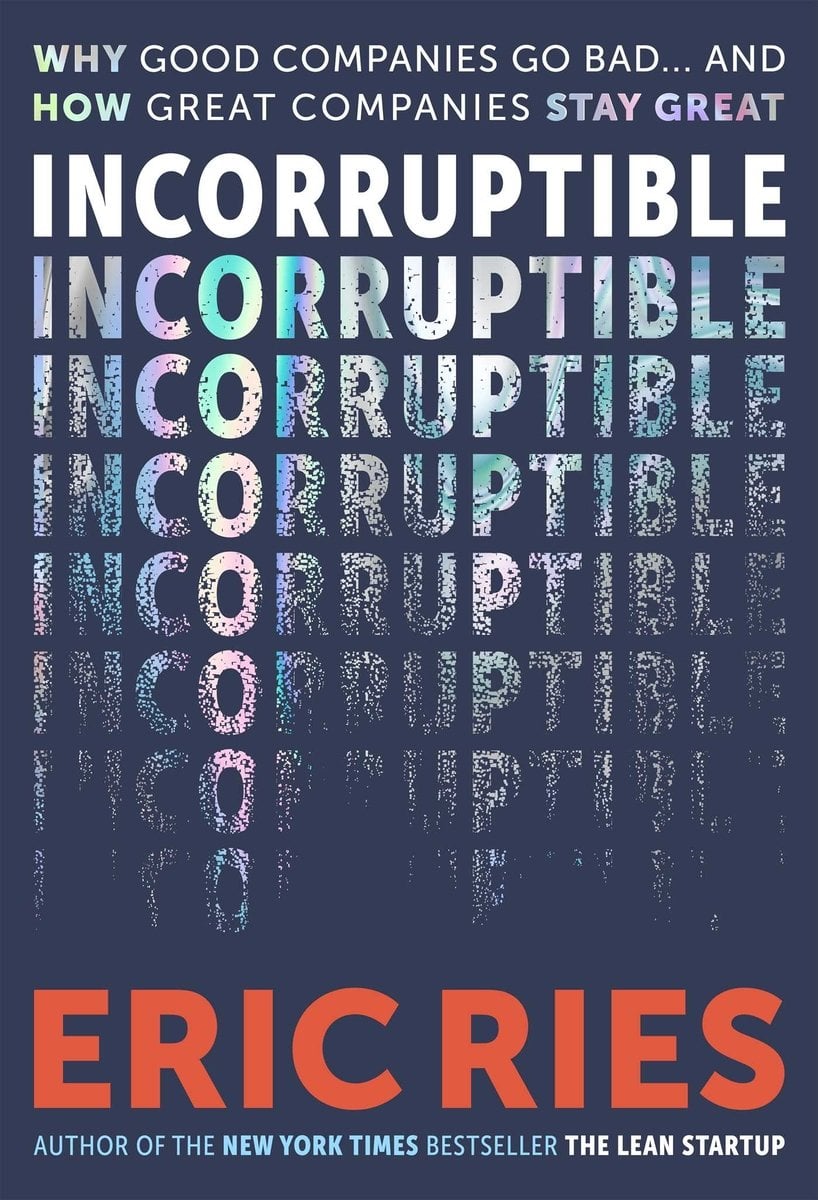
Incorruptible
Instant New York Times Bestseller "Incorruptible by Eric Ries is the best and most important business book of the year." —Dan Heath, NYT Bestselling Author & Podcast Host of "What It's Like To Be..." A Thinkers50 Best New Management Book | A Next Big Idea Club Must-Read From Eric Ries, creator of The Lean Startup, comes a bold and urgently needed rethink of how organizations are built—and why success itself so often turns companies against the people and principles that made them worth building in the first place. For decades, we've explained corporate corruption as a problem of bad actors, moral weakness, or isolated scandals. But that story doesn't match reality. Again and again, companies founded with strong ideals drift toward short-term thinking, extractive behavior, and mission abandonment—often despite the best intentions of the people inside them. Incorruptible argues that this failure is not primarily ethical. It is structural. As organizations grow, the systems that govern them—ownership, incentives, charters, accountability, and decision-making—quietly reshape behavior. When those systems are poorly designed, even principled leaders are pushed toward outcomes they never wanted. Success itself becomes a form of financial gravity, bending companies away from their original purpose. Drawing on two decades of work with founders, CEOs, investors, and institution builders, Ries shows how these failures arise predictably—and how they can be prevented. He reframes corporate governance not as bureaucracy or compliance, but as a creative and strategic act at the heart of building enduring, mission-controlled companies. At a moment when trust in business is eroding, Incorruptible offers a clear-eyed diagnosis and a practical blueprint for change. Success alone will not protect what matters most. Only incorruptible design can. Get more information and bonus materials at incorruptible.co.
Opinion | The New Power Structure (Published 2018)
New organizations are forming and succeeding in an age of distrust.


Leading Change: Why Transformation Efforts Fail
Businesses hoping to survive over the long term will have to remake themselves into better competitors at least once along the way. These efforts have gone under many banners: total quality management, reengineering, rightsizing, restructuring, cultural change, and turnarounds, to name a few. In almost every case, the goal has been to cope with a new, more challenging market by changing the way business is conducted. A few of these endeavors have been very successful. A few have been utter failures. Most fall somewhere in between, with a distinct tilt toward the lower end of the scale. John P. Kotter is renowned for his work on leading organizational change. In 1995, when this article was first published, he had just completed a ten-year study of more than 100 companies that attempted such a transformation. Here he shares the results of his observations, outlining the eight largest errors that can doom these efforts and explaining the general lessons that encourage success. Unsuccessful transitions almost always founder during at least one of the following phases: generating a sense of urgency, establishing a powerful guiding coalition, developing a vision, communicating the vision clearly and often, removing obstacles, planning for and creating short-term wins, avoiding premature declarations of victory, and embedding changes in the corporate culture. Realizing that change usually takes a long time, says Kotter, can improve the chances of success.

The Fractal Organization
The world of management is in crisis - the old remedies no longer work and organizations are failing at an increasing rate. Although many talk of 'joined up thinking', few offer practical guidance on how to achieve this in organizations. <b><i>The Fractal Organization</i></b> sets down the practical implications of a well tested systemic approach to building organizations that are capable of surviving and flourishing in these turbulent times. <p>"An excellent read…Many organizations fail at the mercy of their own ignorance. The author has done an excellent job in making ‘the science of effective organization’ accessible to management, providing them with a new knowledge to deal with the uncertainties that the markets place upon them."<br /><b>Stephen J. Brewis, Business Architect, British Telecom</b></p> <p>"...one of the most interesting, thorough and rigorous guides to management that I have ever read, … introduces new insights in every chapter… carries a credibility which acts as a counterbalance to the sometimes difficult message which he conveys which is that a lot of mainstream management practice is at best ineffective and at worst downright destructive. I would recommend this book to anyone interested in management or systems thinking."<br /><b>Penny Marrington</b>, <b>Course Chair, Systems Group, Open University</b></p> <p>"In my opinion this book manages to present sound academic theory that is relevant and helpful to the practitioner in the business. I experienced several A-HA moments."<br /><b>Pauline Marsh, Strategy Director, CS&S International, BAE SYSTEMS</b></p> <p>"The insights of the Viable System Model have been open only to a select few for much too long. Hoverstadt has gone furthest in bringing these ideas to a wider audience…Management books have too often been serious but not practical, or practical but not serious. This book is both brilliantly serious and practical, and often entertaining too."<br /><b>Professor Peter Kawalak, Manchester Business School</b></p> <p>"Integrates mainstream management ideas with the systems ideas underpinning the VSM, and flows and reads well. As a starting point for developing understanding of the VSM in today's world this book improves greatly on all books that have gone before, I would certainly recommend it to colleagues, clients, and students."<br /><b>Dr. Robin Asby, Course Chair, Communication and Systems, Open University</b></p>
This New Cooperative Business Model Could Change Everything
Self-Organization is Self-Management | New Technology Solutions
This means the reverse is true: “self management is self organization.”
The Four Factors for Organizations - Future Mending Radio
When I pick an organization for the podcast or the map at Futuremending.com, I’m not just picking businesses out of a hat – I have a system for evaluating orgs which I call the Four Factors for Organizations. The Four Factors are Multi-solving, Sharing, Sufficiency and Transparency.This episode is in two parts. The opening minutes are a bit of an emotional check-in to see how people are processing the unprecedented political turmoil in the United States. The second part of the podcast discusses the Four Factors for Organizations and why seeking out certain vectors of change makes more sense than trying to lay out a detailed plan for a better future. Read about the Four Factors: https://www.futuremending.com/whatMatt’s Blue Sky account: https://bsky.app/profile/mattliepaehlke.bsky.socialWired Magazine coverage of the crisis in the U.S. : https://www.wired.com/tag/elon-musk/Rebecca Solnit’s newsletter: https://meditations-in-an-emergency.ghost.io/welcome-to-meditations-in-an-emergency/ Google's AI Policy: https://www.theguardian.com/technology/2025/feb/05/google-owner-drops-promise-not-to-use-ai-for-weapons Future Mending Map: https://www.futuremending.com/toronto Music Credits:'Epilogue' by The Slow Motions. Used with permission of the artist.‘Fashion’ by Alex Productions. Creative Commons. https://www.youtube.com/watch?v=OV1miCgT7J4‘Miss you’ by Middle Child. Creative Commons. https://www.youtube.com/watch?v=dayIKHEIYqY‘Opening’ by Phillip Glass. Arr. by Karl Michelson. Performed by The Union Guitar Trio. Used with permission of the artists.Union Guitar Trio on Spotify - https://open.spotify.com/track/2E0NidLjIzBAO7t0BBPFUDUnion Guitar Trio on Apple Music - https://music.apple.com/us/artist/the-union-guitar-trio/1592543833Sound Effects:BBC News November 9th, 1989: https://www.youtube.com/watch?v=fjNz1lvXgzUwood hit low glass bowl 3.mp3 by ascap -- https://freesound.org/s/242388/ -- License: Attribution NonCommercial 4.0Brightness by sonically_sound -- https://freesound.org/s/632762/ -- License: Creative Commons 0
