


Demystifying Debuggers Series
lala-hakobyan/front-end-debugging-handbook
A comprehensive guide to debugging tools for modern, complex front-end applications. This handbook provides practical, real-world guidance on a complete suite of tools, from Chrome DevTools and framework extensions to integrated IDE debuggers.
DefensiveComputingChecklist.com Table of Contents
Full Table of contents for DefensiveComputingChecklist.com

Fix your tools
Last week I had to diagnose a bug in an open source library I maintain. The issue was gnarly enough that I couldn’t find it right away, but then I thought: if I set a breakpoint here and fire up the debugger, I will likely find the root cause very soon… and then proceed to mercilessly destroy it! So I rolled up my sleeves, set the breakpoint, fired up the debugger, and… saw the program run to completion without interruptions whatsoever.

There Are No Bugs, Just TODOs | Almad's Changelog
One of my life’s traumas is the bug trackers, the issue trackers, the project management tools. The toolset that completes the version control log to form the development equivalent of double-entry bookkeeping.
Sharing Debugger - Meta for Developers

kyju.org
Horribly misusing Rust features to provide provable memory safety and tracing garbage collection for pointer soup.
WiCER: Wiki-memory Compile, Evaluate, Refine Iterative Knowledge Compilation for LLM Wiki Systems
The LLM Wiki pattern, to compile and provide domain knowledge into a persistent artifact and serve it to LLMs via KV cache inference, promises context access at sub-second latency with zero retrieval failure. Realizing this requires solving the compilation gap: LLM compilation distilling raw documents into a wiki without catastrophically discarding critical facts. We characterize this gap across 17 RepLiQA domains (6,800 questions): we observe that full context KV cache inference outperforms RAG on curated knowledge (4.38 vs. 4.08 out of 5, 7.3 faster TTFT) but degrades below RAG at scale due to attention dilution, and blind compilation fails entirely (2.14 to 2.32 vs. 3.46, 53 to 60% catastrophic failure rate). To address the compilation gap, we propose WiCER (Wiki-memory Compile, Evaluate, Refine), an iterative algorithm inspired by counterexample-guided abstraction refinement (CEGAR) that closes this gap. WiCER evaluates compiled wikis against diagnostic probes, identifies dropped facts, and forces their preservation in subsequent compilations. One to two iterations recover 80% of lost quality (mean 3.24 vs. 3.47 for raw full-context across the 15 topics with baselines), reducing catastrophic failures by 55% relative. An ablation across all 17 topics confirms that targeted diagnosis (+0.95), not generic pinning (+0.16), drives the gains. All code and benchmarks are released for reproducible research.


Agent autonomously debugging Hashicorp Raft bugs using the Multiverse Debugger API
What I Found Interesting in Claude Code's Source
A breakdown of the most interesting engineering patterns in Claude Code's leaked source code: composable system prompts, runtime instruction injection, context compression, forking, prompt caching architecture, and more.
Microsoft Struggling With Hundreds of AI-Discovered Security Bugs — ProPublica
Anthropic’s Mythos has flagged bugs faster than Microsoft can fix them. Documents reviewed by ProPublica reveal the tech giant's “mad dash” behind the scenes to patch holes before hackers can find and exploit them.

The issue tracker that runs inside the loop.
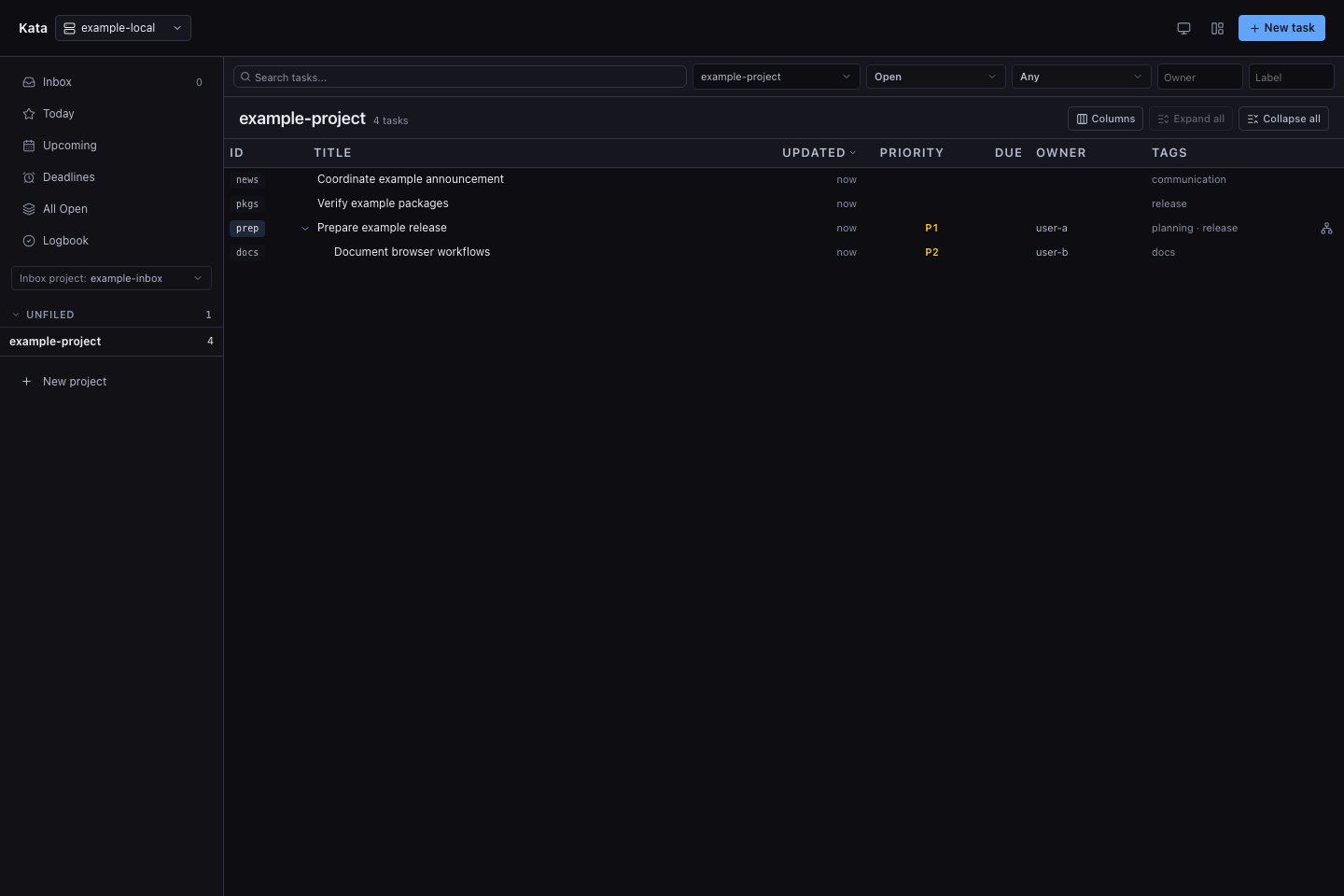
A local-first issue tracker for coding agents and the humans steering them. Queries in 4ms, on your own machine.
Wikum: Bridging Discussion Forums and Wikis Using Recursive Summarization
Large-scale discussions between many participants abound on the internet today, on topics ranging from political arguments to group coordination. But as these discussions grow to tens of thousands of posts, they become ever more difficult for a reader to digest. In this article, we describe a workflow called recursive summarization, implemented in our Wikum prototype, that enables a large population of readers or editors to work in small doses to refine out the main points of the discussion. More than just a single summary, our workflow produces a summary tree that enables a reader to explore distinct subtopics at multiple levels of detail based on their interests. We describe lab evaluations showing that (i) Wikum can be used more effectively than a control to quickly construct a summary tree and (ii) the summary tree is more effective than the original discussion in helping readers identify and explore the main topics.
Made a tool for easier viewing of long and convoluted post threads and trees. Input a post URL and get a graph overview and concatenated runs of single author threads!

Atreeshake · eriskii.net
eriskii.net