

rheingold's brainstorms: rheingoldian writing
For Information About Rheingold Associates Virtual Community Services, click here WHAT AN ONLINE HOST WANTS TO ACHIEVE:
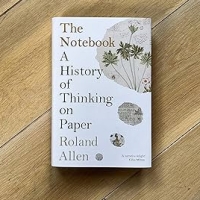
Roland-Allen.com
Home of the author of THE NOTEBOOK: A HISTORY OF THINKING ON PAPER, available now
RethinkDB, SageMath, Andreessen-Horowitz, Basecamp and Open Source Software
RethinkDB and sustainable business models Three weeks ago, I spent the evening of Sept 12, 2016 with Daniel Mewes, who is the lead enginee...
Early Tools for Thought, Mark Bernstein @ Tools For Thought Rocks
A Modern Guide to Thinking, Fast and Slow - Critikid
A chapter-by-chapter analysis of Kahneman's text with a focus on the replication crisis, clarifying which findings remain solid and which have not held up to scrutiny.
Tools for better thinking
Collection of thinking tools and frameworks to help you solve problems, make decisions and understand systems.
Lessons Answer.AI can learn from history’s greatest R&D labs
Today’s piece was put together with the help of several conversations with Answer.AI co-founder Jeremy Howard.

How to Research Tools for Thought
Tools for Thought as Cultural Practices, not Computational Objects
On seeing tools for thought through a historical and anthropological lens
Refine
I recently tried refine, an AI tool for refining academic articles, developed by Yann Calvó López and Ben Golub.

rheingold's brainstorms: rheingoldian writing
MOOSE Crossing is a text-based virtual world (or "MUD") where kids, in Bruckman's words, "are imagining new places and objects, and creating them with words and programs. In their spare time for fun they are reading, doing creative writing, and writing computer programs. Through these activities, they are learning in a self-motivated, self-directed, peer-supported fashion." Imagine combining the educational value of a well-designed curriculum in writing, history, programming, mathematics or other subject areas with the innate fascination that kids exhibit when they play with video games or college students exhibit when they stay online for hours on end, engaged in the role-playing games known as MUDs.
On thinking machines
While Chiron Codex is about the application of LLMs and AI-augmented tools, we also need to understand their meaning to us, each other, and society. I have three topics: intelligence,...

Don't Take the Black Pill - Andrew Kelley | SSW 2026
Intrigued by @semble.so as a potential research tool for creatives as well as encouraging deeper thinking, making connections between ideas. For me, I can see using it alongside @obsidian.md (which I use similarly, but for my private use). Also love how responsive the developers are to questions.
