


James C. Scott's fascinating and seminal book, Seeing Like a State: How Certain Schemes to Imp rove the Human Condition Have Failed , examines how, across…
Two Cheers for Anarchism: Six Easy Pieces on Autonomy, …
James Scott taught us what's wrong with seeing like a s…

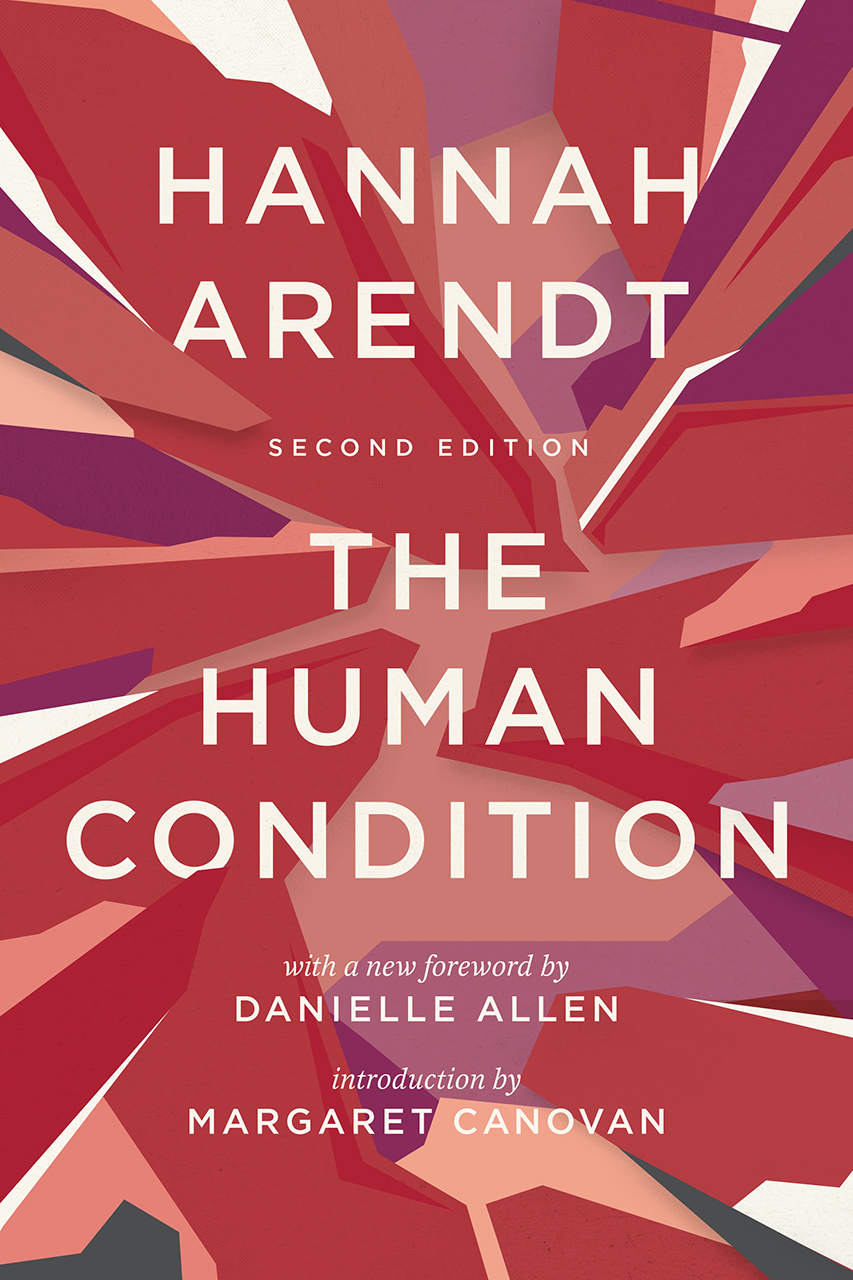
The Human Condition: Second Edition
A classic work of political thought, more relevant today than ever The twenty-first century has seen a resurgence of interest in the political thinker Hannah Arendt, “the theorist of beginnings,” whose work probes the logics underlying unexpected transformations—from totalitarianism to revolution. A work of striking originality, The Human Condition is in many respects more relevant now than when it first appeared in 1958. In her study of the state of modern humanity, Hannah Arendt considers humankind from the perspective of the actions of which it is capable. The problems Arendt identified then—diminishing human agency and political freedom, the paradox that as human powers increase through technological and humanistic inquiry, we are less equipped to control the consequences of our actions—continue to confront us today. This new edition, published to coincide with the sixtieth anniversary of its original publication, contains Margaret Canovan’s 1998 introduction and a new foreword by Danielle Allen. A classic in political and social theory, The Human Condition is a work that has proved both timeless and perpetually timely.
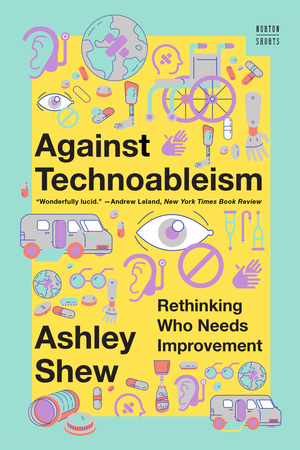
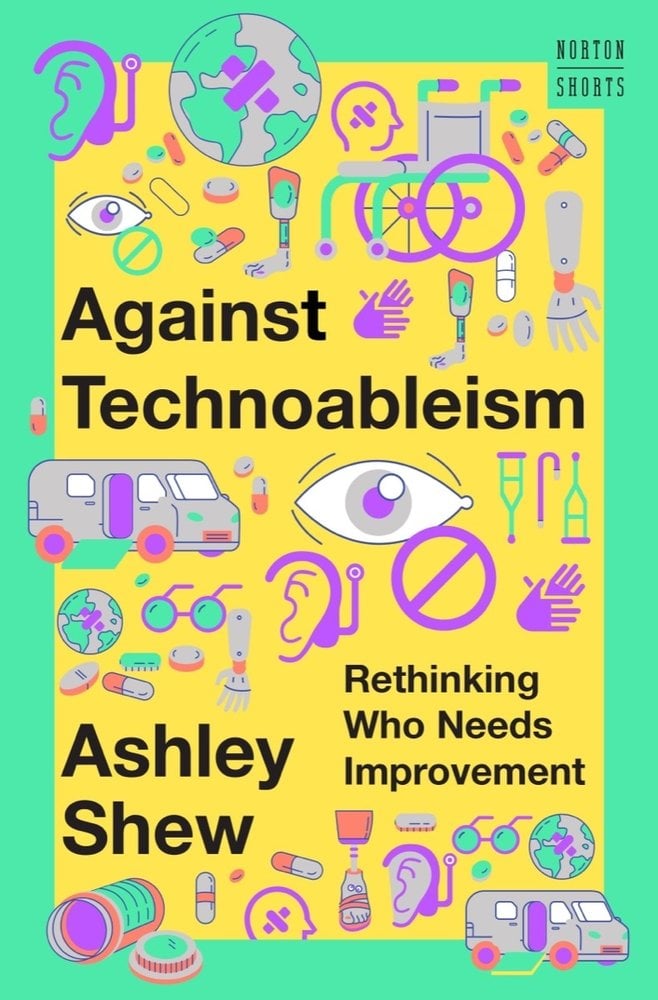
Against Technoableism
One of BookRiot’s Ten Best Disability Books of the YearShortlisted for the Inc. Non-Obvious Book Awards“Wonderfully lucid.” —Andrew Leland, New York Times Book ReviewA manifesto exploding what we think we know about disability, and arguing that disabled people are the real experts when it comes to technology and disability., Against Technoableism, Rethinking Who Needs Improvement, Ashley Shew, 9781324076254
A Theory Of Scott Alexander which I find persuasive 20/
A Theory Of Scott Alexander which I find persuasive20/ https://t.co/RW6w7QUgz5— Jonathan Korman 🟣 (@miniver) February 19, 2021
Eradicating Unhappiness
Is there a manual for living well? Where modern science, society, and psychology underserves, a philosophy nearly as old as time emerges. “Take a simple idea, and take it seriously.”—Charlie Munger…

Geoff Shullenberger on Twitter / X
Günther Anders's "The Obsolescence of the Human," which was finally translated into English last year, is one of the books I most often recommend these days. Robert Bellafiore has written a lucid introduction to Anders's ever more relevant thought: https://t.co/MWiwSMeq6u— Geoff Shullenberger (@g_shullenberger) September 10, 2026
Signaling as a Service
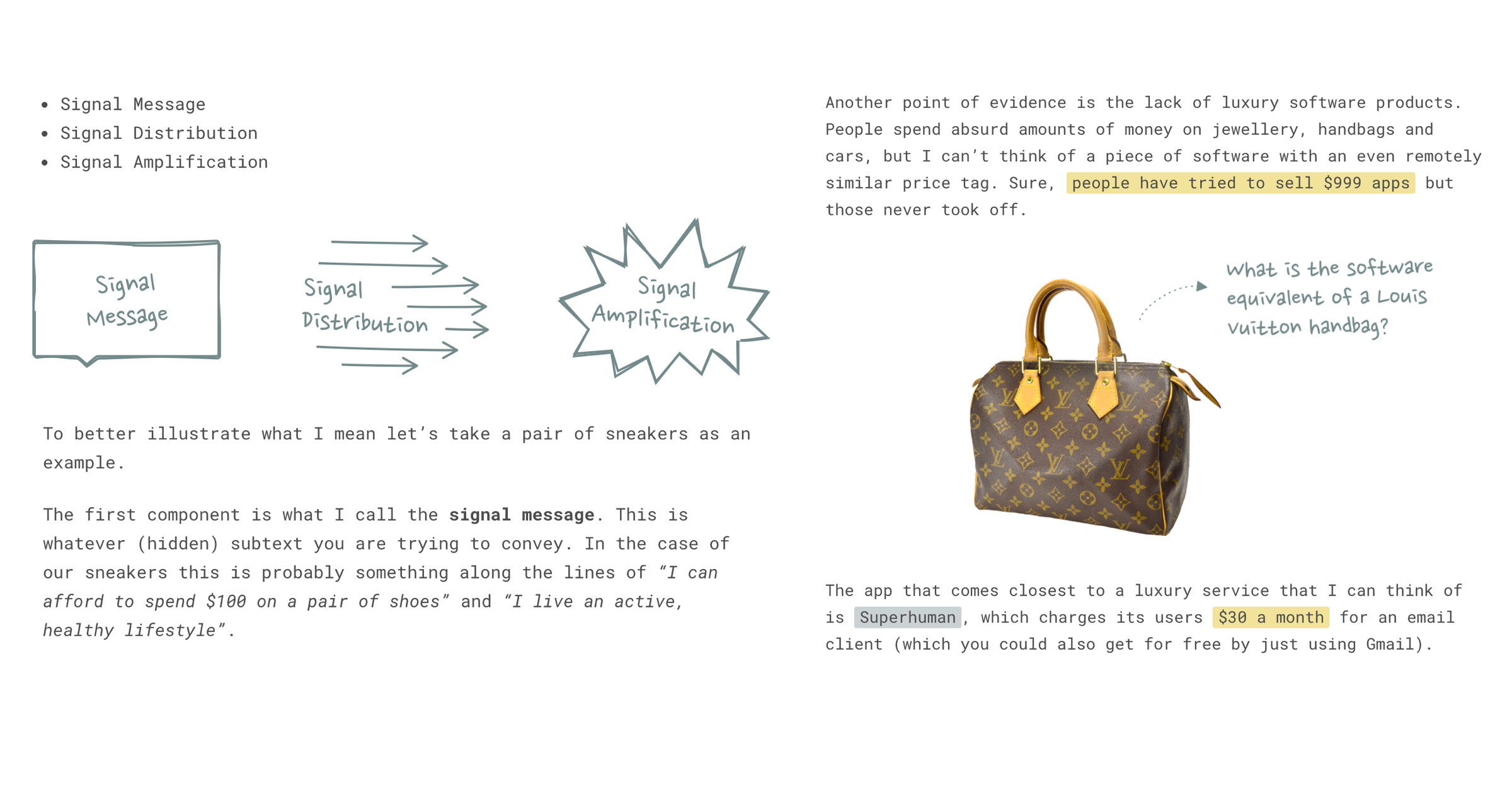
01 Intro One of the best books I have read in the last few years is The Elephant in the Brain by Robin Hanson and Kevin Simler. The book makes two main arguments: a) Most of our everyday actions can be traced back to some form of signaling or status seeking b) Our brains deliberately hi
Post-Meritocracy – Will Scott
A defining characteristic of the industrialized world has been the promise of meritocracy: if you’re smart and work hard, you can improve your position in life. The promise has always had limits, and class mobility has often been more aspiration than reality, but the belief itself has been a driving motivation for much of society.…
How to read | Robert Heaton
Five years ago I realized that I remembered almost nothing about most books that I read. I was reading all kinds of non-fiction - pop-psychology, pop-economics, pop-sociology, you name it - and felt like quite the polymath auto-didact. But one day, after I had finished blathering at a friend about how much I had enjoyed Thinking, Fast and Slow, they asked for a quick summary of the book’s overall thesis. I thought for a while, mumbled something about System 1 and System 2 and how I had only really read...
Against Technoableism
When bioethicist and professor Ashley Shew became a self-described "hard-of-hearing chemobrained amputee with Crohn's disease and tinnitus," there was no returning to "normal." Suddenly well-meaning people called her an "inspiration" while grocery shopping or viewed her as a needy recipient of technological wizardry. Most disabled people don't want what the abled assume they want--nor are they generally asked. Almost everyone will experience disability at some point in their lives, yet the abled persistently frame disability as an individual's problem rather than a social one. In a warm, feisty voice and vibrant prose, Shew shows how we can create better narratives and more accessible futures by drawing from the insights of the cross-disability community. To forge a more equitable world, Shew argues that we must eliminate "technoableism"--the harmful belief that technology is a "solution" for disability; that the disabled simply await being "fixed" by technological wizardry; that making society more accessible and equitable is somehow a lesser priority. This badly needed introduction to disability expertise considers mobility devices, medical infrastructure, neurodivergence, and the crucial relationship between disability and race. The future, Shew points out, is surely disabled--whether through changing climate, new diseases, or even through space travel. It's time we looked closely at how we all think about disability technologies and learn to envision disabilities not as liabilities, but as skill sets enabling all of us to navigate a challenging world.
A Modern Guide to Thinking, Fast and Slow - Critikid
A chapter-by-chapter analysis of Kahneman's text with a focus on the replication crisis, clarifying which findings remain solid and which have not held up to scrutiny.
Convivial Computing
In 1973, Ivan Illich published Tools for Conviviality, a book about man's relation to tools 1. Illich pleaded for a pluralism of responsibly limited tools that guarantee an individual’s right to work with independent efficiency, the development of which is "as unpredictable, creative and lively as the people who use them" (Illich, 1973) 2. He pointed to overgrowth and overproduction threatening the right to a liveable environment, which unfortunately led him to ideas on gender and population control that are highly problematic 3. His ideas are included in the Catalog because of their influence on other practices, that picked up on his ideas about limited tools and turned a blind eye to the less appealing parts of his writing.
The social model of disability: thirty years on
This year marks exactly 30 years since I published a book introducing the social model of disability onto an unsuspecting world and yet, despite the impact this model has had, all we now seem to do...

The social model of disability: thirty years on
This year marks exactly 30 years since I published a book introducing the social model of disability onto an unsuspecting world and yet, despite the impact this model has had, all we now seem to do...
Mindless Machines, Mindless Myths | Los Angeles Review of Books
Erik J. Larson thinks about “Mindless: The Human Condition in the Age of Artificial Intelligence,” which traces Robert Skidelsky’s philosophical reckoning with AI, automation, and the illusion of progress.
