

Human beings have this amazing ability to retreat from reality without knowing precisely what reality is, in which direction it lies, and how to solve the…
The World Doesn’t Exist: William Gibson, William Blake, and Navigating an Algorithmic Hall of Mirrors | ODDCRITIC
Scrolling the TL revealed distorted realities, shaped by algorithms and biases.

The Myth and Magic of Generating New Ideas
A mathematician on how to get the mind into motion.

The Perfect Mirror
An experiment with AI spiritual direction almost convinces Matthew Milliner that it works—until the real world breaks the spell.
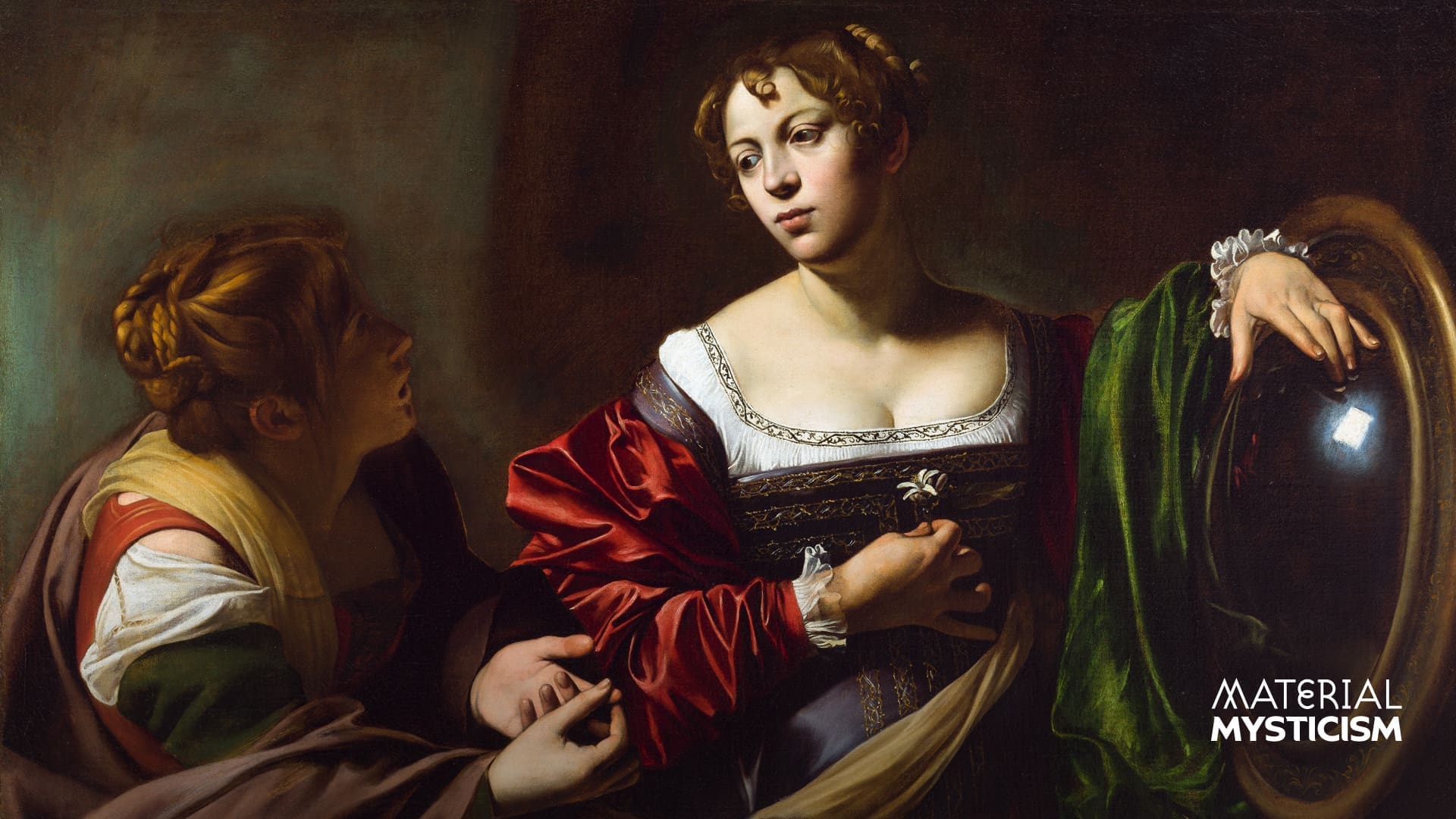
We speak often of AI as if it were a future event. But it is already here in the fabric of our being. What Karl Ove Knausgaard captures with devastating clarity in his recent essay ‘The Reenchanted… | Kenneth Mikkelsen | 19 comments
We speak often of AI as if it were a future event. But it is already here in the fabric of our being. What Karl Ove Knausgaard captures with devastating clarity in his recent essay ‘The Reenchanted World’ is the departure of the real. “We live in a virtual world, as if the world had been lifted out of itself, into the air, like a giant roof suspended above the ground,” he writes. It is an existential condition. Across philosophy, from Heidegger to Baudrillard, from Don DeLillo to Debord, a singular thread weaves: the world, once our shelter from the self, has become self-referential. Where once we encountered beings in our Zuhandensein—ready-to-hand, intimate, meaningful—we now face a procession of Vorhandensein: inert, objectified, mediated. Simulation replaces encounter. Perception is swallowed by spectacle. And the digital era, in Knausgaard’s terms, “distances culture from the body”. “It is not just the body that disappears—it is the awareness that we are dying,” he writes. What we face is not merely technological change, but what I would call existential dissonance: the erosion of resonance between our inner world, our social world, and the material world. It is the tension that arises when the way one lives, acts, and relates is misaligned with one’s deeper sense of meaning, reality, and value. It manifests itself as a disturbance in being — an unease that is not merely emotional, but rooted in a felt gap between one’s existence as it is and as it could or should be. It is the voice of the self calling from within the noise of the world. This is why Knausgaard’s essay matters for anyone working in, with, or around AI. Because the question isn’t: What can these systems do? It is: What do they undo? “We can explain everything. But we understand nothing,” he writes. Manipulated constructions of truth, in such a time, becomes a currency. As shown in recent events—from Francesca Gino’s research fraud at Harvard to Bezos’ all-female crew venture into space, and Trump’s detention camp —truth is no longer that which corresponds with reality, but that which performs and sells. As Baudrillard warned, the simulation no longer hides the real—it becomes it. And yet, something remains. Knausgaard writes not to despair, but to stay. In the body. In death. In silence. In the concrete. If you seek to understand what is happening—not just in AI, but in the very metaphysics of modern life—I suggest we begin not with data, but with dissonance. With the feeling that something vital is slipping from view, and that “being in the world” now requires resistance. “We are surrounded by mystery. And yet we act as if everything were known,” he writes. AI will never understand this. But we must. Knausgaard’s full essay from Harper’s Magazine can be read via link in comments. | 19 comments on LinkedIn

Are We Already Living in Virtual Reality?
A new technology—virtual embodiment—challenges our understanding of who and what we are.

The Protagonist Problem - Uncanny Magazine
“Speculative Resistance”—a term coined by Malka Older—posits that one great power speculative fiction wields is that exploring other worlds and ways societies could work encourages people to question extant systems, to imagine alternatives, to hope, to act, and to reject the old hope-ending “because that’s the way it is.” The author Ursula K. Le Guin […]

Weird Studies
Professor Phil Ford and writer J. F. Martel host a series of conversations on art and philosophy, dwelling on ideas that are hard to think and art that opens up rifts in what we are pleased to call "reality."
Our Minds Are Weirder than You Think
How to Understand the Universe When You’re Stuck Inside of It
Lee Smolin’s radical idea to reimagine how we view the universe.

The brain's 7D sandcastles could be the key to consciousness | New Scientist
We’ve glimpsed mind-bending geometric structures that fleetingly encode our thoughts, memories and feelings – and could solve the greatest mystery of all

Designs for the pluriverse: radical interdependence, autonomy, and the making of worlds
"Arturo Escobar presents a new vision of design theory by arguing for the creation of what he calls 'autonomous design'--a design practice aimed at channeling design's world-making capacity toward ways of being and doing that are deeply attuned to justice and the Earth"--Publisher description

On Verticality
Explorations into the human need to escape the surface of the earth. A mashup of architecture, aeronautics, evolutionary psychology, anthropology, anatomy and human pre-history

The Unbearable Brightness of Seeing
Is “frame architecture” our escape route from the dogma trap of endless culture wars?
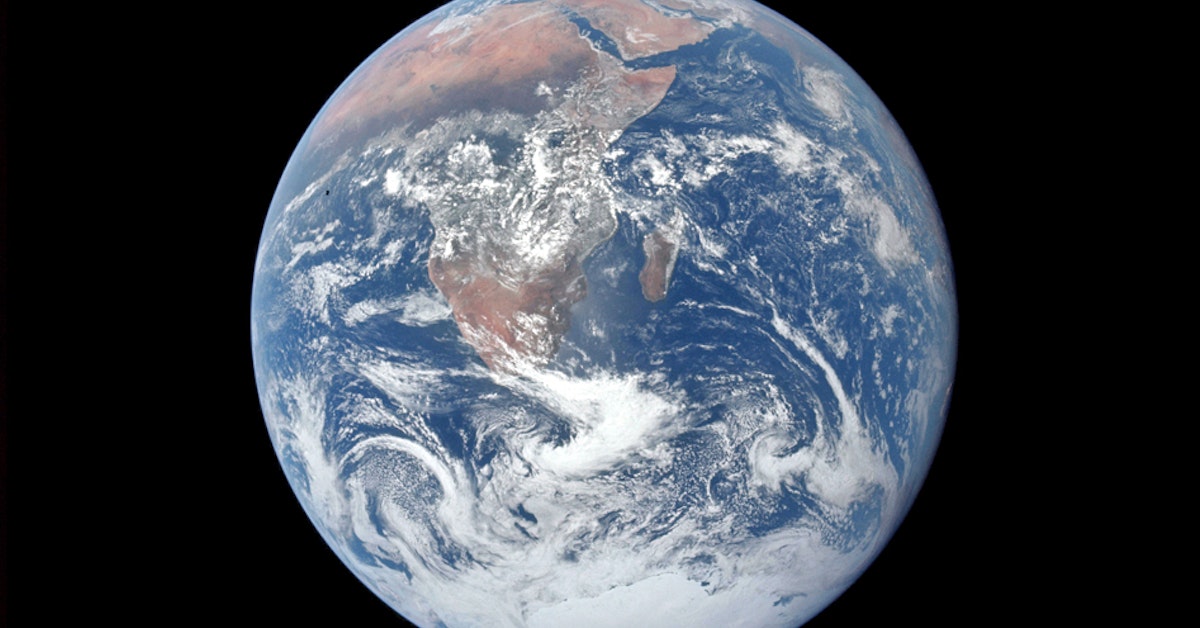
The Origins Of <br>‘Planetary Realism’ And <br>‘Whole Earth’ Thinking | NOEMA
There is no escaping an interconnected world.
Weirding Diary: 3
A sense of weirdness in the environment can be understood as unfactored reality. A blooming, buzzing confusion of sensory input that impinges on awareness…