

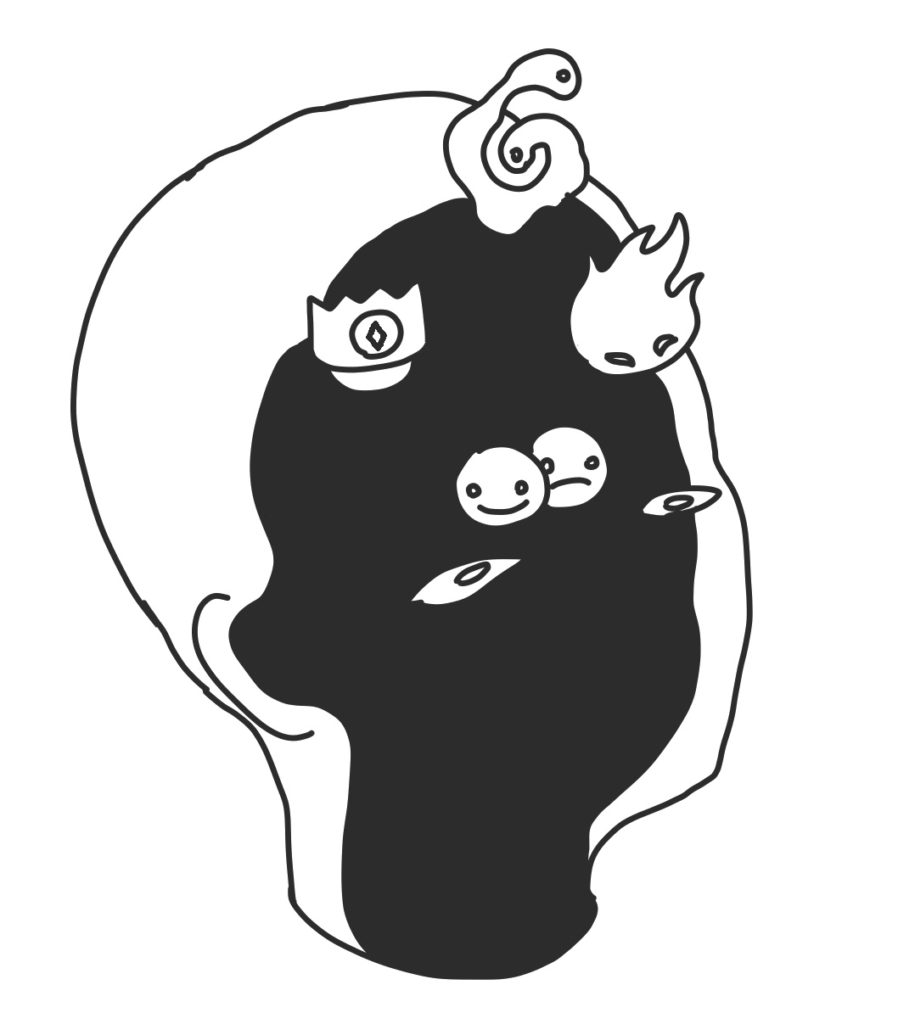
So far we’ve been discussing Worlding as an art . One that an individual creator can engage in on their own. As Venkat suggested , we are already living in an…
Another World Archive
Another World is a people's archive of free educational materials about artists and cultural workers in the struggle to build and imagine another world. It affirms that the artist must take sides against oppression and uplift the courage, dignity, and power of everyday people. Their creative labor a

Another World Archive
Another World is a people's archive of free educational materials about artists and cultural workers in the struggle to build and imagine another world. It affirms that the artist must take sides against oppression and uplift the courage, dignity, and power of everyday people. Their creative labor a
Home - FLI Worldbuilding Contest
It is frequently practiced by creative writers and scriptwriters, providing the context and backdrop for stories that take place in future, fantasy or alternative realities. Worldbuilding is a tool that can help us explore possible futures for our own world. It helps us better understand what sorts of worlds we may find more or less desirable, and how we might get to there. World builds don’t always have to be grounded in reality, but for our worldbuilding contest we asked contestants to make their imagined worlds plausible and aspirational. To better understand the constraints and ground rules that were used for this contest, visit the Rules page prior to exploring the worlds.
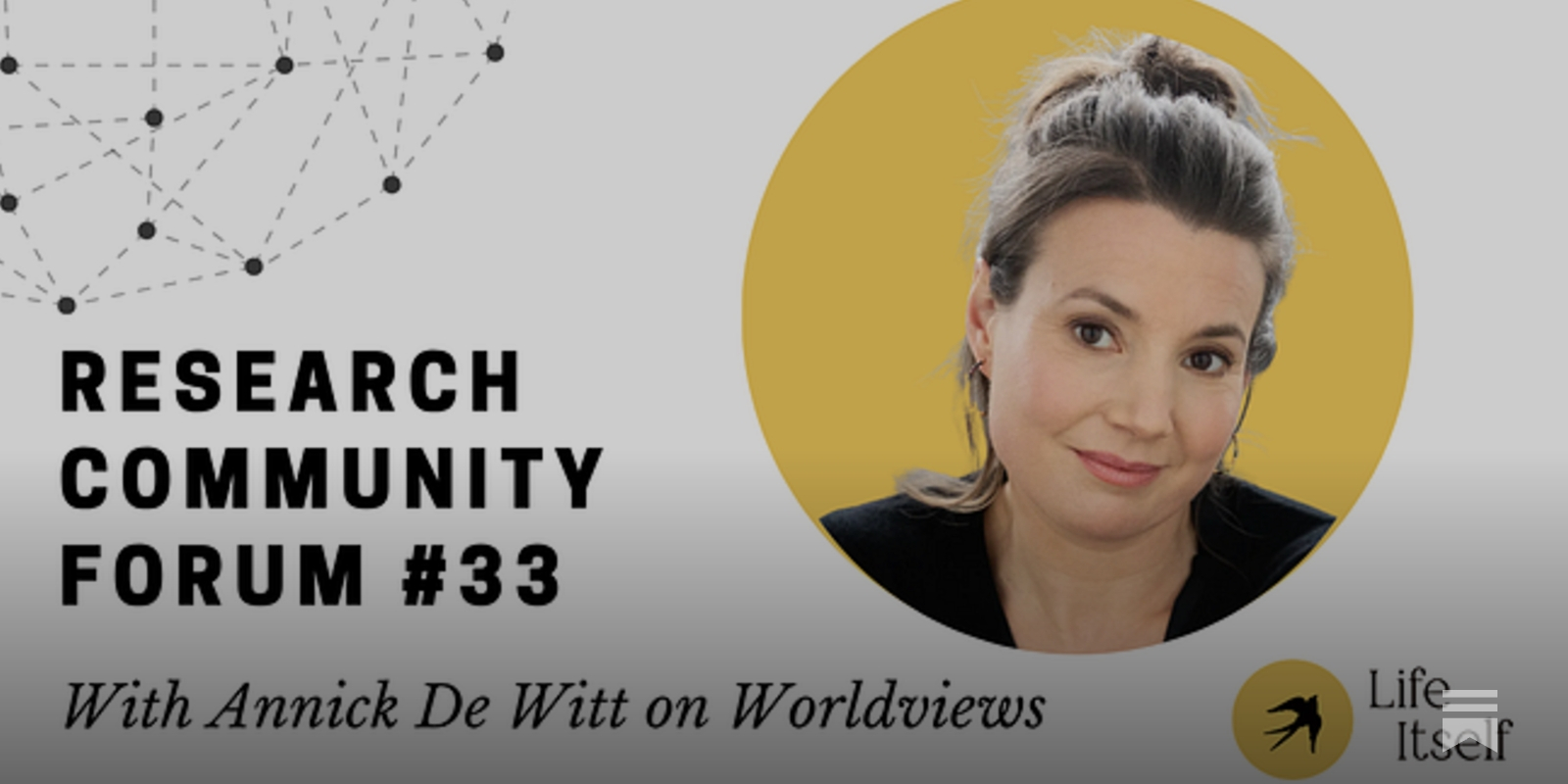
Annick de Witt on Worldview Theory in a Time Between Worlds
Join us for the Life Itself Research Community Call#33. Annick de Witt discusses how her research on worldviews helps us respond to our current period of global societal transition.
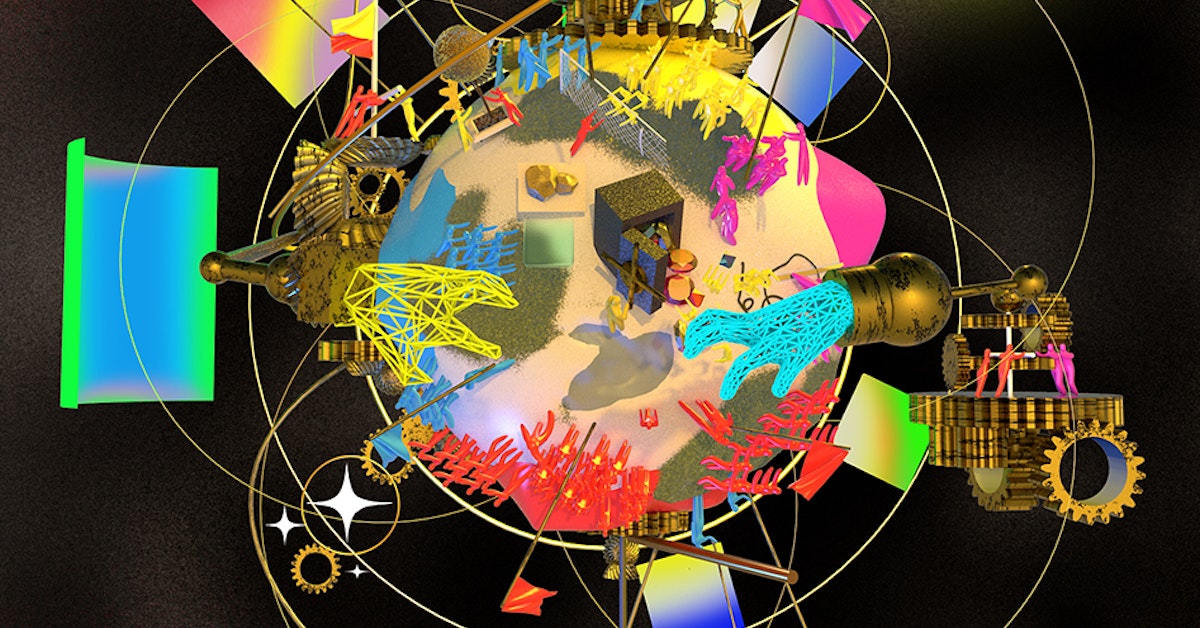
The New Planetary Nationalism
The realization of human embeddedness in Earth’s natural systems does not inevitably create a cosmopolitan politics oriented toward universal well-being.
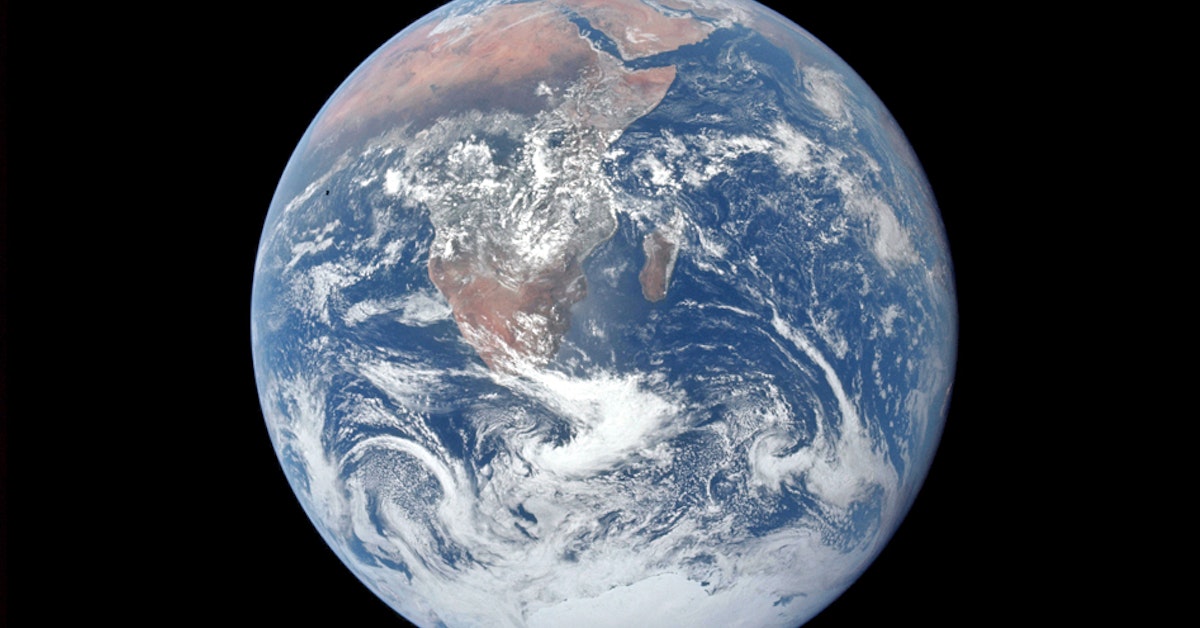
The Origins Of <br>‘Planetary Realism’ And <br>‘Whole Earth’ Thinking | NOEMA
There is no escaping an interconnected world.

We speak often of AI as if it were a future event. But it is already here in the fabric of our being. What Karl Ove Knausgaard captures with devastating clarity in his recent essay ‘The Reenchanted… | Kenneth Mikkelsen | 19 comments
We speak often of AI as if it were a future event. But it is already here in the fabric of our being. What Karl Ove Knausgaard captures with devastating clarity in his recent essay ‘The Reenchanted World’ is the departure of the real. “We live in a virtual world, as if the world had been lifted out of itself, into the air, like a giant roof suspended above the ground,” he writes. It is an existential condition. Across philosophy, from Heidegger to Baudrillard, from Don DeLillo to Debord, a singular thread weaves: the world, once our shelter from the self, has become self-referential. Where once we encountered beings in our Zuhandensein—ready-to-hand, intimate, meaningful—we now face a procession of Vorhandensein: inert, objectified, mediated. Simulation replaces encounter. Perception is swallowed by spectacle. And the digital era, in Knausgaard’s terms, “distances culture from the body”. “It is not just the body that disappears—it is the awareness that we are dying,” he writes. What we face is not merely technological change, but what I would call existential dissonance: the erosion of resonance between our inner world, our social world, and the material world. It is the tension that arises when the way one lives, acts, and relates is misaligned with one’s deeper sense of meaning, reality, and value. It manifests itself as a disturbance in being — an unease that is not merely emotional, but rooted in a felt gap between one’s existence as it is and as it could or should be. It is the voice of the self calling from within the noise of the world. This is why Knausgaard’s essay matters for anyone working in, with, or around AI. Because the question isn’t: What can these systems do? It is: What do they undo? “We can explain everything. But we understand nothing,” he writes. Manipulated constructions of truth, in such a time, becomes a currency. As shown in recent events—from Francesca Gino’s research fraud at Harvard to Bezos’ all-female crew venture into space, and Trump’s detention camp —truth is no longer that which corresponds with reality, but that which performs and sells. As Baudrillard warned, the simulation no longer hides the real—it becomes it. And yet, something remains. Knausgaard writes not to despair, but to stay. In the body. In death. In silence. In the concrete. If you seek to understand what is happening—not just in AI, but in the very metaphysics of modern life—I suggest we begin not with data, but with dissonance. With the feeling that something vital is slipping from view, and that “being in the world” now requires resistance. “We are surrounded by mystery. And yet we act as if everything were known,” he writes. AI will never understand this. But we must. Knausgaard’s full essay from Harper’s Magazine can be read via link in comments. | 19 comments on LinkedIn

Critiques of World Models
Specifically, a World Model (WM) is a generative model that simulates the possibilities in diverse scenarios (e.g., physical world, mental world, social world, and evolutionary world). Operationally, a WM takes previous world state s𝑠sitalic_s and action a𝑎aitalic_a, and predicts or simulates the next world state s′superscript𝑠′s^{\prime}italic_s start_POSTSUPERSCRIPT ′ end_POSTSUPERSCRIPT through a transformation function, such as a conditional probability distribution:
HOME
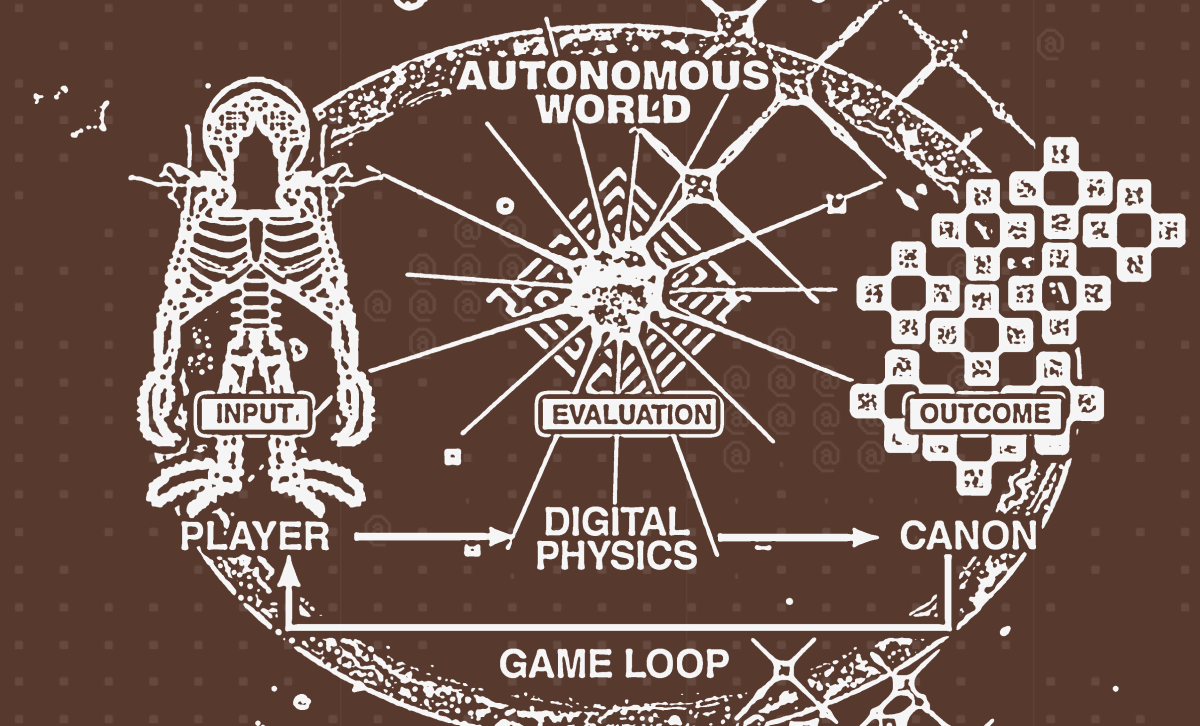
Autonomous Worlds are not just worlds that happen to exist onchain, but worlds that could not exist otherwise.
Projects – discover our non-empty spaces
Fostering spaces for growth is an important part of our trajectory. We seek to harness the combined power of practice, critical inquiry and creativity to address some of the issues of our times - health, environmental awareness, social equality and multilingual, trans-cultural collaborations.
Game
Come inhabit an exotic world and chisel through a layer cake of thousand-year-old civilizations.
The World Doesn’t Exist: William Gibson, William Blake, and Navigating an Algorithmic Hall of Mirrors | ODDCRITIC
Scrolling the TL revealed distorted realities, shaped by algorithms and biases.

World-systems theory
World-systems theory is a multidisciplinary approach to world history and social change which emphasizes the world-system as the primary unit of social analysis. World-systems theorists argue that their theory explains the rise and fall of states, income inequality, social unrest, and imperialism.

Small worlds — Stylized dioramas
Six interactive miniature worlds. Wander through an Italian harbor, a Japanese garden, a tropical island, a neon alley, forest ruins, and a sunken garden.