


We develop frontier AI methods to reinvent chip development, collapsing traditional design timelines, closing the loop between AI and the hardware that fuels it, and enabling a Cambrian explosion of custom silicon.
Harness Engineering for Self-Improvement
The concept of recursive self-improvement (RSI) dates back to I. J. Good (1965), where he defined an “ultraintelligent machine” as a system that can surpass humans in all intellectual activities and design better machines to improve itself. Yudkowsky (2008) used the phrase “recursive self-improvement” for a specific feedback loop: an AI uses its current intelligence to improve the cognitive machinery that produces its intelligence. This feedback loop in modern AI may indicate the model rewriting its own weights directly, or more broadly the model improves the training pipeline and the deployment system, which in turn enables a better successor model with improved performance across economically valuable tasks. The speed of research development in AI has been shown to drastically accelerated in frontier labs (Anthropic; OpenAI).
Import AI 455: AI systems are about to start building themselves.
The first step towards recursive self improvement

When AI builds itself
Our progress toward recursive self-improvement, and its implications.

Awesome RSI: A curated research map of Recursive Self-Improvement
A curated research map of Recursive Self-Improvement (RSI): models, agents, harnesses, embodied systems, automated AI R&D, benchmarks, and safety.
AI Chip Architectures
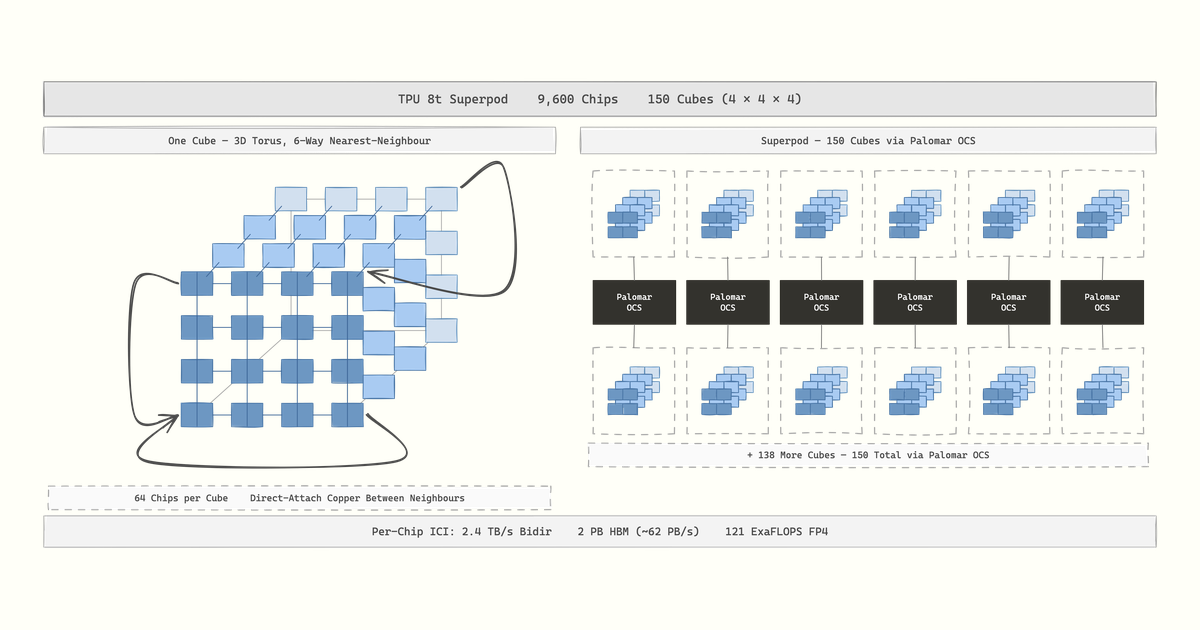
A look at AI Chip Architectures. NVIDIA, AMD, TPUs, Trainium, Groq, Cerebras.
RSI Simulator: Play the Economics of Recursive Self-Improvement
Bootstrap an AI lab from scratch. A web game from Paradigm built on real economic models of AI recursive self-improvement.
AI Promise and Chip Precariousness
The AI industry is more exciting than ever, but the chip situation is very precarious and requires drastic action.

The Bitter Lesson: Rethinking How We Build AI Systems
The Race for AI Progress In 2019, Richard Sutton, wrote his groundbreaking essay titled ‘The Bitter Lesson’. Simply put, the essay concludes that systems which get better with higher compute beat the systems that do not. Or specifically in AI: raw computing power consistently wins over intricate human-designed solutions. I used to believe that clever orchestrations and sophisticated rules were the key to building better AI systems. That was a typical sofware dev mentality. You build a system, look for edgecases, cover them and you are good to go. Boy, was I wrong.
Import AI 470: No rights for machines; automating environment generation with SPADE; and building better GPU kernels with Hawkeye
Differential acceleration of cyber, math, and AI

Good design hasn’t changed with AI — John Pham, SF Compute
AI R&D Is Accelerating Towards Potential RSI in 2027
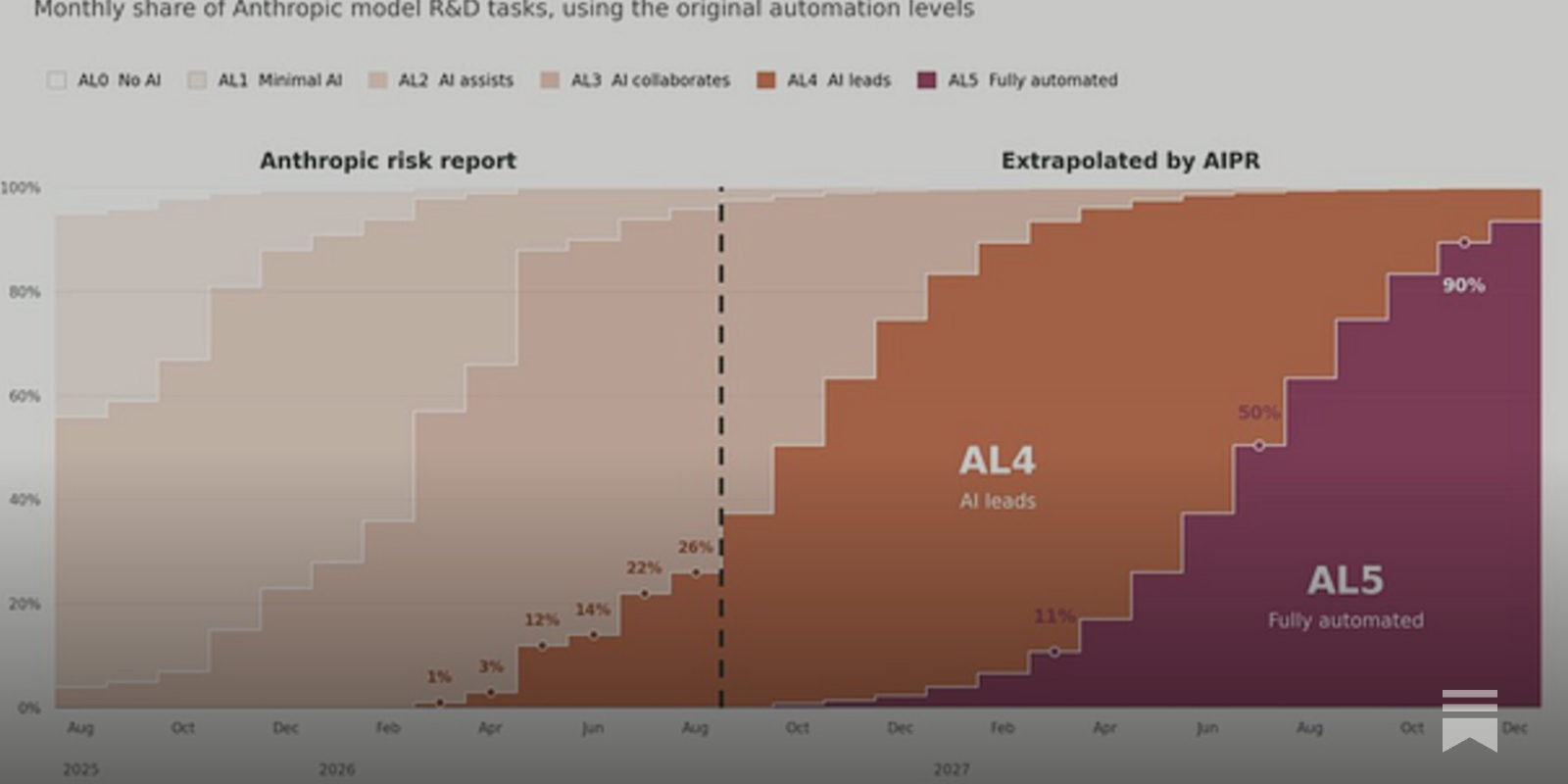
METR came out with an extensive report on how much AI is accelerating AI R&D at Anthropic, and thus how close we might be to recursive self-improvement (RSI) and how far that might go.
The Geopolitics of AI Infrastructure - Dylan Patel, SemiAnalysis
Automated Architecture Synthesis via Targeted Evolution | Liquid AI
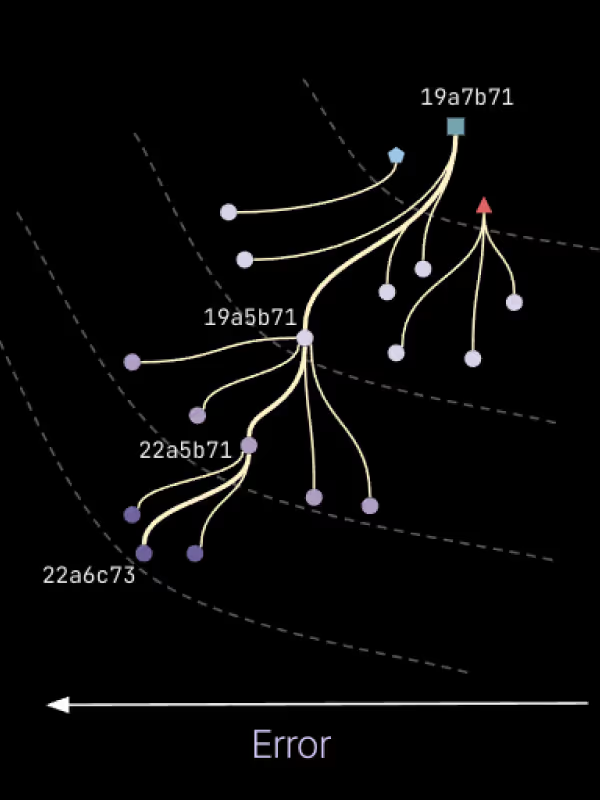
Today, we report advances in automated neural network architecture design and customization. We developed algorithms for the synthesis of tailored architectures (STAR), based on evolutionary algorithms applied to a numerical representation for model architectures derived from a new design theory. STAR automates the process of architecture discovery and optimization, turning it into an end-to-end process. With these methods, we have been able to tailor architectures to custom tasks, metrics, and hardware. We used STAR to synthesize hundreds of different designs that outperform strong Transformer and hybrid architectures in quality, with smaller caches and number of parameters.
Itai Yanai on Twitter / X
Unpopular opinion: Going straight to AI limits your creatively, because it short-circuits the iterative process you need to develop new ideas. pic.twitter.com/O2iPs0bfh0— Itai Yanai (@ItaiYanai) June 20, 2026

How Nvidia’s Jensen Huang became AI’s global salesman
Chipmaker’s chief is urging countries to build their own AI ecosystems — but using its tech

Making an OS From Scratch - Bootstrapping the dev loop
I made an OS, and you should too I’ve always wanted to make my own OS, but it felt like an insurmountable project. I knew many of the pieces that would be needed, but not all of them. And to realistically make something usable or even useful in any small way seemed impossible. AI changes the equation. While it sucks most of the fun out of coding, it opens up the possibility of being the architect for a larger project without having to know every detail.