

Rites and Rituals Scotland is a collective of dedicated Celebrants from across Scotland, specialising in ceremonies that honour Life, Love, and Loss. We offer Legal Marriages, as well as many other Life Ceremonies. We also offer Celebrant Training.
Dozens tie the metaphorical knot at Amsterdam’s ‘Married For A Day’ Pride event
Wearing rainbow flags, sequins and sometimes hardly anything at all, dozens have lined up in a pink church at Amsterdam’s Pride festival to get married, or at least married for the day.
Could Edinburgh be the world’s first regenerative festival city? | Offprint
A netwalking discussion for changemakers by Thrivable Scotland

Beyond Equality—Non-Monogamy and the Necropolitics of Marriage
‘Marriage equality’ has been a widely used slogan and mobilizing concept for LGBTQ+ rights’ movements across the globe striving for formal recognition for ‘same-sex’ or ‘same-gender’ marriages. In this article, we critically interrogate the terminology and political rationality that have given shape to ‘marriage equality’ campaigns. We demonstrate the structural erasure of non-monogamous relations and populations from the changes hoped for and envisioned in these mobilizations. The lack of any genuine and substantial concern with consensual non-monogamies (CNMs) from most of the literature in the field highlights the close entanglement of marriage with monogamy. As a result, ideas are scarce about how meaningful and adequate legal recognition and social policy provisions for a wide range of intimate, sexual, familial, and/or caring bonds or constellations on the CNM continuum could look like. We argue that the critique of the mononormativity inherent to marriage is fundamental to understanding the role of this in the 21st century. We identify the roots of the mononormativity of marriage in its governmental role as a necropolitical and biopolitical technology, evidenced by its ‘civilizing’ function in white settler colonial projects. Because of this, an expansion of the call for equality to include non-monogamous populations does not resolve but rather aggravates the problem. We conclude that any truly queer politics of CNM consequently needs to be anti-marriage.

Edinburgh festival: how the city’s residents could benefit after the crowds leave
Every year the festival attracts thousands of people to Scotland’s capital, but is the city able to harness this and improve it as a place to live?

Unhappy Coincidences
marriages of licensing convenience, and changed circumstances

Against the Couple-Form | LIES Journal
Libidinal flows cut through the social world. Amorous and sexual relations do not exist in some domain safely taped off from the rest of society. Rather they are constituent elements of nearly every aspect of social life. Desire flows and circulates amongst places of employment, intellectual debates, political organizing, artistic circles, playgrounds, and cemeteries. The elderly patient grabs at the breast of a nurse hunched over him. A governmental official strips his newly hired intern down to her leopard print thong during an important briefing in his office. The incarcerated man holds his hand up to the glass of the visiting booth, attempting to touch his wife after twenty years of their bodily separation. These flows of libidinal desire operate within and amongst broader social mechanisms, such that they help animate the dynamics of economic and political life. Often a locus of politics, desire permeates the so-called ‘public’ terrain.
Extraordinary Passion: Couple Meditation
How Police Make Up The Law (ft. LegalEagle)
Pain and Sacrifice: Experience and Modulation of Pain in a Religious Piercing Ritual
Fascinating pain-related rituals have been observed throughout the world, but so far no systematic evidence exists to support previous ethnographic reports of analgesic states and dissociative sym...

HOMOSEXUAL MARRIAGE VERSUS PEDOPHILES
This is trying to get a gay marriage registered through existing legal pathways and if failing, then documenting the failure.

Rational Ritual
Why do Internet, financial service, and beer commercials dominate Super Bowl advertising? How do political ceremonies establish authority? Why does repetition characterize anthems and ritual speech? Why were circular forms favored for public festivals during the French Revolution? This book answers these questions using a single concept: common knowledge. Game theory shows that in order to coordinate its actions, a group of people must form “common knowledge.” Each person wants to participate only if others also participate. Members must have knowledge of each other, knowledge of that knowledge, knowledge of the knowledge of that knowledge, and so on. Michael Chwe applies this insight, with striking erudition, to analyze a range of rituals across history and cultures. He shows that public ceremonies are powerful not simply because they transmit meaning from a central source to each audience member but because they let audience members know what other members know. For instance, people watching the Super Bowl know that many others are seeing precisely what they see and that those people know in turn that many others are also watching. This creates common knowledge, and advertisers selling products that depend on consensus are willing to pay large sums to gain access to it. Remarkably, a great variety of rituals and ceremonies, such as formal inaugurations, work in much the same way. By using a rational-choice argument to explain diverse cultural practices, Chwe argues for a close reciprocal relationship between the perspectives of rationality and culture. He illustrates how game theory can be applied to an unexpectedly broad spectrum of problems, while showing in an admirably clear way what game theory might hold for scholars in the social sciences and humanities who are not yet acquainted with it. In a new afterword, Chwe delves into new applications of common knowledge, both in the real world and in experiments, and considers how generating common knowledge has become easier in the digital age.

Miwa Events
Miwa Events creates elegant weddings, destination weekends, and editorially composed celebrations.
Let’s Talk About Consent
What is sexual consent? What practices does it refer to? Rébecca Lévy-Guillain explores these questions through the prism of sociology in her doctoral research. A Ph.D. student at the National Institute for demographic studies (Ined) and at the Observatoire sociologique du changement (OSC) of Sciences Po, she is studying the uses of the category

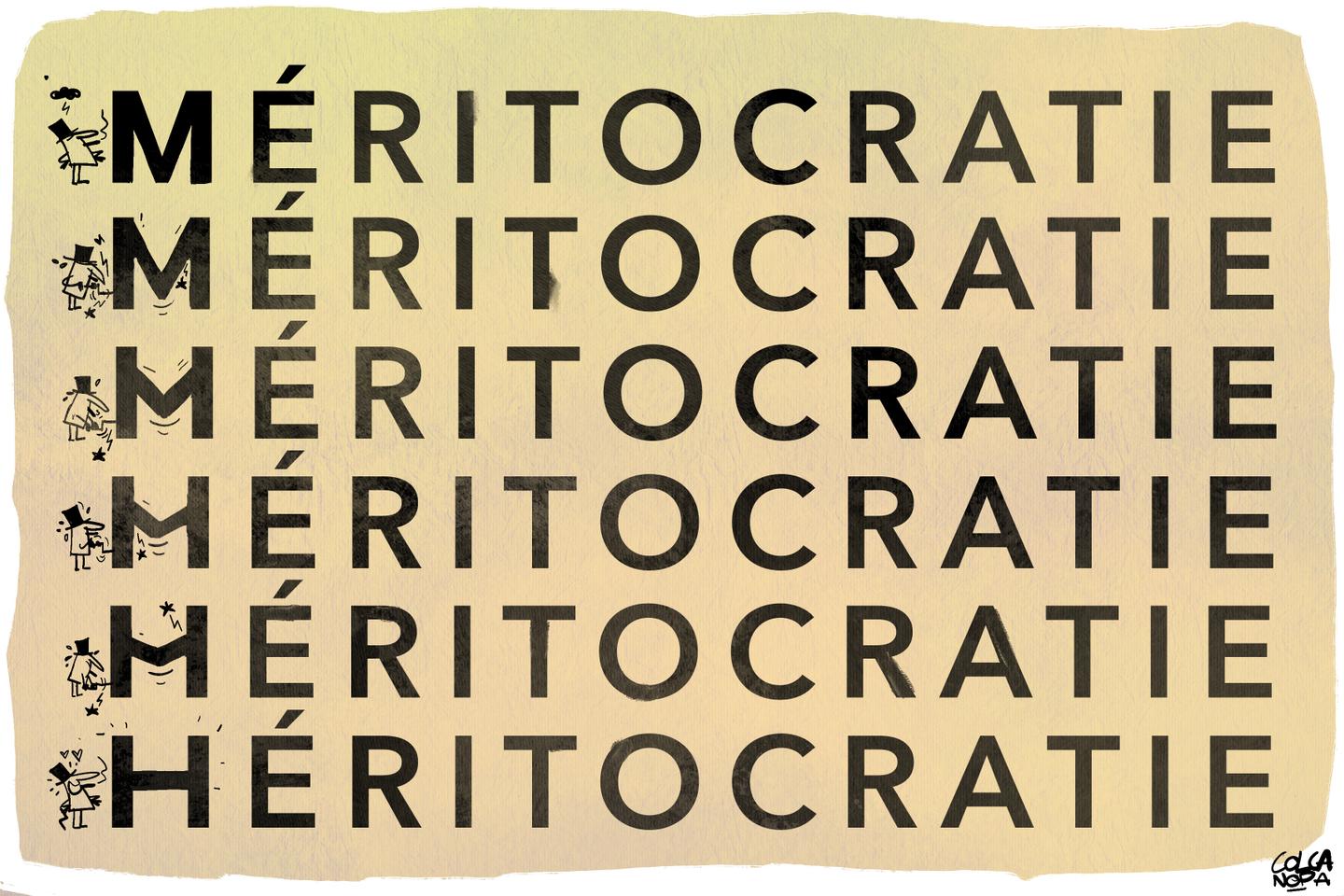
Comment la France est redevenue une société d’héritiers
« L’héritage, amplificateur des inégalités ». Le niveau élevé des inégalités de patrimoine et de la fortune héritée observé aujourd’hui rappelle celui de la France du XIXᵉ siècle. Un phénomène inquiétant, synonyme d’ascenseur social bloqué, et alimentant le ressentiment des classes moyennes.
Rupture amoureuse : les femmes se confient, les hommes se protègent
En matière de peines de cœur, les femmes se livrent plus que les hommes et reçoivent davantage de confidences. Ce qui fait peser sur elles une forme de contrôle social.

New: Bilateral delegations as mutually consenting social contracts

Capability Trees: A Protocol-Level Extension of Object Capabilities, Draft 4
leaflet.pub