An overview of common mistakes people make while developing a product strategy, tips for creating a successful strategy, and how to communicate and execute on a product strategy.
Product strategy best practices [with examples]
When building a product you have to be great at saying No. Not 'maybe' or 'later'. 'No' is the strategy for delivering a cohesive, well defined product.

Evolving and explaining how we run our company
As we write in “It Doesn’t Have to Be Crazy at Work”, you should treat your company as a product too. To improve a product, you listen, learn, (re)consider, concept, and iterate. …

6 steps to perfecting an open source product strategy
The future of building great products lies in breaking down the boundaries between business and technical thinking.

How to build a roadmap in 3½ steps | HackerNoon
<em>When done right, the product roadmap reduces uncertainty about the future and keeps product teams focused on the highest priority product initiatives. But how to build it effectively?</em>

Hot Take: Google has a company strategy, not a product strategy
Or, Why Google keeps killing products

Good Product Manager/Bad Product Manager | Andreessen Horowitz
Warning: This document was written 15 years ago and is probably not relevant for today’s product managers. I present it here merely as an example of a useful training document. Good product managers know the market, the product, the product line and the competition extremely well and operate from a strong basis of knowledge and...

Many Strategies Fail Because They’re Not Actually Strategies
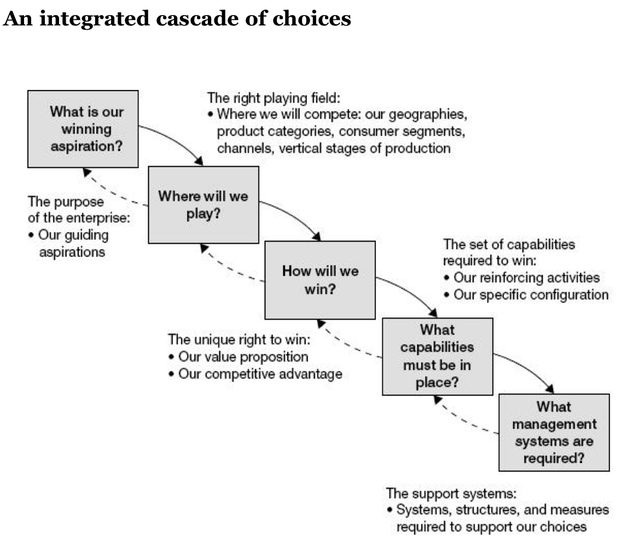
Many strategy execution processes fail because “new strategies” are often not strategies at all. A real strategy involves a clear set of choices that define what the firm is going to do and what it’s not going to do. Many strategies fail to get implemented because they do not represent such a set of clear choices. And many so-called strategies are in fact goals. “We want to be the number one or number two in all the markets in which we operate” is one of those. It does not tell you what you are going to do; all it does is tell you what you hope the outcome will be. But you’ll still need a strategy to achieve it. Another reason why many implementation efforts fail is that executives see it as a pure top-down, two-step process: “The strategy is made; now we implement it.” That’s unlikely to work. A successful strategy execution process is seldom a one-way trickle-down cascade of decisions.

What Is Strategy?
Today’s dynamic markets and technologies have called into question the sustainability of competitive advantage. Under pressure to improve productivity, quality, and speed, managers have embraced tools such as TQM, benchmarking, and re-engineering. Dramatic operational improvements have resulted, but rarely have these gains translated into sustainable profitability. And gradually, the tools have taken the place of strategy. In his five-part article, Michael Porter explores how that shift has led to the rise of mutually destructive competitive battles that damage the profitability of many companies. As managers push to improve on all fronts, they move further away from viable competitive positions. Porter argues that operational effectiveness, although necessary to superior performance, is not sufficient, because its techniques are easy to imitate. In contrast, the essence of strategy is choosing a unique and valuable position rooted in systems of activities that are much more difficult to match. Porter thus traces the economic basis of competitive advantage down to the level of the specific activities a company performs. Using cases such as Ikea and Vanguard, he shows how making trade-offs among activities is critical to the sustainability of a strategy. Whereas managers often focus on individual components of success such as core competencies or critical resources, Porter shows how managing fit across all of a company’s activities enhances both competitive advantage and sustainability. While stressing the role of leadership in making and enforcing clear strategic choices, Porter also offers advice on how companies can reconnect with strategies that have become blurred over time.

The Illusion of Decisiveness
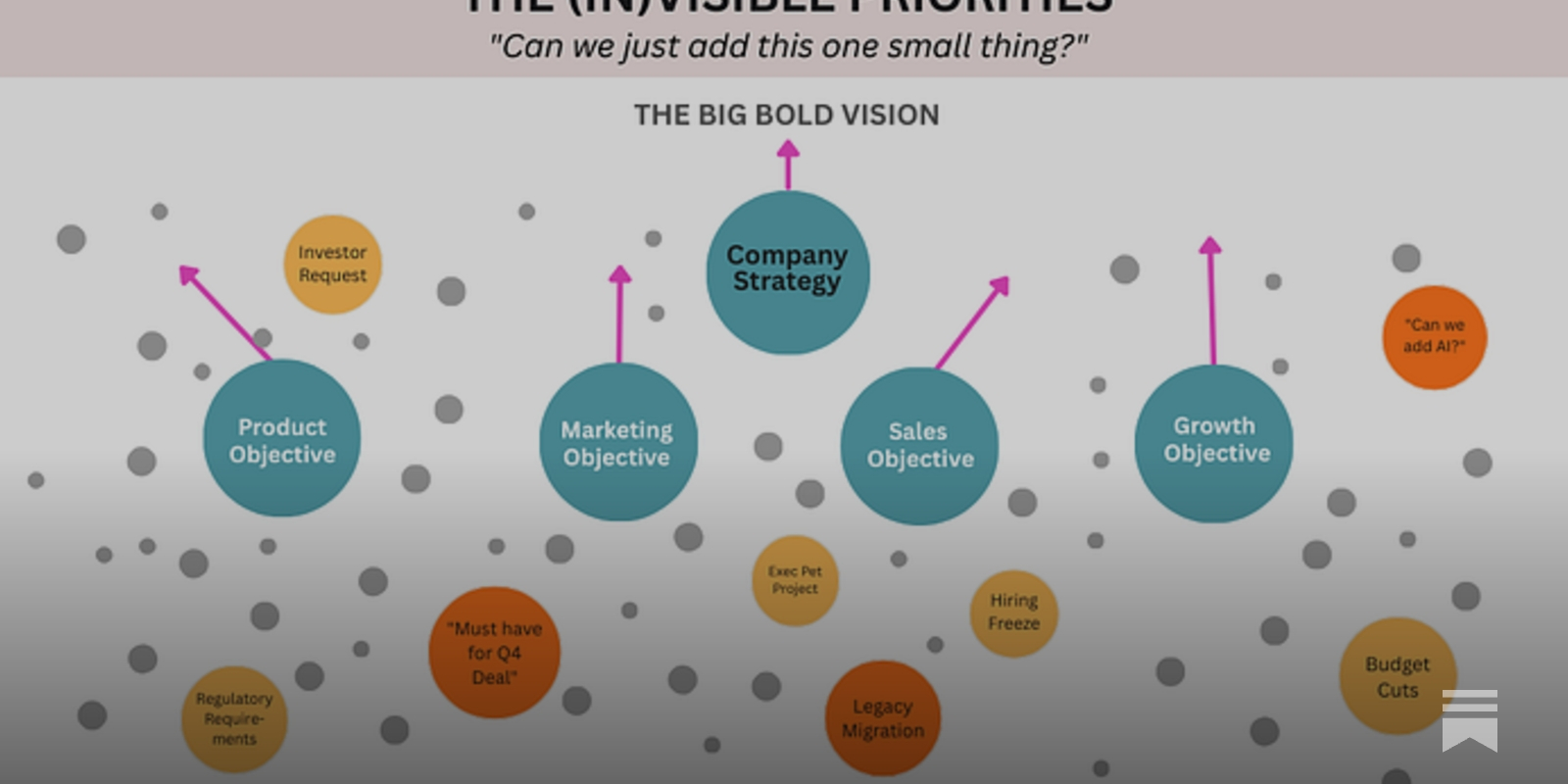
Why product teams spin in chaos despite a "clear" strategy
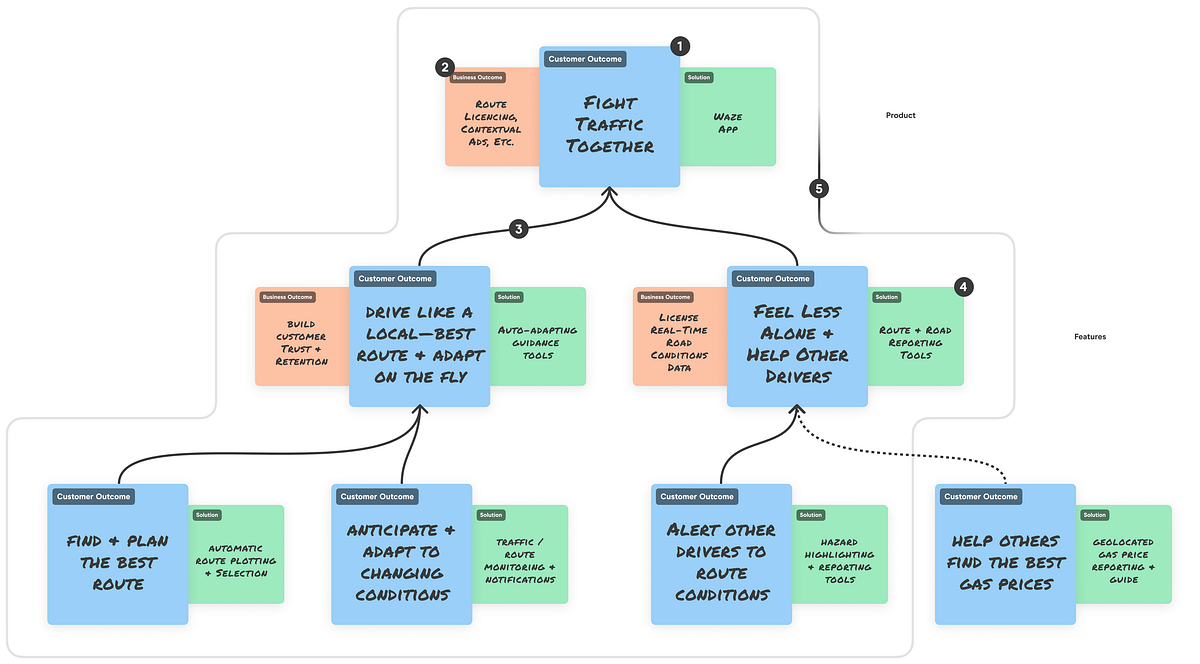
The Product Strategy Stack | Reforge Blog
Reforge drives team performance, with the most actionable learning from vetted operators that your team will actually use and apply.

Great engineering teams focus on milestones instead of projects | Jade Rubick - Engineering Leadership
Programs are more complicated than projects which are more complicated than milestones. Instead of projects, focus on milestonesMost engineering organizations focus on delivering projects. You can get better results by focusing on milestones instead.

Work Smarter: The Cocktail of Simplicity, Manageable Adversity, and Muntzing
Sometimes deliberate roadblocks can be a good thing to get more efficient and effective products and workflow. Here's how.

Bring a Product Manager Mindset to Your Next Engineering Job
The age of AI demands strong ideas, data driven methods, and experimentation

Playing to Win: How Strategy Really Works
How Strategy Really Works. This approach grew out of the strategy practice at Monitor Company and subsequently became the standard process at P&G.