

Salomé is an Assistant Professor of Law at Michigan Law School, where she teaches and writes about contracts, privacy, commercial surveillance and data governance. Salomé works on the law and political economy of data and AI and the role of law in structuring digital life. She is especially interested in platform power, how information law structures inequality, and how law theorizes data about people (i.e. ‘social data’). Some of her recent and forthcoming work develops a theory of affirmative, socially beneficial uses of social data, and examines the role of public agencies in gathering, governing, and using social data as a form of public governance. Other recent and forthcoming work considers under what kinds of conditions the datafication of social life is morally or legally wrongful. Broadly, she is interested in what legal status social data enjoys, what kinds of legal interests social data production and use implicates, and how the law does (and should) regulate the digital economy.
Artificial Intelligence and the Purpose of Social Systems
The law and ethics of Western democratic states have their basis in liberalism. This extends to regulation and ethical discussion of technology and businesses doing data processing. Liberalism relies on the privacy and autonomy of individuals, their ordering through a public market, and, more recently, a measure of equality guaranteed by the state. We argue that these forms of regulation and ethical analysis are largely incompatible with the techno-political and techno-economic dimensions of artificial intelligence. By analyzing liberal regulatory solutions in the form of privacy and data protection, regulation of public markets, and fairness in AI, we expose how the data economy and artificial intelligence have transcended liberal legal imagination. Organizations use artificial intelligence to exceed the bounded rationality of individuals and each other. This has led to the private consolidation of markets and an unequal hierarchy of control operating mainly for the purpose of shareholder value. An artificial intelligence will be only as ethical as the purpose of the social system that operates it. Inspired by the science of artificial life as an alternative to artificial intelligence, we consider data intermediaries: sociotechnical systems composed of individuals associated around collectively pursued purposes. An attention cooperative, that prioritizes its incoming and outgoing data flows, is one model of a social system that could form and maintain its own autonomous purpose.

AI and Doctrinal Collapse
Artificial intelligence runs on data. But the two legal regimes that govern data—information privacy law and copyright law—are under pressure. Formally, each re

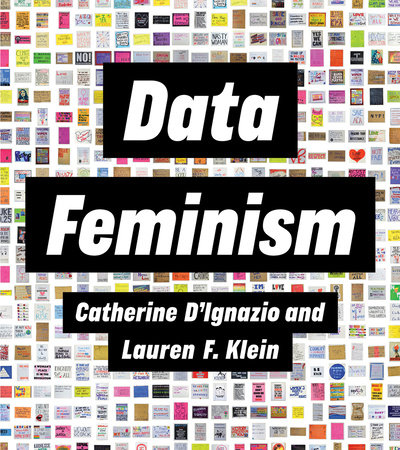
Data Feminism
A new way of thinking about data science and data ethics that is informed by the ideas of intersectional feminism.Today, data science is a form of power. I
Living in Data: A Citizen's Guide to a Better Information Future (Paperback)
Jer Thorp’s analysis of the word “data” in 10,325 New York Times stories written between 1984 and 2018 shows a distinct trend: among the words most closely associated with “data,” we find not only its classic companions “information” and “digital,” but also a variety of new neighbors—from “scandal” and “misinformation” to “ethics,” “friends,” and “play.”To live in data in the twenty-first century

Kari Jordan, Ph.D.
Advancing the power of data to improve the social and economic lives of all people.

Data Feminism
A new way of thinking about data science and data ethics that is informed by the ideas of intersectional feminism.

Data-owning Democracy or Digital Socialism?
This article contrasts two reform proposals articulated in recent debates about how to democratize the digital economy: data-owning democracy and digital socialism. A data-owning democracy is a political-economic regime character-ized by the
Data Feminism
Today, data science is a form of power. It has been used to expose injustice, improve health outcomes, and topple governments. But it has also been used to d...

Home
For decades as a political science professor, I have studied the threats to privacy and data protection from new digital technologies.
Movement Data Science: Practices for Working in Solidarity with Social Justice Efforts
Although many data scientists are eager to promote social justice, their efforts often fall short, and in some cases even exacerbate existing injustices. This gap between intentions and impacts follows from issues in how data scientists conceptualize their role in social justice efforts: they typically act as technicians, aiming to develop technical tools that will produce social justice. This default role generally results in depoliticized techno-fixes that fail to produce substantive changes. In this paper, we contribute “movement data science” as a framework to guide data scientists in taking on more productive and equitable roles in social justice efforts. Our framework is inspired by movement lawyering, a practice used by lawyers to situate themselves in grassroots social movements. Movement data science suggests that data scientists should ground their efforts to advance justice in sustained and solidaristic relationships with social movements. We contribute a process with four essential practices to help data scientists build these relationships and identify roles to play within specific social justice efforts. Movement data science does not provide a simple blueprint for data scientists to follow, but it can help them support social justice movements in substantive ways that go beyond attempting to solve injustices with technical tools.

Danielle Robinson, PhD
Advancing the power of data to improve the social and economic lives of all people.
The Internet Was Built by Movements w Sasha Costanza-Chock
Home - Data For Good
Empowering Communities Through Data Learn About Us Volunteer Get Support Donate Who Are We? Data For Good is a collective of do gooders, who want to use their powers for good, and not evil, to help make our communities better through data. We are a national not for profit organization, with chapters across the county, […]

MyData
The human-centric approach to data is aimed at a fair, sustainable, and prosperous digital society. In such a society, people get value from their data and set the agenda on how it is used. And for organisations, the ethical use of data is always the most attractive option.

Who owns your data?
A Supreme Court case about a bank robbery could redefine your digital rights.

Steps to Data Sovereignty


A Jewish Case for AI work exemptions

The AI Resist List
What is the Atmosphere? - Leaflet Lab Notes
Collective action strategies in the age of AI w/ Nick Vincent from Data Leverage - The Blockchain Socialist

Roundabout

How to: Migrate away from Substack