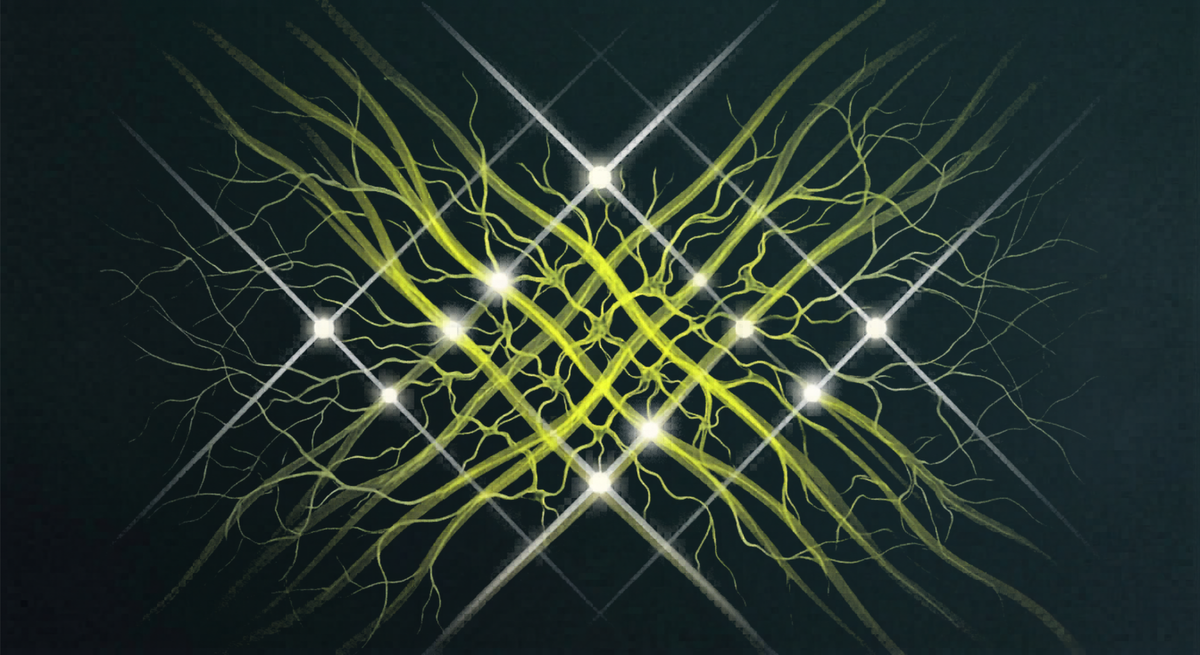
What makes up Relational infrastructure when we zoom in? What are the qualities and attributes that might help us explain how we build it, nurture it and best invest in it - and indeed, what we can expect in return?
On Relational Infrastructure
Exploring the role of relationships, trust and mutualistic approaches to change.
Relational Tech Project — Build what we need
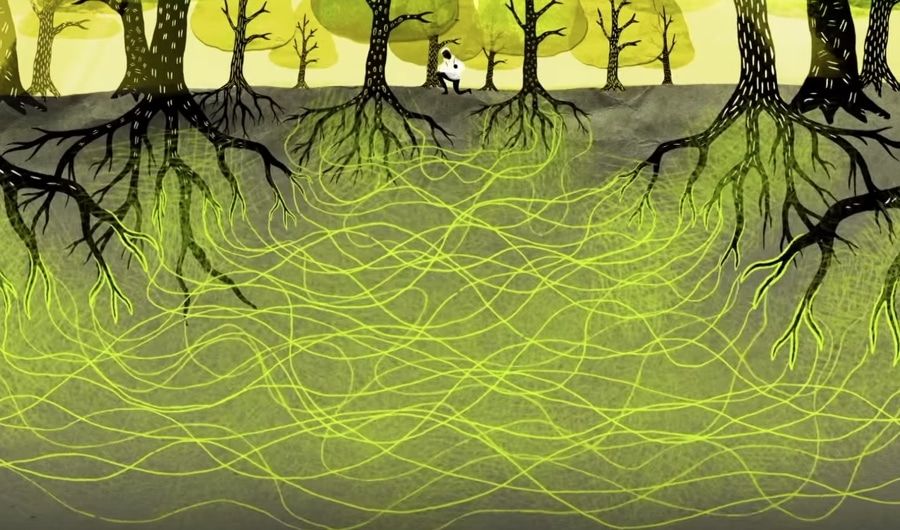
Many of us wish our neighborhoods were more connected. We want to live in neighborhoods where we learn from the creativity, care, and skills of our neighbors — and share our gifts too.

Welcome to the Relational Design Lab | LX Cast | 19 comments
Today I am VERY excited to share with all of you about my new home, Relational Design Lab! This R&D studio brings together a number of projects and will, I hope, grow to encompass many more. I imagine this lab as a gathering place for curious people who want to think about systems, and not in the typical mechanistic way they are described and implemented in technology. Instead, we'll feel into living systems, fractal ways of being, where the how is as important as the what. Over time, I hope the Lab will be a home or a waypoint for designers, researchers, community organizations, artists, storytellers, and technologists to explore togetherness together. Our 'theory of change' focuses on paradigm shift. Big change takes practice and possibility. Paradoxically, paradigm shift is a result of many small changes and repetitions in our behaviour and belief systems. We embrace emergence, mutual support, collective practice, and storytelling. One thing feels pretty clear, we need technology that is designed in solidarity with mutual care, does not depend on the whims of big corporations or its surveillance, and is joyful to use. To live in this reality, we also need to consider how business, funding, governance, scale, and context affect our work. We need embodied ways of knowing and sharing knowledge alongside our technical reasoning. And we need to face the reality of the consequences of our actions and those of our ancestors. This is not a project that aims to solve all the world's problems, but instead, to nurture the capacity for doing things together. We support and practice responding with curiosity and care, not with answers or attachment to ideals that no longer make sense amid collapsing systems. We are not "hiring" for this project now but there are many ways to get involved and would welcome opportunities to collaborate. Some of the projects we're holding include Folk Tech, Spacious, SEED Founding, and Relational Source License. We're also developing a very cool workshop process to help other organizations explore relational design through a community-driven futurism process. As ecosystem supporters, we are developing relationships with many aligned groups and projects as well. There will be more communications coming! If this all sounds like something you would like to support, contribute to, keep track of, or develop relationship with, for now you can subscribe to our calendar here https://lnkd.in/gPRFW7zC and message me directly! | 19 comments on LinkedIn
Data Mesh Architecture: Interoperability, Co-Operation, and Co-Regulation
This paper examines the emergence of data mesh architectures and data intermediaries as key components in emerging data economies. It explores how data mesh arc

Relational Design Lab
Relational Design Lab is a research and development lab focused on belonging and technology.
Relational Design Lab · Events Calendar
View and follow events from Relational Design Lab on Luma. How we together. Exploring the connections within and among us with and through technology.

Commoning as Relational Provisioning & Governance | David Bollier
This is the second section of an essay, "Relationalized Finance for Generative Living Systems and Bioregions," by David Bollier and Natasha Hulst. The remaining three sections of the essay will be published in the remaining days of this week. The full essay can be downloaded as a PDF here.
Semantic Data Modeling, Graph Query, and SQL, Together at Last?
Our teams advance the state of the art through research, systems engineering, and collaboration across Google.
MIRA — the structure layer for a shared research graph
Research ships as a sealed document. MIRAfying it makes a graph of signed, citable records anchored on the actual data artifacts — so analyses compound without flattening the nuance.
LinkML – Bring structure to your data.
An open framework that simplifies authoring, validating, and sharing data — providing an accessible platform for interdisciplinary collaboration and a reliable way to define and share data semantics.
Against SQL
But SQL is the only widely-used implementation of the relational model, and it is:
Linked Open Vocabularies (LOV)
Your entry point to high quality and reusable Vocabularies to describe Linked Data.