

From ChatGPT Plugins to Agent Skills, a look at how we've been trying (and failing) to extend LLMs for the last three years.
crawshaw - 2026-02-08
I wrote up my experiences programming with LLMs a bit over a year ago, and updated it for the world of agents eight months ago. A lot has changed since then, so here is an update.
I don't pay for ChatGPT, Perplexity, Gemini, or Claude – I stick to my self-hosted LLMs instead
There's no point in relying on AI tools when my local LLMs can handle everything
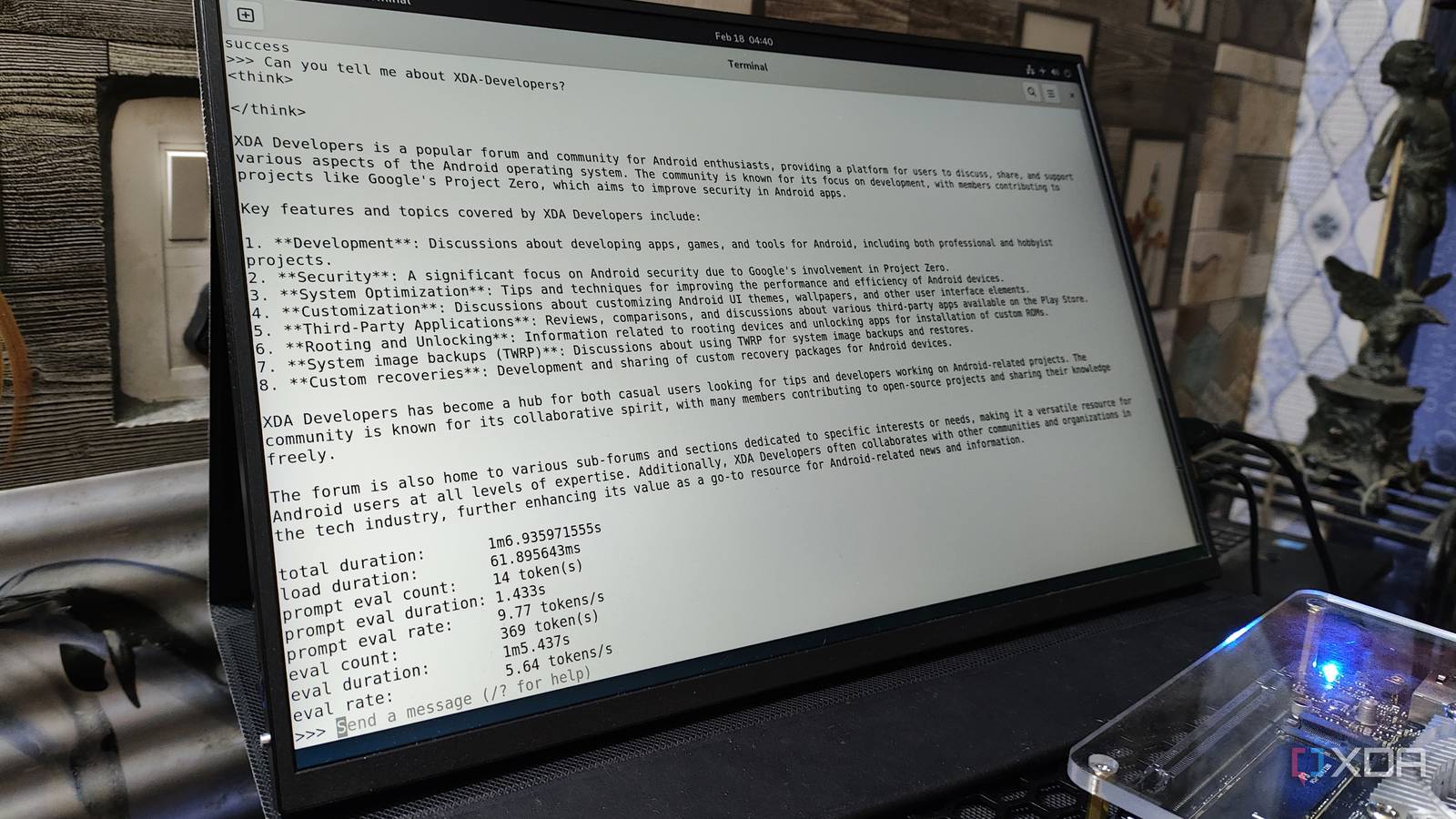
LLMs running on my laptop can drive coding agents now | Simon P. Couch
Qwen 3.5 and Gemma 4 are a step change for local coding agents.

This Web Tool Sabotages AI Chatbots By Making Them Really, Really Slow
Artist Sam Lavigne created ‘Slow LLM’ to make people question their dependence on tools like Claude and ChatGPT. Or at least, make them super annoying to use.

Instant LLM Updates with Doc-to-LoRA and Text-to-LoRA
Recent LLM agents have shown impressive capabilities on complex computer use and long-horizon tasks. Yet, they still struggle with long-term memory and adaptation--two of the most important cognitive capabilities that still limit LLMs today. Without long-term memory, users have to provide LLMs with relevant content at the start of every new session, creating friction, discontinuity, and longer time-to-response. Additionally, due to the lack of adaptation, they do not learn from mistakes or user preferences from previous sessions, making each interaction as cumbersome as the first. Traditionally, these two problems are tackled by "updating" the model.
The scientific case for being nice to your chatbot
New research confirms that LLMs often perform better when you encourage them. But why?
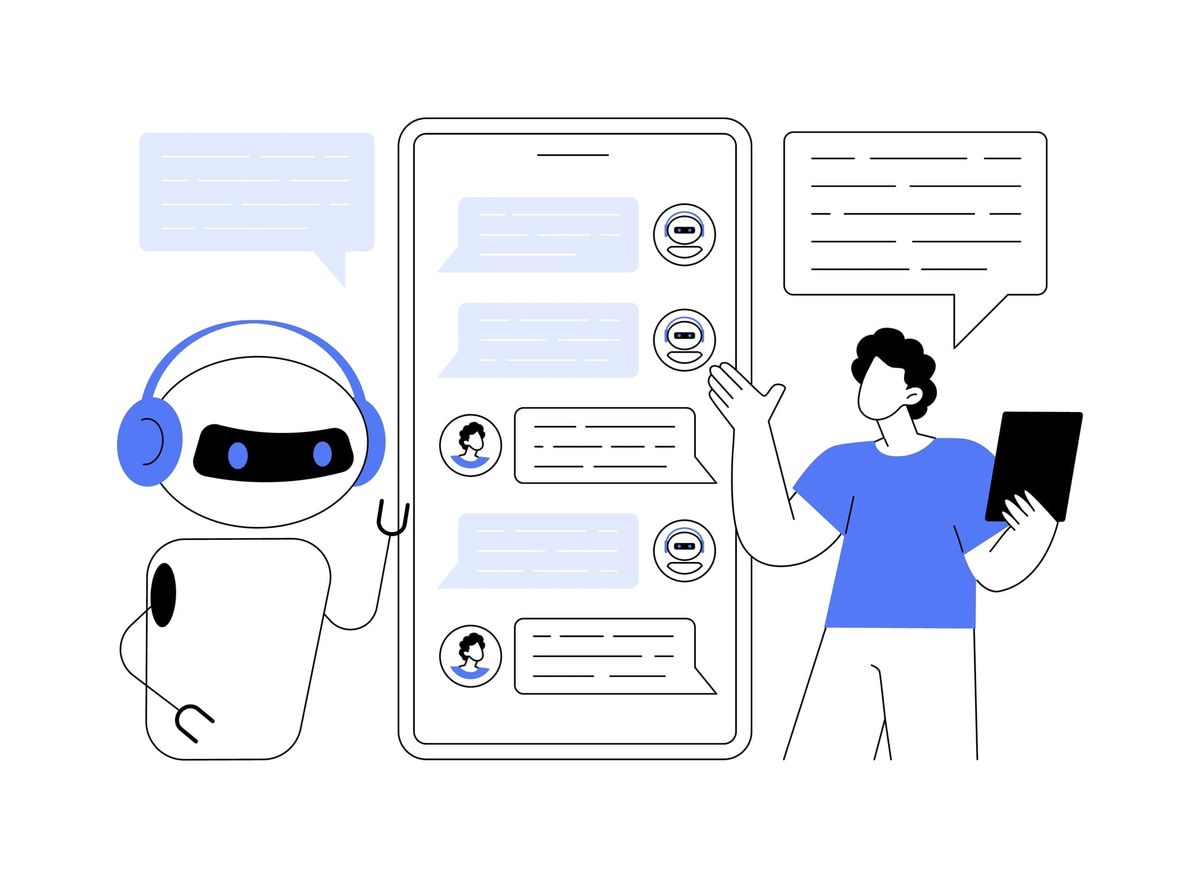
ChatGPT Plans | Free, Go, Plus, Pro, Business, and Enterprise
Built-in worktrees and cloud environments for multi-agent workflows

Philipp Schmid on Twitter / X
Should we build the web for agents, not agents for the web? 🤔 A new paper argues that current research is misguidedly focuses on improving LLMs leading to significant problems with efficiency, reliability, and safety, proposing a new "Agentic Web Interface" (AWI) that sits on… pic.twitter.com/I90k6kdYdk— Philipp Schmid (@_philschmid) June 14, 2025

Codifying a ChatGPT workflow into a malleable GUI
Wouldn't it be neat if you could use LLMs to create little personal utility apps as the need arises? Here's a story where I did just that...
AI Agents: Key Concepts and How They Overcome LLM Limitations
An AI agent is an autonomous software entity that is often used to augment a large language model. Here's what developers need to know.

truefoundry/trueforge
The open-source agent harness - the runtime layer that turns an LLM into a working agent.
Dria on Twitter / X
Introducing Inference Arena v2.0.An agentic experience that searches, analyzes, and delivers insights about LLM inference.When we first launched, our goal was simple: make it easier for developers to compare models, engines, and hardware without digging through scattered… pic.twitter.com/fgWgos48lW— Dria (@driaforall) September 30, 2025

maxleedev on Twitter / X
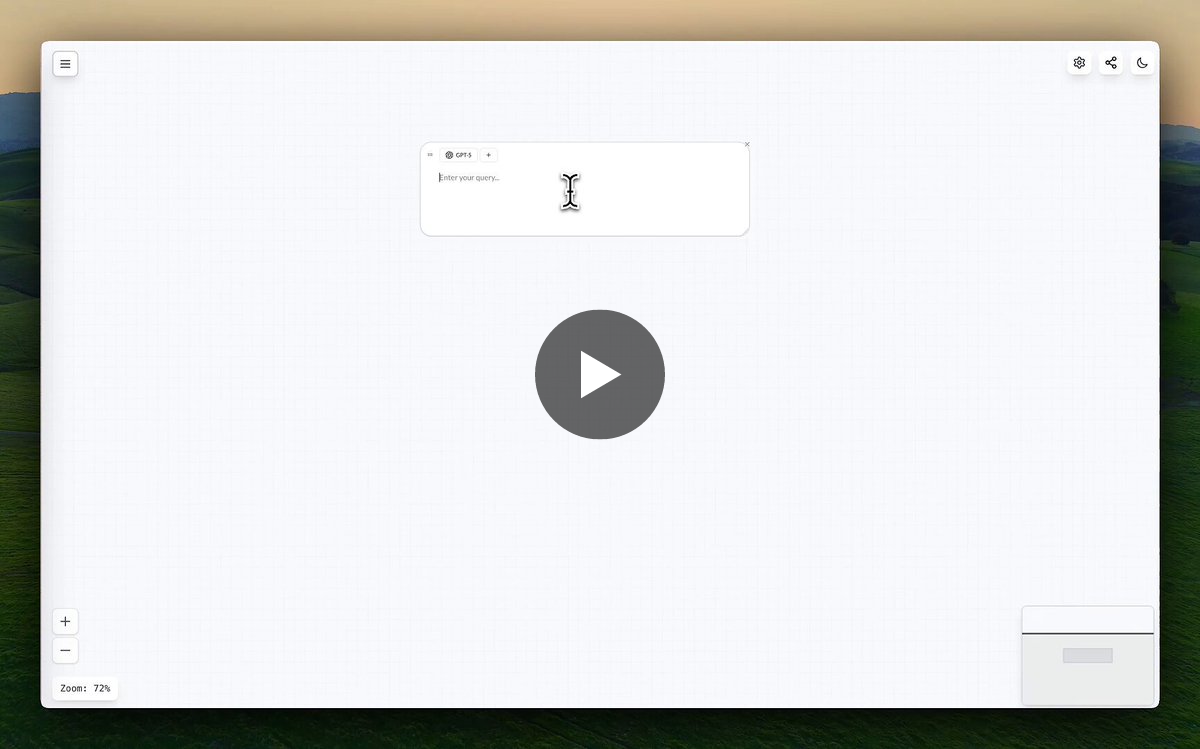
current chat interfaces suck, so i built a canvas for llms https://t.co/s0vAq0g8aH pic.twitter.com/94RvYgIrGV— maxleedev (@maxleedev) September 2, 2025
Why Chatbots Are Not the Future of Interfaces
Unfortunately for the countless hapless people I've talked to in the past few months, this was inexorable. Ever since ChatGPT exploded in popularity, my inner designer has been bursting at the seams.
something that has come up fairly recently with LLMs - for coding, specifically - is that it’s become a lot easier to burn stupefying amounts of tokens on stuff very fast, with agents running 24/7 or managing more agents (see: Yegge’s Gas Town) even with low inference costs that adds up in a hurry

Jesse Felder
‘While some cling to the promise of an AI “revolution,” the cost of adoption is proving a stubborn bottleneck. These developments also suggest that the economics of replacing human labor with AI may be more complicated than some early forecasts originally implied.’ fortune.com/2026/05/22/microsoft-ai-cost-…
