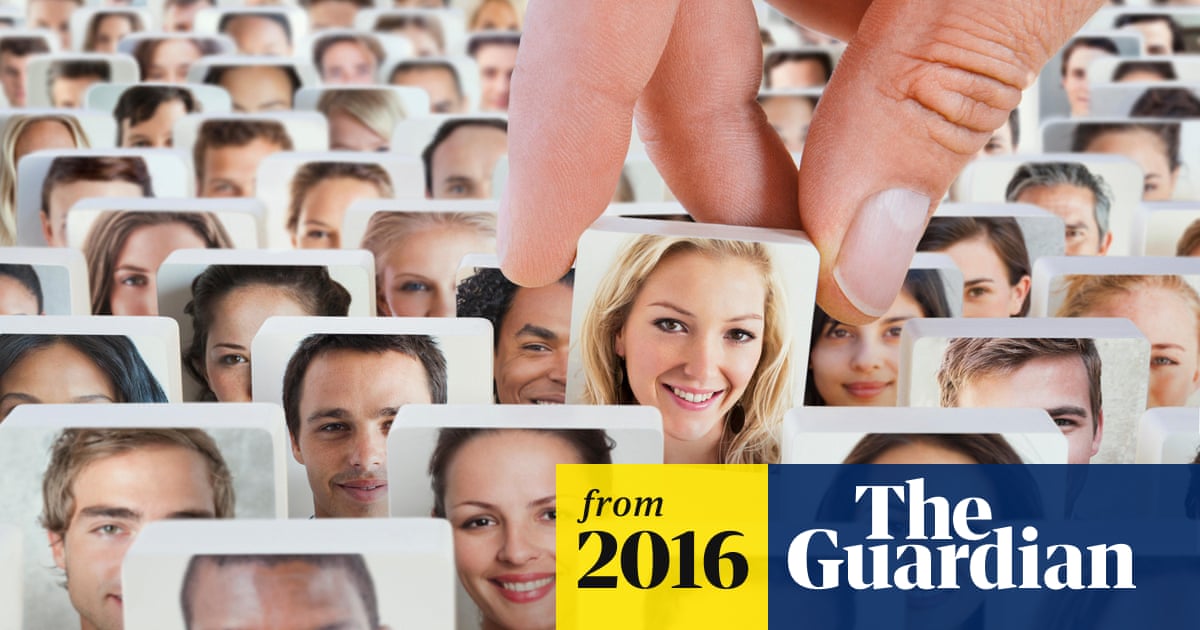
Face re-identification from genomic data is harder than you think! , Recent studies suggest that genomic data can be matched to images of human faces, raising the concern that genomic data can be re-identified with relative ease. However, such investigations assume access to well-curated images, which are rarely available in practice and challenging to derive from photos not generated in a controlled laboratory setting. In this study, we reconsider re-identification risk and find that, for most individuals, the actual risk posed by linkage attacks to typical face images is substantially smaller than claimed in prior investigations. Moreover, we show that only a small amount of well-calibrated noise, imperceptible to humans, can be added to images to markedly reduce such risk. The results of this investigation create an opportunity to create image filters that enable individuals to have better control over re-identification risk based on linkage.
Exploring Frequency Adversarial Attacks for Face Forgery Detection
Various facial manipulation techniques have drawn seri-ous public concerns in morality, security, and privacy. Al- though existing face forgery classifiers achieve promising performance on detecting fake images, these methods are vulnerable to adversarial examples with injected impercep- tible perturbations on the pixels. Meanwhile, many face forgery detectors always utilize the frequency diversity be-tween real and fake faces as a crucial clue. In this paper, in- stead of injecting adversarial perturbations into the spatial domain, we propose a frequency adversarial attack method against face forgery detectors. Concretely, we apply dis-crete cosine transform (DCT) on the input images and in-troduce a fusion module to capture the salient region of ad-versary in the frequency domain. Compared with existing adversarial attacks (e.g. FGSM, PGD) in the spatial do-main, our method is more imperceptible to human observers and does not degrade the visual quality of the original images. Moreover, inspired by the idea of meta-learning, we also propose a hybrid adversarial attack that performs at-tacks in both the spatial and frequency domains. Exten-sive experiments indicate that the proposed method fools not only the spatial-based detectors but also the state-of- the-art frequency-based detectors effectively. In addition, the proposed frequency attack enhances the transferability across face forgery detectors as black-box attacks.
Exploring Frequency Adversarial Attacks for Face Forgery Detection
Various facial manipulation techniques have drawn seri-ous public concerns in morality, security, and privacy. Al- though existing face forgery classifiers achieve promising performance on detecting fake images, these methods are vulnerable to adversarial examples with injected impercep- tible perturbations on the pixels. Meanwhile, many face forgery detectors always utilize the frequency diversity be-tween real and fake faces as a crucial clue. In this paper, in- stead of injecting adversarial perturbations into the spatial domain, we propose a frequency adversarial attack method against face forgery detectors. Concretely, we apply dis-crete cosine transform (DCT) on the input images and in-troduce a fusion module to capture the salient region of ad-versary in the frequency domain. Compared with existing adversarial attacks (e.g. FGSM, PGD) in the spatial do-main, our method is more imperceptible to human observers and does not degrade the visual quality of the original images. Moreover, inspired by the idea of meta-learning, we also propose a hybrid adversarial attack that performs at-tacks in both the spatial and frequency domains. Exten-sive experiments indicate that the proposed method fools not only the spatial-based detectors but also the state-of- the-art frequency-based detectors effectively. In addition, the proposed frequency attack enhances the transferability across face forgery detectors as black-box attacks.
Facial recognition database used by FBI is out of control, House committee hears
Database contains photos of half of US adults without consent, and algorithm is wrong nearly 15% of time and is more likely to misidentify black people

We can ID people from DNA that shows up in environmental studies
Advances in DNA sequencing mean privacy can be violated accidentally.

Police use of Amazon’s face-recognition service draws privacy warnings
Cloud-based service can index millions of faces and recognize 100 people in an image.

The perpetual lineup: Half of US adults in a face-recognition database
In this virtual lineup, you're scanned despite not being suspected of a crime.

Can names shape facial appearance?
Our given name is a social tag associated with us early in life. This study investigates the possibility of a self-fulfilling prophecy effect wherein individuals’ facial appearance develops over time to resemble the social stereotypes associated with given names. Leveraging the face–name matching effect, which demonstrates an ability to match adults’ names to their faces, we hypothesized that individuals would resemble their social stereotype (name) in adulthood but not in childhood. To test this hypothesis, children and adults were asked to match faces and names of children and adults. Results revealed that both adults and children correctly matched adult faces to their corresponding names, significantly above the chance level. However, when it came to children’s faces and names, participants were unable to make accurate associations. Complementing our lab studies, we employed a machine-learning framework to process facial image data and found that facial representations of adults with the same name were more similar to each other than to those of adults with different names. This pattern of similarity was absent among the facial representations of children, thereby strengthening the case for the self-fulfilling prophecy hypothesis. Furthermore, the face–name matching effect was evident for adults but not for children’s faces that were artificially aged to resemble adults, supporting the conjectured role of social development in this effect. Together, these findings suggest that even our facial appearance can be influenced by a social factor such as our name, confirming the potent impact of social expectations.

Facebook’s New Test: 'Upload A Clear Photo of Your Face'
Facebook asks some users to upload a picture of their face to authenticate themselves in cases of "suspicious activity."

Turnbull denies new facial recognition measures amount to 'mass surveillance'
Prime minister plays down privacy implications of automated face-matching regime under anti-terrorism deal struck with states

Facebook’s newest privacy problem: ‘Faceprint’ data
A court case moves forward over whether the social network is breaking the law for not asking your explicit permission for scanning and storing your facial features.

Meta Sued Over Training Data for Its AI and Face-Recognition Systems
The proposed class action alleges Meta illegally harvested people’s Facebook and Instagram photos to train its AI image-generation models and to build its unreleased “NameTag” face recognition feature.

Opinion | We’re Banning Facial Recognition. We’re Missing the Point. (Published 2020)
The whole point of modern surveillance is to treat people differently, and facial recognition technologies are only a small part of that.

Deepfake detection by human crowds, machines, and machine-informed crowds
Significance The recent emergence of deepfake videos raises theoretical and practical questions. Are humans or the leading machine learning model more capable of detecting algorithmic visual manipulations of videos? How should content moderation systems be designed to detect and flag video-based misinformation? We present data showing that ordinary humans perform in the range of the leading machine learning model on a large set of minimal context videos. While we find that a system integrating human and model predictions is more accurate than either humans or the model alone, we show inaccurate model predictions often lead humans to incorrectly update their responses. Finally, we demonstrate that specialized face processing and the ability to consider context may specially equip humans for deepfake detection. , The recent emergence of machine-manipulated media raises an important societal question: How can we know whether a video that we watch is real or fake? In two online studies with 15,016 participants, we present authentic videos and deepfakes and ask participants to identify which is which. We compare the performance of ordinary human observers with the leading computer vision deepfake detection model and find them similarly accurate, while making different kinds of mistakes. Together, participants with access to the model’s prediction are more accurate than either alone, but inaccurate model predictions often decrease participants’ accuracy. To probe the relative strengths and weaknesses of humans and machines as detectors of deepfakes, we examine human and machine performance across video-level features, and we evaluate the impact of preregistered randomized interventions on deepfake detection. We find that manipulations designed to disrupt visual processing of faces hinder human participants’ performance while mostly not affecting the model’s performance, suggesting a role for specialized cognitive capacities in explaining human deepfake detection performance.

Deepfake detection by human crowds, machines, and machine-informed crowds
Significance The recent emergence of deepfake videos raises theoretical and practical questions. Are humans or the leading machine learning model more capable of detecting algorithmic visual manipulations of videos? How should content moderation systems be designed to detect and flag video-based misinformation? We present data showing that ordinary humans perform in the range of the leading machine learning model on a large set of minimal context videos. While we find that a system integrating human and model predictions is more accurate than either humans or the model alone, we show inaccurate model predictions often lead humans to incorrectly update their responses. Finally, we demonstrate that specialized face processing and the ability to consider context may specially equip humans for deepfake detection. , The recent emergence of machine-manipulated media raises an important societal question: How can we know whether a video that we watch is real or fake? In two online studies with 15,016 participants, we present authentic videos and deepfakes and ask participants to identify which is which. We compare the performance of ordinary human observers with the leading computer vision deepfake detection model and find them similarly accurate, while making different kinds of mistakes. Together, participants with access to the model’s prediction are more accurate than either alone, but inaccurate model predictions often decrease participants’ accuracy. To probe the relative strengths and weaknesses of humans and machines as detectors of deepfakes, we examine human and machine performance across video-level features, and we evaluate the impact of preregistered randomized interventions on deepfake detection. We find that manipulations designed to disrupt visual processing of faces hinder human participants’ performance while mostly not affecting the model’s performance, suggesting a role for specialized cognitive capacities in explaining human deepfake detection performance.
Microbiomes raise privacy concerns
DNA from microbes living on the human body can be used to identify individuals.

Face recognition app taking Russia by storm may bring end to public anonymity
FindFace compares photos to profile pictures on social network Vkontakte and works out identities with 70% reliability