Nine preregistered studies ( n = 4197) demonstrate that advantaged group members misperceive equality as necessarily harming their access to resources and inequality as necessarily benefitting them. Only when equality is increased within their ingroup, instead of between groups, do advantaged group members accurately perceive it as unharmful. Misperceptions persist when equality-enhancing policies offer broad benefits to society or when resources, and resource access, are unlimited. A longitudinal survey of the 2020 U.S. voters reveals that harm perceptions predict voting against actual equality-enhancing policies, more so than voters’ political and egalitarian beliefs. Finally two novel-groups experiments reveal that advantaged participants’ harm misperceptions predict voting for inequality-enhancing policies that financially hurt them and against equality-enhancing policies that financially benefit them. Misperceptions persist even after an intervention to improve decision-making. This misperception that equality is necessarily zero-sum may explain why inequality prevails even as it incurs societal costs that harm everyone. , Advantaged groups misperceive equality as harming their resource access, which predicts voting against equality policies.
The persistence of cognitive biases in financial decisions across economic groups
While economic inequality continues to rise within countries, efforts to address it have been largely ineffective, particularly those involving behavioral approaches. It is often implied but not tested that choice patterns among low-income individuals may be a factor impeding behavioral interventions aimed at improving upward economic mobility. To test this, we assessed rates of ten cognitive biases across nearly 5000 participants from 27 countries. Our analyses were primarily focused on 1458 individuals that were either low-income adults or individuals who grew up in disadvantaged households but had above-average financial well-being as adults, known as positive deviants. Using discrete and complex models, we find evidence of no differences within or between groups or countries. We therefore conclude that choices impeded by cognitive biases alone cannot explain why some individuals do not experience upward economic mobility. Policies must combine both behavioral and structural interventions to improve financial well-being across populations.

Integrative experiments identify how punishment affects welfare in public goods games
Despite decades of research, the conditions under which punishment promotes cooperation remain unclear. Through an integrative experiment varying 14 design parameters of public goods games across 360 experimental conditions (147,618 decisions from 7100 participants), we reveal substantial heterogeneity in punishment effectiveness: Its impact on welfare ranges from 43% improvement to 44% reduction depending on the game parameters. To characterize these patterns, we developed models that outperformed human forecasters in predicting punishment effectiveness in new experiments. Communication emerges as the most important factor, followed by contribution framing (opt out versus opt in), contribution type (variable versus all-or-nothing), game length, and outcome visibility, though these factors often interact. The results reframe the debate from whether punishment works to when it does, demonstrating how integrative experiments enable discovery of generalizable patterns in social phenomena. , Editor’s summary People face conflicts between maximizing personal gain versus supporting collective interests. If we cooperatively recycle or donate to charities, it benefits society, but it also costs us time and resources that could be selfishly preserved for ourselves. We impose penalties to deter those undesirable or selfish behaviors, but under what conditions do punishments or penalties effectively modify behavior to benefit group welfare? Alsobay et al . systematically and simultaneously varied 14 factors together instead of in isolation. Punishment was unequivocally most effective when paired with consistent communication, particularly over time. Another effective factor was “opting out” or withdrawing some, but not all, endowments already in the public fund. These methodological advances revealed when, rather than whether, punishment works. —Ekeoma Uzogara , INTRODUCTION Human societies face many situations where individual and collective interests conflict, often referred to as social dilemmas. Costly peer punishment has been studied for more than 25 years in public goods games (stylized behavioral experiments in which individuals decide how much to contribute to a shared pool that benefits everyone) as a mechanism to promote cooperation. Prior research has identified many contextual factors that moderate punishment’s effectiveness, including game length, communication, group size, punishment cost, and so on. However, the specific conditions under which punishment improves group welfare remain unclear. RATIONALE We argue that this lack of clarity derives from the dominant experimental paradigm, in which any given study manipulates only one or a few theoretically informed factors. Because such studies differ in many ways (different experimental procedures, populations), their results are often difficult to compare or integrate. Consequently, one can list many factors that have some effect, but cannot say how much each matters relative to the others, or how they work together, and as a result, cannot predict when punishment will help or harm welfare in new settings. To address this fundamental knowledge gap, we use an integrative experimental design and systematically vary 14 parameters across 360 conditions (147,618 decisions from 7100 participants) to elucidate when punishment improves versus undermines welfare in public goods games, which factors matter most, and how they interact. RESULTS The effect of punishment on welfare ranged from 43% improvement to 44% reduction depending on the specific combination of game parameters. To characterize this heterogeneity, we trained a model that outperformed all 553 human forecasters (laypeople and experts) in predicting whether punishment would help or harm welfare in new experiments. Communication emerged as roughly three times more important than any other factor, followed by contribution framing (opt in versus opt out), contribution type (variable versus all-or-nothing), game length, and peer outcome visibility (whether participants can see others’ earnings). These factors often interact. For example, longer games enhance punishment’s effectiveness only when communication is available, and contribution framing effects depend on both contribution type and outcome visibility. CONCLUSION Many phenomena in social science are shaped by many factors whose interactions are consequential, yet the dominant experimental paradigm often limits its inquiry to “does a given effect exist?” and examines hypothesized factors in isolation. As a result, research programs can accumulate many partial explanations without a clear picture of how they combine to determine outcomes across settings. Knowing that factors matter individually is fundamentally different from knowing how much each matters and how they interact. The integrative approach implemented here offers one way forward. It varies many factors simultaneously within a shared design space, evaluates models by their predictive accuracy on new experiments, and probes those models to constrain and develop theory. Our hope is that integrative experiment designs, combined with models that integrate prediction and explanation, represent a path toward more cumulative social science. Integrative experiment reveals when punishment helps versus harms. We systematically varied 14 design parameters across 360 experimental conditions. The effect of punishment on cooperation efficiency ranged from −44% to +43% depending on the specific game parameters. Communication emerged as three times more important than any other factor, followed by contribution framing, contribution type, and game length.

Misperceptions About Others
Perceptions about others play an important role in shaping people's attitudes and behaviors, as well as social norms more broadly. This review presents a meta-analysis of the recent empirical literature that examines perceptions about others in the field, covering over a million observations for a total of 434 elicited perceptions. We document a number of stylized facts. Misperceptions about others are widespread, asymmetric, much larger when about out-group members, and positively associated with one's own attitudes. Experimental treatments to recalibrate misperceptions generally work as intended; they sometimes lead to meaningful changes in behaviors, though this often occurs only immediately after the treatments. We discuss different conceptual frameworks that could explain the origin, persistence, and rigidity of misperceptions about others. We point to several directions for future research.

Choice Bracketing
When making many choices, a person can broadly bracket them by assessing the consequences of all of them taken together, or narrowly bracket them by making each choice in isolation. We integrate research conducted in a wide range of decision contexts which shows that choice bracketing is an important determinant of behavior. Because broad bracketing allows people to take into account all the consequences of their actions, it generally leads to choices that yield higher utility. The evidence that we review, however, shows that people often fail to bracket broadly when it would be feasible for them to do so. In addition to documenting the diverse effects of bracketing, we also discuss factors that determine whether people bracket narrowly or broadly. We conclude with a discussion of normative aspects of bracketing and argue that there are some situations in which narrower bracketing results in superior decision making.

Facts and Myths about Misperceptions
Misperceptions threaten to warp mass opinion and public policy on controversial issues in politics, science, and health. What explains the prevalence and persistence of these false and unsupported beliefs, which seem to be genuinely held by many people? Though limits on cognitive resources and attention play an important role, many of the most destructive misperceptions arise in domains where individuals have weak incentives to hold accurate beliefs and strong directional motivations to endorse beliefs that are consistent with a group identity such as partisanship. These tendencies are often exploited by elites who frequently create and amplify misperceptions to influence elections and public policy. Though evidence is lacking for claims of a “post-truth” era, changes in the speed with which false information travels and the extent to which it can find receptive audiences require new approaches to counter misinformation. Reducing the propagation and influence of false claims will require further efforts to inoculate people in advance of exposure (for example, media literacy), debunk false claims that are already salient or widespread (for example, fact-checking), reduce the prevalence of low-quality information (for example, changing social media algorithms), and discourage elites from promoting false information (for example, strengthening reputational sanctions).
The Paradox of Redistribution and Strategies of Equality: Welfare State Institutions, Inequality, and Poverty in the Western Countries
Debates on how to reduce poverty and inequality have focused on two controversial questions: Should social policies be targeted to low-income groups or be universal? Should benefits be equal for all or earnings-related? Traditional arguments in favor of targeting and flat-rate benefits, focusing on the distribution of the money actually transferred, neglect three policy-relevant considerations: (1) The size of redistributive budgets is not fixed but reflects the structure of welfare state institutions. (2) A trade-off exists between the degree of low-income targeting and the size of redistributive budgets. (3) Outcomes of market-based distribution are often more unequal than those of earnings-related social insurance programs. We argue that social insurance institutions are of central importance for redistributive outcomes. Using new data, our comparative analyses of the effects of different institutional types of welfare states on poverty and inequality indicate that institutional differences lead to unexpected outcomes and generate the paradox of redistribution: The more we target benefits at the poor and the more concerned we are with creating equality via equal public transfers to all, the less likely we are to reduce poverty and inequality.
Psychological ownership interventions increase interest in claiming government benefits
Significance Most government benefits programs exhibit a sizable participation gap, with eligible individuals forgoing billions of dollars in government benefits each year. Many policymakers have focused on addressing this participation gap, as receiving government benefits has been shown to reduce poverty, childhood hunger, educational gaps, and physical and mental illness. The current work presents psychological ownership framing as a behavioral science intervention, and we show that it can help address this benefits participation gap. These interventions are subtle, simple to implement, and cheaper to execute relative to logistical interventions. Moreover, the data show that psychological ownership interventions can be more efficacious than other common psychological interventions such as social norms and urgency. , Each year, eligible individuals forgo billions of dollars in financial assistance in the form of government benefits. To address this participation gap, we identify psychological ownership of government benefits as a factor that significantly influences individuals’ interest in applying for government benefits. Psychological ownership refers to how much an individual feels that a target is their own. We propose that the more individuals feel that government benefits are their own, the less likely they are to perceive applying for them as an aversive ask for help, and thus, the more likely they are to pursue them. Three large-scale field experiments among low-income individuals demonstrate that higher psychological ownership framing of government benefits significantly increases participants’ pursuit of benefits and outperforms other common psychological interventions. An additional experiment shows that this effect occurs because greater psychological ownership reduces people’s general aversion to asking for assistance. Relative to control messages, these psychological ownership interventions increased interest in claiming government benefits by 20% to 128%. These results suggest that psychological ownership framing is an effective tool in the portfolio of potential behavioral science interventions and a simple way to stimulate interest in claiming benefits.

As diversity increases, people paradoxically perceive social groups as more similar
With globalization and immigration, societal contexts differ in sheer variety of resident social groups. Social diversity challenges individuals to think in new ways about new kinds of people and where their groups all stand, relative to each other. However, psychological science does not yet specify how human minds represent social diversity, in homogeneous or heterogenous contexts. Mental maps of the array of society’s groups should differ when individuals inhabit more and less diverse ecologies. Nonetheless, predictions disagree on how they should differ. Confirmation bias suggests more diversity means more stereotype dispersion: With increased exposure, perceivers’ mental maps might differentiate more among groups, so their stereotypes would spread out (disperse). In contrast, individuation suggests more diversity means less stereotype dispersion, as perceivers experience within-group variety and between-group overlap. Worldwide, nationwide, individual, and longitudinal datasets ( n = 12,011) revealed a diversity paradox: More diversity consistently meant less stereotype dispersion. Both contextual and perceived ethnic diversity correlate with decreased stereotype dispersion. Countries and US states with higher levels of ethnic diversity (e.g., South Africa and Hawaii, versus South Korea and Vermont), online individuals who perceive more ethnic diversity, and students who moved to more ethnically diverse colleges mentally represent ethnic groups as more similar to each other, on warmth and competence stereotypes. Homogeneity shows more-differentiated stereotypes; ironically, those with the least exposure have the most-distinct stereotypes. Diversity means less-differentiated stereotypes, as in the melting pot metaphor. Diversity and reduced dispersion also correlate positively with subjective wellbeing.

Heterogeneous participation and allocation skews: when is choice "worth it"?
A core ethos of the Economics and Computation (EconCS) community is that people have complex private preferences and information of which the central planner is unaware, but which an appropriately designed mechanism can uncover to improve collective decisionmaking. This ethos underlies the community's largest deployed success stories, from stable matching systems to participatory budgeting. I ask: is this choice and information aggregation ``worth it''? In particular, I discuss how such systems induce \textit{heterogeneous participation}: those already relatively advantaged are, empirically, more able to pay time costs and navigate administrative burdens imposed by the mechanisms. I draw on three case studies, including my own work -- complex democratic mechanisms, resident crowdsourcing, and school matching. I end with lessons for practice and research, challenging the community to help reduce participation heterogeneity and design and deploy mechanisms that meet a ``best of both worlds'' north star: \textit{use preferences and information from those who choose to participate, but provide a ``sufficient'' quality of service to those who do not.}

Picking on the Same Person: Does Algorithmic Monoculture lead to Outcome Homogenization?
As the scope of machine learning broadens, we observe a recurring theme of algorithmic monoculture: the same systems, or systems that share components (e.g. datasets, models), are deployed by multiple decision-makers. While sharing offers advantages like amortizing effort, it also has risks. We introduce and formalize one such risk, outcome homogenization: the extent to which particular individuals or groups experience the same outcomes across different deployments. If the same individuals or groups exclusively experience undesirable outcomes, this may institutionalize systemic exclusion and reinscribe social hierarchy. We relate algorithmic monoculture and outcome homogenization by proposing the component sharing hypothesis: if algorithmic systems are increasingly built on the same data or models, then they will increasingly homogenize outcomes. We test this hypothesis on algorithmic fairness benchmarks, demonstrating that increased data-sharing reliably exacerbates homogenization and individual-level effects generally exceed group-level effects. Further, given the current regime in AI of foundation models, i.e. pretrained models that can be adapted to myriad downstream tasks, we test whether model-sharing homogenizes outcomes across tasks. We observe mixed results: we find that for both vision and language settings, the specific methods for adapting a foundation model significantly influence the degree of outcome homogenization. We also identify societal challenges that inhibit the measurement, diagnosis, and rectification of outcome homogenization in deployed machine learning systems.
Echo Chambers and Their Effects on Economic and Political Outcomes
In this review, we survey the economics literature on echo chambers. We identify echo chambers as arising from a combination of two phenomena: ( a) the choice of individuals to segregate with like-minded ones, i.e., the creation of chambers, and ( b) behavioral biases that induce polarization when individuals exchange beliefs in these chambers, i.e., the echo. We summarize the literatures on these two phenomena and suggest how to combine the two literatures to gain insights about the effects of echo chambers on economic and political outcomes. We end by suggesting pathways for future research and discussing policy interventions to alleviate echo chambers.
Fairness is what the powerful ‘can get away with’ study shows
The willingness of those in power to act fairly depends on how easily others can collectively push back against unfair treatment

The long-run effects of affirmative action bans
Recent national affirmative action ban could worsen earnings inequality across racial and ethnic groups among women, while having relatively little impact on men

Children’s Sense of Fairness as Equal Respect
One influential view holds that children’s sense of fairness emerges at age 8 and is rooted in the development of an aversion to unequal resource distributions. Here, we suggest two amendments to this view. First, we argue and present evidence that children’s sense of fairness emerges already at age 3 in (and only in) the context of collaborative activities. This is because, in our theoretical view, collaboration creates a sense of equal respect among partners. Second, we argue and present evidence that children’s judgments about what is fair are essentially judgments about the social meaning of the distributive act; for example, children accept unequal distributions if the procedure gave everyone an equal chance (so-called distributive justice). Children thus respond to unequal (and other) distributions not based on material concerns, but rather based on interpersonal concerns: they want equal respect.
The Illusion of Asymmetric Insight
The Misconception: You celebrate diversity and respect others’ points of view. The Truth: You are driven to create and form groups and then believe others are wrong just because they are oth…

Revisiting evidence for an attentional tunneling effect caused by scarcity
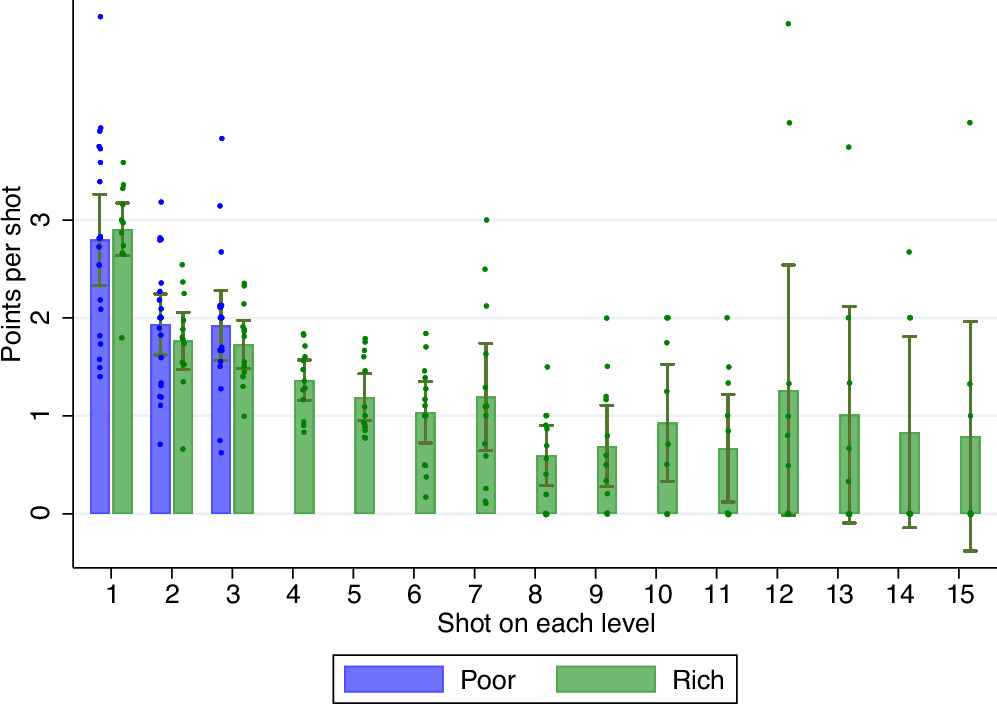
People in poverty sometimes behave in ways that perpetuate their socioeconomic condition. By one influential account, these behaviors arise from psychological effects of scarcity on attention that create greater focus toward managing scarce resources, at the cost of attention to potentially-beneficial information outside of this ‘tunnel’. Although the tunneling hypothesis has been widely discussed in academia and beyond, its direct empirical support derives primarily from a landmark study by Shah et al. (2012) in which participants played games while their access to resources was experimentally manipulated, rendering participants either ‘rich’ or ‘poor’. Here, we present new analyses that contest the original interpretation of the data, showing that the behavioral differences between ‘rich’ and ‘poor’ participants are more parsimoniously explained by the game’s structure than by an attentional shift caused by the scarcity manipulation—a conclusion we substantiate through an additional experiment. We contextualize our findings within the literature on scarcity and attention, and highlight the need for greater clarity regarding the tunneling hypothesis itself.