


The game of checkers has roughly 500 billion billion possible positions (5 × 10²⁰). The task of solving the game, determining the final result in a game with no mistakes made by either player, is daunting. Since 1989, almost continuously, dozens of ...
98 out of 100. That's how many advanced maths problems current AI models managed to solve in an international benchmark in Leipzig. One of the two remaining problems? A simplified version of a… | Czech Technical University in Prague | 11 comments
98 out of 100. That's how many advanced maths problems current AI models managed to solve in an international benchmark in Leipzig. One of the two remaining problems? A simplified version of a combinatorics problem solved by researchers from the Faculty of Information Technology CTU in Prague. Alexander Clifton, Daniela Černá and Jan Volec, together with Bartołomiej Kielak from Universität Leipzig , found the solution to a simplified version of the long-standing open problem of breaking triples with permutations. The problem was later included among the 100 tasks used to test how today's AI models perform in advanced mathematics. While AI came remarkably close, this was one of the problems it couldn't solve on its own. A nice reminder that mathematical creativity and abstract reasoning still leave some room for humans. 🧠 🔗 Read the full story in the comments. | 11 comments on LinkedIn

Look-ahead Reasoning with a Learned Model in Imperfect Information Games
Test-time reasoning significantly enhances pre-trained AI agents' performance. However, it requires an explicit environment model, often unavailable or overly complex in real-world scenarios....

Ante: A New Way to Blend Borrow Checking and Reference Counting
Ante has taken the first step towards something we all thought was impossible: blending reference counting and borrow checking without run-time crashes. 0
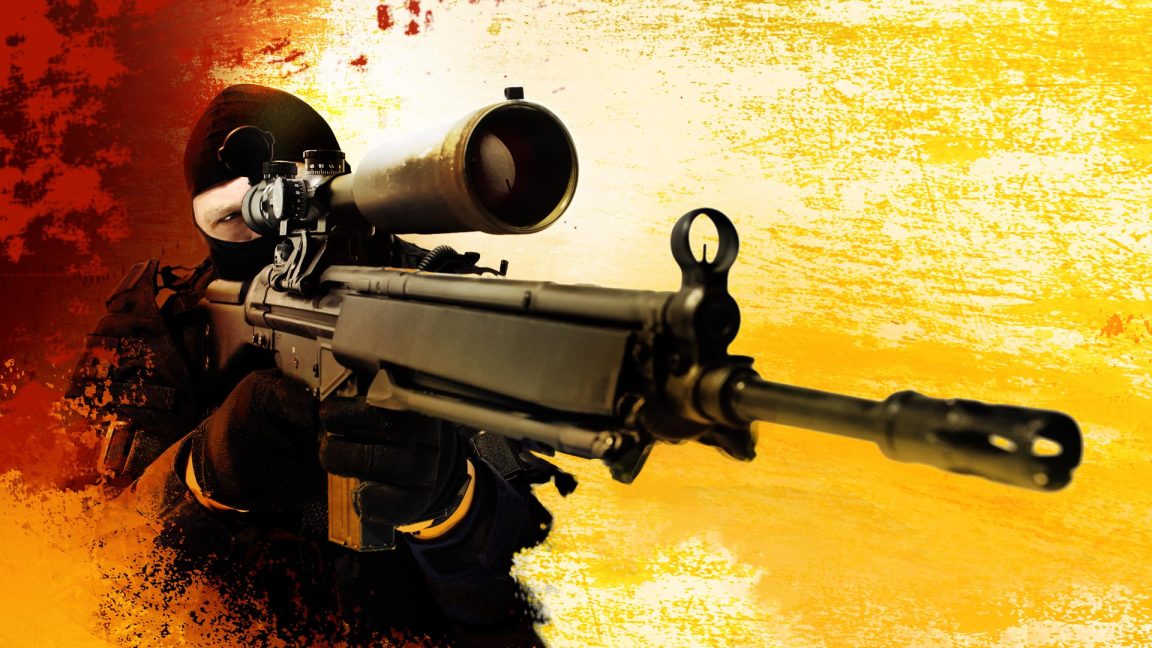
A negative-sum game: Policing Counter-Strike: GO cheaters with Overwatch
In battling cheaters, Valve crowdsources the judge, jury, and executioner.
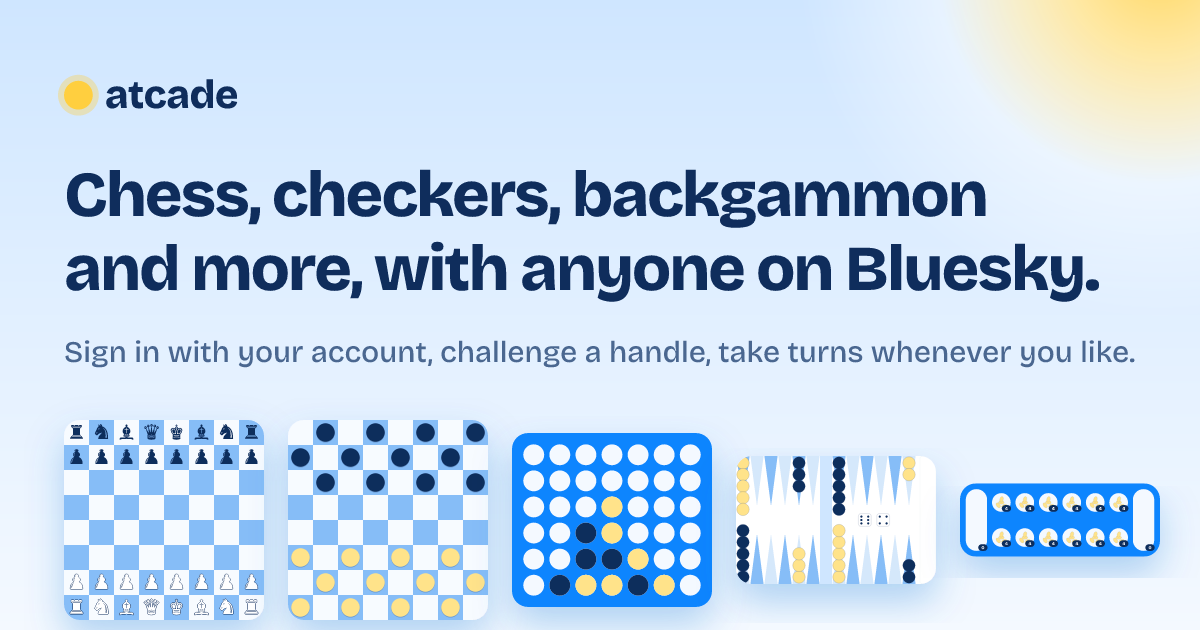
atcade
Chess, checkers, four in a row, backgammon, mancala and reversi with anyone on Bluesky. Sign in with your account and challenge a handle.
Scientists Are Discovering Long-Lost Rules for Ancient Board Games
You can play reconstructions of ancient board games thanks to these scientists and their algorithms.

System One: fast judgments and deliberate checks
Explore System One thinking, its limits, and how fast judgments can be used in software. Interactive examples, with Jev as a case study.
The World's Most Satisfying Checkbox | !Boring Software
The Art of Game Feel (a.k.a Juice) in Product Design

ReBeL: A general game-playing AI bot that excels at poker and more
Combining reinforcement learning with search (RL+Search) has been tremendously successful for perfect-information games. But prior RL+Search algorithms break down in

Scalable decision-making for games of imperfect information
Real-world decision-making generally involves hidden information, that is, information that is unknown to one agent but possessed by another. Unfortunately, the presence of large amounts of hidden information renders established reinforcement learning and search approaches ineffective. Even with multimillion-dollar industrial research efforts1, top-human-level play at Stratego—a board wargame with hidden information on a massive scale—has remained beyond the reach of artificial intelligence (AI). Here we introduce Ataraxos, an AI for Stratego based on general techniques that we developed for both self-play reinforcement learning and test-time search under hidden information. Ataraxos defeated the most decorated human Stratego player of all time by a large margin—achieving, to our knowledge, the first superhuman result in the game’s history—while consuming orders of magnitude less compute and data than previous efforts. Using the same techniques, we built a superhuman AI for Barrage Stratego and state-of-the-art AIs for Hanabi and dou dizhu, all with low cost and high sample efficiency. The success of this approach across adversarial, cooperative and team games establishes a design pattern for reinforcement learning and search that is effective under large amounts of hidden information, a longstanding desideratum of the field of strategic decision-making.


AI Has Ruined the Job Market
Maybe flawed people were better than brute algorithms.

Binary, Hanoi, and Sierpinski, part 2
Designing And Building Stockfighter, Our Programming Game | Kalzumeus Software
17. A Value for n-Person Games
17. A Value for n-Person Games was published in Contributions to the Theory of Games, Volume II on page 307.