


Two different ways of thinking through texts are compared for learning value. , Educators rely heavily on learning activities that encourage elaborative studying, whereas activities that require students to practice retrieving and reconstructing knowledge are used less frequently. Here, we show that practicing retrieval produces greater gains in meaningful learning than elaborative studying with concept mapping. The advantage of retrieval practice generalized across texts identical to those commonly found in science education. The advantage of retrieval practice was observed with test questions that assessed comprehension and required students to make inferences. The advantage of retrieval practice occurred even when the criterial test involved creating concept maps. Our findings support the theory that retrieval practice enhances learning by retrieval-specific mechanisms rather than by elaborative study processes. Retrieval practice is an effective tool to promote conceptual learning about science.
ChatGPT as a cognitive crutch: Evidence from a randomized controlled trial on knowledge retention
The rapid integration of generative artificial intelligence into higher education has outpaced empirical understanding of its effects on fundamental learning processes. To address this gap, this randomized controlled trial (n = 120) tested ChatGPT's impact on long-term knowledge retention in undergraduates learning AI. Participants were randomly assigned either to use ChatGPT as a study aid (AI-Assisted Group) or to use only traditional, non-AI study methods (traditional learning group). Knowledge retention was assessed with a surprise test 45 days after learning. Students who used ChatGPT scored significantly lower on the retention test (57.5 % correct) compared to those who studied traditionally (68.5 % correct), t (83) = −3.19, p = .002, Cohen's d = 0.68. This suggests that unrestricted ChatGPT use impaired long-term retention, likely by reducing the cognitive effort that supports durable memory. The findings align with cognitive offloading theory and the ‘desirable difficulties’ principle: while AI assistance may ease initial learning, it appears to undermine the effortful processes needed for robust learning. These results have important implications for how generative AI tools should be integrated into higher education.
Unlocking Scientific Concepts: How Effective Are LLM-Generated Analogies for Student Understanding and Classroom Practice?
Teaching scientific concepts is essential but challenging, and analogies help students connect new concepts to familiar ideas. Advancements in large language models (LLMs) enable generating analogies, yet their effectiveness in education remains underexplored. In this paper, we first conducted a two-stage study involving high school students and teachers to assess the effectiveness of LLM-generated analogies in biology and physics through a controlled in-class test and a classroom field study. Test results suggested that LLM-generated analogies could enhance student understanding particularly in biology, but require teachers’ guidance to prevent over-reliance and overconfidence. Classroom experiments suggested that teachers could refine LLM-generated analogies to their satisfaction and inspire new analogies from generated ones, encouraged by positive classroom feedback and homework performance boosts. Based on findings, we developed and evaluated a practical system to help teachers generate and refine teaching analogies. We discussed future directions for developing and evaluating LLM-supported teaching and learning by analogy.

Why Some Students Learn Faster
A hypothesis about teaching and learning
Why Some Students Learn Faster
A hypothesis about teaching and learning
How Learning Happens | Seminal Works in Educational Psychology and Wha
How Learning Happens introduces 28 giants of educational research and their findings on how we learn and what we need to learn effectively, efficiently, and

Experimental evidence of the effects of large language models versus web search on depth of learning
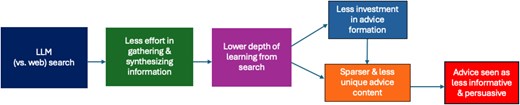
Abstract The effects of using large language models (LLMs) versus traditional web search on depth of learning are explored. A theory is proposed that when individuals learn about a topic from LLM syntheses, they risk developing shallower knowledge than when they learn through standard web search, even when the core facts in the results are the same. This shallower knowledge accrues from an inherent feature of LLMs—the presentation of results as summaries of vast arrays of information rather than individual search links—which inhibits users from actively discovering and synthesizing information sources themselves, as in traditional web search. Thus, when subsequently forming advice on the topic based on their search, those who learn from LLM syntheses (vs. traditional web links) feel less invested in forming their advice, and, more importantly, create advice that is sparser, less original, and ultimately less likely to be adopted by recipients. Results from seven online and laboratory experiments (n = 10,462) lend support for these predictions, and confirm, for example, that participants reported developing shallower knowledge from LLM summaries even when the results were augmented by real-time web links. Implications of the findings for recent research on the benefits and risks of LLMs, as well as limitations of the work, are discussed.
Experimental evidence of the effects of large language models versus web search on depth of learning
Abstract. The effects of using large language models (LLMs) versus traditional web search on depth of learning are explored. A theory is proposed that when
Learning How to Learn (And 20+ Studies) – Max's Two Cents
I have been interested in cognitive science and effective learning methods for years. I’ve read multiple books and articles and put many ideas to test. In this post, I aim to synthesize my notes and provide references to scientific studies.
Social learning preserves both useful and useless theories by canalizing learners’ exploration
In many domains, learning from others is crucial for leveraging cumulative cultural knowledge, which encapsulates the efforts of successive generations of innovators. However, anecdotal and experimental evidence suggests that reliance on social information can reduce the exploration of the problem space. Here, we experimentally investigate the extent to which cultural transmission fosters the persistence of arbitrary solutions in a context where participants are incentivized to improve a physical system across multiple trials. Participants were exposed to various theories about the system, ranging from accurate to misleading. Our findings indicate that even under conditions conducive to exploration, the transmission of cultural knowledge canalizes learners’ focus, limiting their consideration of alternative solutions. This effect was observed in both the theories produced and the solutions attempted by participants, irrespective of the accuracy of the provided theories. These results challenge the notion that arbitrary solutions persist only when they are efficient or intuitive and underscore the significant role of cultural transmission in shaping human knowledge and technologies.

Retraction Note: The effect of ChatGPT on students’ learning performance, learning perception, and higher-order thinking: insights from a meta-analysis
Humanities and Social Sciences Communications - Retraction Note: The effect of ChatGPT on students’ learning performance, learning perception, and higher-order thinking: insights from a...
Retraction Note: The effect of ChatGPT on students’ learning performance, learning perception, and higher-order thinking: insights from a meta-analysis
Humanities and Social Sciences Communications - Retraction Note: The effect of ChatGPT on students’ learning performance, learning perception, and higher-order thinking: insights from a...
Experimental Evidence on the Learning Impact of Generative AI
We study whether access to off-the-shelf generative AI changes how much students learn in a timed assignment. In a proctored, in-person randomized experiment, undergraduates study an unfamiliar topic and write an essay with or without AI, then complete unaided assessments immediately and one week later. AI access raises test scores, and a smaller gain persists a week later. Gains remain for students who use AI as a tutor ("augmentation") and fade for students who have AI write for them ("automation"). We document two mechanisms: students shift time from writing toward reading and searching for information, and report greater learning enjoyment.

Creative Reading: Scaffolding Reading for Transformation
However, recent work on augmenting reading largely focuses on making reading more efficient, especially in knowledge-intensive contexts where people must rapidly make sense of research papers and other complex documents (Lo et al., 2024). These systems often aim to help readers skim, summarize, and synthesize large volumes of information in order to reduce cognitive effort and accelerate document- and corpus-level sensemaking at scale (Gu et al., 2025; Lo et al., 2024; Fok et al., 2023). At one extreme, the form of reading implicitly envisioned by these systems may resemble what we call “reading to discard”: extracting the essential, actionable informational core of a document as quickly and efficiently as possible, so that the rest can be swiftly tossed aside—much like we often process inbound mail. This motivates us to ask what scaffolding approaches might resist “reading to discard,” what alternative forms of reading we might scaffold, and what alternative views and values of reading might guide the conversation.
Terence Tao (@tao@mathstodon.xyz)
In basic research, such as pure mathematics, one might naively expect that the natural question to ask with regards to a given problem X in a field is "What is the answer to X?". But in many cases the more valuable question is "What can be learned from studying X?" The answer to X itself can of course be one of the things learned in this process of study; but one can learn far more useful information besides, such as * What are the main difficulties to overcome to resolve X? * What new techniques can one discover in order to solve X? * Why are existing techniques insufficient to solve the problem by itself? * How does X relate to results in prior literature? * Can one uncover new connections between X and other topics Y, Z, ...? * What are some natural related or followup questions X', X'', ... to study? Nevertheless, until recently the two questions were closely aligned, to the point where it was not really necessary to distinguish the two: the only practical route to solving a difficult problem was to first address many of the subquestions listed above. (1/3)
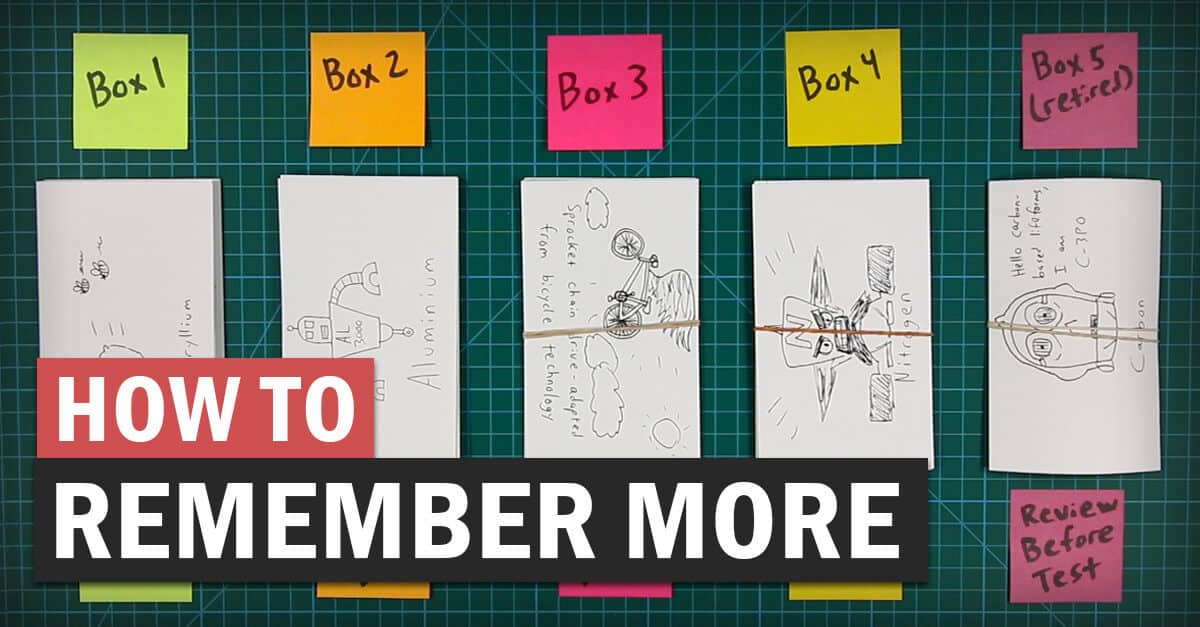
How to Remember More of What You Learn with Spaced Repetition
Using spaced repetition in conjunction with other study techniques can help you memorize information much, much more quickly. Here's how to do it.
What Makes a Concept Good? A Criterial Framework for Understanding Concept Formation in the Social Sciences
Nowhere in the broad and heterogeneous work on concept formation has the question of conceptual utility been satisfactorily addressed. Goodness in concept formation, I argue, cannot be reduced to 'clarity,' to empirical or theoretical relevance, to a set of rules, or to the methodology particular to a given study. Rather, I argue that conceptual adequacy should be perceived as an attempt to respond to a standard set of criteria, whose demands are felt in the formation and use of all social science concepts: (1) familiarity, (2) resonance, (3) parsimony, (4) coherence, (5) differentiation, (6) depth, (7) theoretical utility, and (8) field utility. The significance of this study is to be found not simply in answering this important question, but also in providing a complete and reasonably concise framework for explaining the process of concept formation within the social sciences. Rather than conceiving of concept formation as a method (with a fixed set of rules and a definite outcome), I view it as a highly variable process involving trade-offs among these eight demands.