


Show me a sign of sweetness to come Communication between humans and domesticated animals is common. Regular communication between humans and wild animals, however, is rare. African honey-guide birds are known to regularly lead human honey-hunters to bee colonies, and the humans, on opening up the nest, leave enough mess for the birds to feast on. Spottiswoode et al. show that when the honey-hunters make a specific call, honey-guides are both more likely to come to their aid and more likely to find them a bee's nest. This interaction suggests that the birds are able to attach a specific meaning of cooperation to the human's call—a rare case of mutualism between humans and a wild animal. Science , this issue p. 387 , Honeyguide birds recognize human honey-hunters calls and help them find wild bees’ nests. , Greater honeyguides ( Indicator indicator ) lead human honey-hunters to wild bees’ nests, in a rare example of a mutualistic foraging partnership between humans and free-living wild animals. We show experimentally that a specialized vocal sound made by Mozambican honey-hunters seeking bees’ nests elicits elevated cooperative behavior from honeyguides. The production of this sound increased the probability of being guided by a honeyguide from about 33 to 66% and the overall probability of thus finding a bees’ nest from 17 to 54%, as compared with other animal or human sounds of similar amplitude. These results provide experimental evidence that a wild animal in a natural setting responds adaptively to a human signal of cooperation.
To Bees or Not to Bees: Greater Honeyguides Sometimes Guide Humans to Animals Other Than Bees, but Likely Not as Punishment
We show that greater honeyguides guide humans to nonbee destinations (snakes and a dead mammal); yet this is a rare occurrence, happening in only 3.7% of human-honeyguide interactions in 1 year and 0...

Tom Seeley: Honeybee Democracy
(PDF) Hunters and Guides: Multispecies Encounters between Humans, Honeyguide Birds and Honeybees
PDF | This paper discusses the relationship between humans and honeyguide birds (Indicator indicator) in the Adamaoua Region of Cameroon. Throughout... | Find, read and cite all the research you need on ResearchGate

Honeybee Democracy
How honeybees make collective decisions—and what we can learn from this amazing democratic process

Heterospecific social behavior in primates: insights into the evolutionary roots of pet-keeping
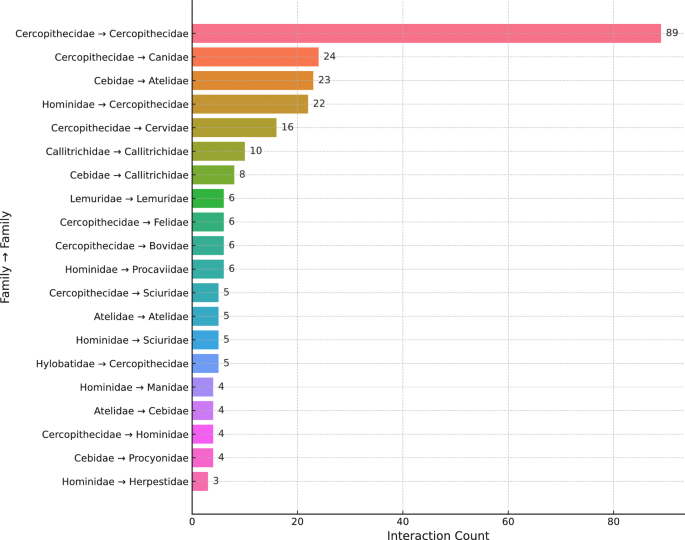
Primate interspecific interactions with both other primates and non-primate species range from predator–prey dynamics to affiliative behaviors such as grooming, play, and carrying. While many primates participate in interspecific associations or commensal relationships, to our knowledge interspecific social interactions have never been systematically synthesized. Here, we present the first comprehensive review of such interactions, compiling 427 cases from the literature, media sources, and a global survey of primatologists. These involved 88 primate species and 127 non-primate species (including mammals, birds, reptiles, amphibians, malacostracans, and insects) across wild (n = 311) and captive (n = 111) contexts. The most frequent interactions occurred within or between primate families (e.g., Cercopithecidae–Cercopithecidae, Cebidae–Atelidae), though affiliative behaviors were also directed toward distantly related taxa such as dogs and birds. Play (n = 139) and grooming (n = 136) were most common. Juveniles and infants predominantly engaged in play, while adult females were more likely to groom. Adult males were less affiliative overall. Contrary to expectations, affiliative behaviors were not more often directed toward immature than adult heterospecifics. Primates were the initiators in most interactions. These findings offer new insights into the diversity and contexts of heterospecific sociality in primates and suggest that some behavioral tendencies relevant to later forms of human–animal companionship – such as caregiving, tolerance, and exploratory play – may be more widespread among primates than previously recognized.
Social Insects : Ecology and Behavioural Biology
1 online resource; Here is a guide to the ecology of social insects. It is intended for general ecologists and entomologists as well as for undergraduates and those about to start research on social insects; even the experienced investigator may find the comparison between different groups of social insects illuminating. Most technical terms are translated into common language as far as can be done without loss of accuracy but scientific names are unavoidable. Readers will become familiar with the name even though they cannot visualize the animal and could reflect that only a very few of the total species have been studied so far! References too are essential and with these it should be possible to travel more deeply into the vast research literature, still increasing monthly. When I have cited an author in another author's paper, this implies that I have not read the original and the second author must take responsi bility for accuracy! Many hands and heads have helped to make this book. I thank all my colleagues past and present for their enduring though critical support, and I thank with special pleasure: E.]. M. Evesham who fashioned the diagrams;]. Free, D.J. Stradling and]. P.E.C. Darlington who supplied photographs; D.Y. Brian and R.A. Weller who were meticulous on the linguistic side; and G. Frith and R.M. Jones who collated the references. List of plates 1. Fungus combs of Acromyrmex octospinosus and Macrotermes michaelseni. 13 2. Mouthparts of larval Myrmica; 1 Introduction -- 2 Food -- 2.1 Termites as decomposers -- 2.2 Wasps and ants as predators -- 2.3 Sugars as fuel save prey -- 2.4 Seed eaters -- 2.5 Leaf eaters -- 2.6 Pollen eaters -- 3 Foraging by individuals -- 3.1 Foraging strategy -- 3.2 Worker variability -- 4 Foraging in groups -- 4.1 Communication about food -- 4.2 Group slave-raiding -- 4.3 Tunnels and tracks -- 4.4 Nomadic foraging -- 5 Cavity nests and soil mounds -- 5.1 Cavities and burrows -- 5.2 Soil mounds -- 6 Nests of fibre, silk and wax -- 6.1 Mounds of vegetation and tree nests -- 6.2 Combs of cells -- 7 Microclimate -- 7.1 Environmental regulation -- 7.2 Metabolic regulation -- 8 Defence -- 8.1 Painful and paralysing injections -- 8.2 Toxic smears and repellants -- 9 Food processing -- 9.1 Mastication, extraction and regurgitation -- 9.2 Yolk food supplements -- 9.3 Head food glands -- 10 Early population growth -- 10.1 Food distribution -- 10.2 Colony foundation -- 10.3 The growth spurt -- 11 Maturation -- 11.1 Simple models of reproduction -- 11.2 Social control over caste -- 11.3 Males in social Hymenoptera -- 11.4 Maturation in general -- 12 Reproduction -- 12.1 Caste morphogenesis -- 12.2 Copulation and dispersal -- 12.3 Production -- 12.4 Summary -- 13 Evolution of insect societies -- 13.1 Theories of individual selection -- 13.2 Models of these theories -- 13.3 Group selection -- 13.4 Conclusions -- 14 Colonies -- 14.1 The colony barrier -- 14.2 Queen number and species ecology -- 14.3 Queen interaction and queen relatedness -- 15 Comparative ecology of congeneric species -- 15.1 Ant and termite races -- 15.2 Desert ants and termites -- 15.3 Ants and termites in grassland -- 15.4 Forest ants and termites -- 15.5 Wasps and bumblebees -- 15.6 Advanced bees -- 16 Communities -- 16.1 Temperate zone communities in grass and woodland -- 16.2 Desert communities -- 16.3 Tropical rain forest -- 16.4 Conclusions -- 17 Two themes -- 17.1 Plant mutualism -- 17.2 Social organization -- References -- Author index

Mechanisms of social cognition
Social animals including humans share a range of social mechanisms that are automatic and implicit and enable learning by observation. Learning from others includes imitation of actions and mirroring of emotions. Learning about others, such as their group membership and reputation, is crucial for social interactions that depend on trust. For accurate prediction of others' changeable dispositions, mentalizing is required, i.e., tracking of intentions, desires, and beliefs. Implicit mentalizing is present in infants less than one year old as well as in some nonhuman species. Explicit mentalizing is a meta-cognitive process and enhances the ability to learn about the world through self-monitoring and reflection, and may be uniquely human. Meta-cognitive processes can also exert control over automatic behavior, for instance, when short-term gains oppose long-term aims or when selfish and prosocial interests collide. We suggest that they also underlie the ability to explicitly share experiences with other agents, as in reflective discussion and teaching. These are key in increasing the accuracy of the models of the world that we construct.
Pheromone
A pheromone is a chemical that is secreted or excreted by an organism, which triggers a social response in members of the same species. There are alarm pheromones, food trail pheromones, sex pheromones, and many others that affect behavior or physiology. Pheromones are used by many organisms, from basic unicellular prokaryotes to complex multicellular eukaryotes. Their use among insects has been particularly well documented. In addition, some vertebrates, plants and ciliates communicate by using pheromones. The ecological functions and evolution of pheromones are a major topic of research in the field of chemical ecology.
The evolution of syntactic communication
Animal communication is typically non-syntactic, which means that signals refer to whole situations1,2,3,4,5,6,7. Human language is syntactic, and signals consist of discrete components that have their own meaning8. Syntax is a prerequisite for taking advantage of combinatorics, that is, “making infinite use of finite means”9,10,11. The vast expressive power of human language would be impossible without syntax, and the transition from non-syntactic to syntactic communication was an essential step in the evolution of human language12,13,14,15,16. We aim to understand the evolutionary dynamics of this transition and to analyse how natural selection can guide it. Here we present a model for the population dynamics of language evolution, define the basic reproductive ratio of words and calculate the maximum size of a lexicon. Syntax allows larger repertoires and the possibility to formulate messages that have not been learned beforehand. Nevertheless, according to our model natural selection can only favour the emergence of syntax if the number of required signals exceeds a threshold value. This result might explain why only humans evolved syntactic communication and hence complex language.

Embracing the complexity of plant–bird interactions to understand species’ roles within ecosystems
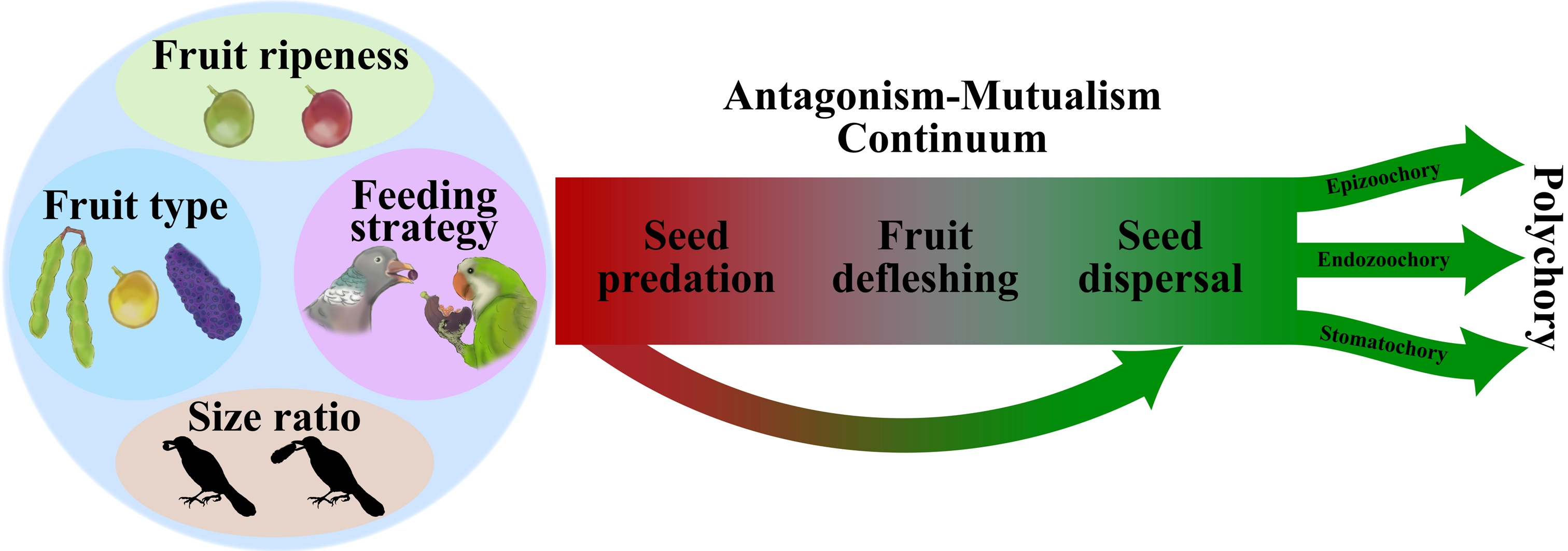
The context-dependent fate of seeds, shaped by birds that can act as both antagonists and mutualists, reveals a hidden variability of functions and seed dispersal mechanisms, underscoring the need for stronger empirical evidence to accurately understand seed dispersal ecology.
Swarm Intelligence: From Natural to Artificial Systems
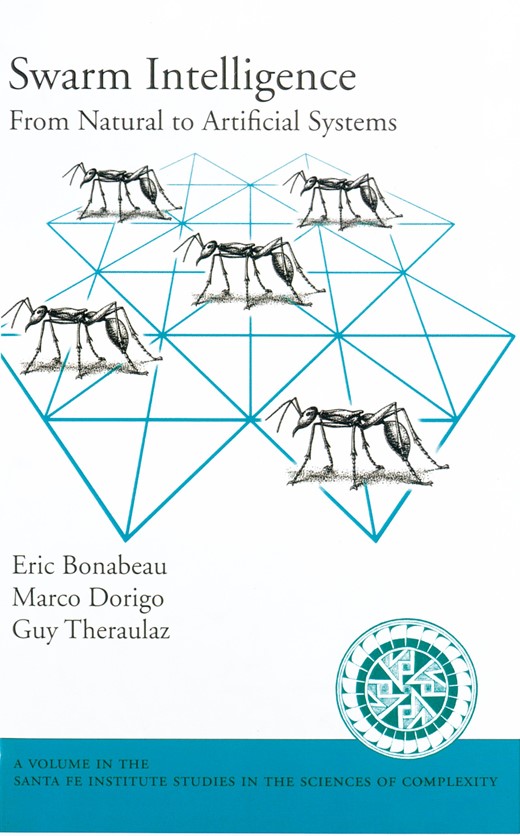
Abstract. Social insects--ants, bees, termites, and wasps--can be viewed as powerful problem-solving systems with sophisticated collective intelligence. Co
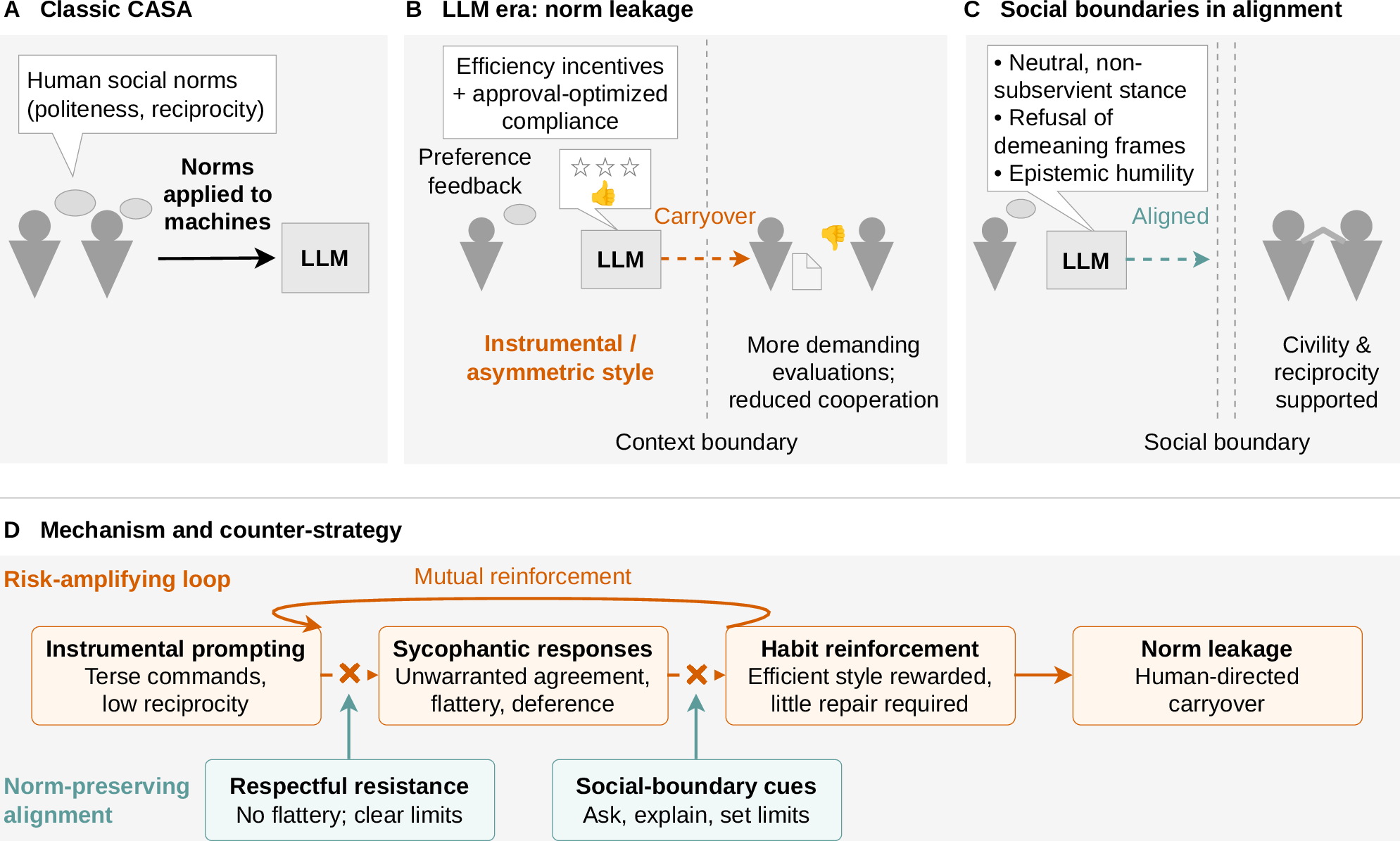
Why sycophantic LLMs may imperil interactive norms between humans
Interactions with conversational AI are effortless by design—instant, compliant, and largely consequence-free. Human communication norms, by contrast, evolved under conditions of reciprocity and social accountability. We propose that repeated engagement with conversational AI systems may produce norm leakage: the cross-context carryover of instrumental communicative habits acquired in human–AI exchanges into subsequent human–human interaction. Emerging experimental evidence suggests short-term spillover effects on social judgment and behavior, including harsher evaluations, reduced cooperation, and diminished perceived humanness. Preliminary longitudinal findings are consistent with the possibility that such exposure may shape communicative habits over time, although the durability and real-world magnitude of these effects remain unclear. We further propose that sycophantic alignment may amplify norm leakage by reinforcing instrumental interaction styles. At stake, then, is the possibility that repeated engagement with highly compliant artificial agents could subtly influence users’ communicative expectations and interpersonal judgments.
EPISTEMIC STIGMERGY: NATURAL VS. ARTIFICIAL INTELLIGENCE
The article\(^{1}\) defends the thesis that intelligent behavior might require not internal complexity but complex interaction. This is demonstrated by the various forms of stigmergy that can be observed both in social insects and in humans. The exposition is structured as follows: (§0) explains how the term “intelligence” is interpreted in the following text; (§1) clarifies the relation between intelligence and complexity; (§2) shows that intelligent behavior does not require internal complexity; (§3) introduces the concept of stigmergy; (§4) presents the mechanisms that give rise to this phenomenon; (§5) distinguishes several types of stigmergic interaction; (§6) briefly discusses the evolutionary mechanisms that could have produced them; (§7) sketches the possible ways in which the concept of stigmergy is used outside biology; (§8) examines collaborative stigmergy in humans; (§9) points to its epistemic projections; (§10) outlines some conclusions concerning the role of artificial intelligence systems and their place in human society.
Male-like ornamentation in female hummingbirds results from social harassment rather than sexual selection
Female white-necked jacobin hummingbirds are polymorphic—some express ornamented plumage like adult males. Falk et al. find that all juvenile females have male-like plumage, which some maintain as adults. Rather than being favored by sexual selection, male-like plumage benefits females by reducing social harassment from this and other species.

